















BANFF — Alberta’s newly unveiled 30-year passenger rail master plan has reignited hopes for a future Calgary-to-Banff rail connection, drawing cautious optimism from municipal leaders across the Bow Valley while raising significant questions about implementation, environmental impacts, and community planning.
The provincial vision outlines the possibility of high-speed passenger rail service connecting Calgary and Banff, with trains potentially operating at speeds exceeding 160 kilometres per hour and running as frequently as once every hour. While the proposal remains in the planning stage and no final decisions have been made regarding routes, funding, construction timelines, or operators, the inclusion of Calgary-Banff passenger rail in Alberta’s long-term transportation strategy marks a significant milestone.
Banff Mayor Corrie DiManno welcomed the announcement, describing it as an encouraging step toward addressing growing transportation challenges in the national park.
“Overall, it’s really exciting,” DiManno said. “It’s great news for the future of passenger rail in Alberta, and especially passenger rail to Banff from the city of Calgary.”
The Alberta government recently committed $15 million over the next three years to advance passenger rail planning, with early work focused on airport connectivity in Calgary and Edmonton, development of a downtown Calgary transportation hub, and discussions with private-sector partners.
Among those celebrating the announcement is Jan Waterous, managing partner of Liricon Capital, which has long advocated for restoring passenger rail service to Banff. Waterous said the provincial framework provides long-awaited direction for private proponents.
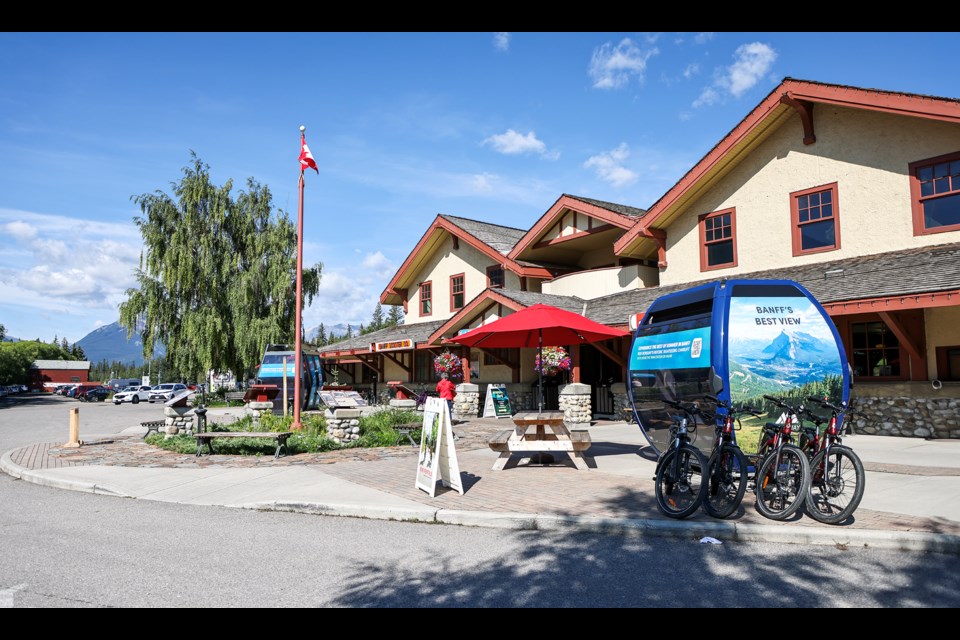
Liricon Capital and its infrastructure partner, Plenary Americas, previously submitted a proposal that would utilize the existing Canadian Pacific Kansas City corridor, with stops planned in Cochrane, Mînî Thnî, Canmore, and Banff. Their vision includes transforming Banff’s historic railway station into a major multimodal transportation and visitor hub.
Waterous said the consortium intends to resubmit its proposal now that the provincial master plan has been completed.
The project is seen as increasingly important as Calgary’s population continues to expand and visitor numbers to Banff National Park grow each year.
“We need to reduce greenhouse gas emissions in Banff, and we know visitor vehicles are the number one producer,” DiManno noted. “We also have very limited parking available. The bottom line is we just really need to shift the way folks get here.”
Banff officials have advocated for regional mass transit solutions since 2017, viewing passenger rail as a key component of future transportation planning. Municipal leaders argue that rail service could help alleviate congestion while improving visitor experiences and reducing environmental pressures on the national park.
However, DiManno emphasized that rail service alone cannot solve overcrowding issues. She suggested additional measures such as dynamic pricing, vehicle reservation systems, or incentives for visitors arriving through public transit.
The issue became particularly evident during Banff’s popular skijoring event earlier this year, when thousands of visitors arriving simultaneously created severe traffic and parking congestion.
“The skijoring weekend was a real wake-up call,” DiManno said. “The fear is that if we don’t work toward solutions, that could become an average summer day in the future.”
Meanwhile, Canmore Mayor Sean Krausert said municipalities still require crucial information before they can begin preparing for rail infrastructure.
One of the largest unanswered questions involves whether passenger trains would operate along the existing CPKC corridor or travel on a completely new route. Alberta’s master plan suggests that a new “greenfield” corridor could be explored instead of relying solely on freight rail infrastructure.
Krausert said route selection will directly influence station locations, transit integration, and community planning decisions.
“As the largest municipality in the Bow Valley and a destination in its own right, it would be a crying shame if passenger rail went through our community without stopping,” he said.
Environmental organizations are also watching developments closely. The Bow Valley Naturalists has called for a comprehensive regional transportation strategy before major rail decisions are finalized.
Wildlife protection remains one of the most sensitive issues. The 2022 management plan for Banff National Park notes that wildlife mortality is already a concern along existing railway corridors and warns that additional rail infrastructure could increase risks unless proper mitigation measures are implemented.
DiManno said any future rail system must incorporate wildlife protections similar to Banff’s internationally recognized wildlife crossings and overpasses.
Further complicating the issue is an ongoing legal challenge filed by the Stoney Nakoda Nations against CPKC. The Nations argue that inadequate fencing along sections of the railway corridor has resulted in significant livestock losses and are seeking court orders requiring improved safety measures and restrictions on future rail expansion.
Despite the challenges, supporters believe passenger rail remains one of the most promising long-term solutions for balancing tourism growth, environmental sustainability, and transportation needs in Alberta’s mountain communities.
For now, Bow Valley leaders agree that while the province’s vision represents an important first step, many critical decisions remain ahead before passengers can board a train from Calgary to Banff.
Courtesy: rmoutlook
Post Disclaimer
The views and content presented in this article, news report, or video are solely those of the respective author or creator and do not necessarily reflect the official policy or position of BW Times Digital Online E-Paper.





Leave a comment