

















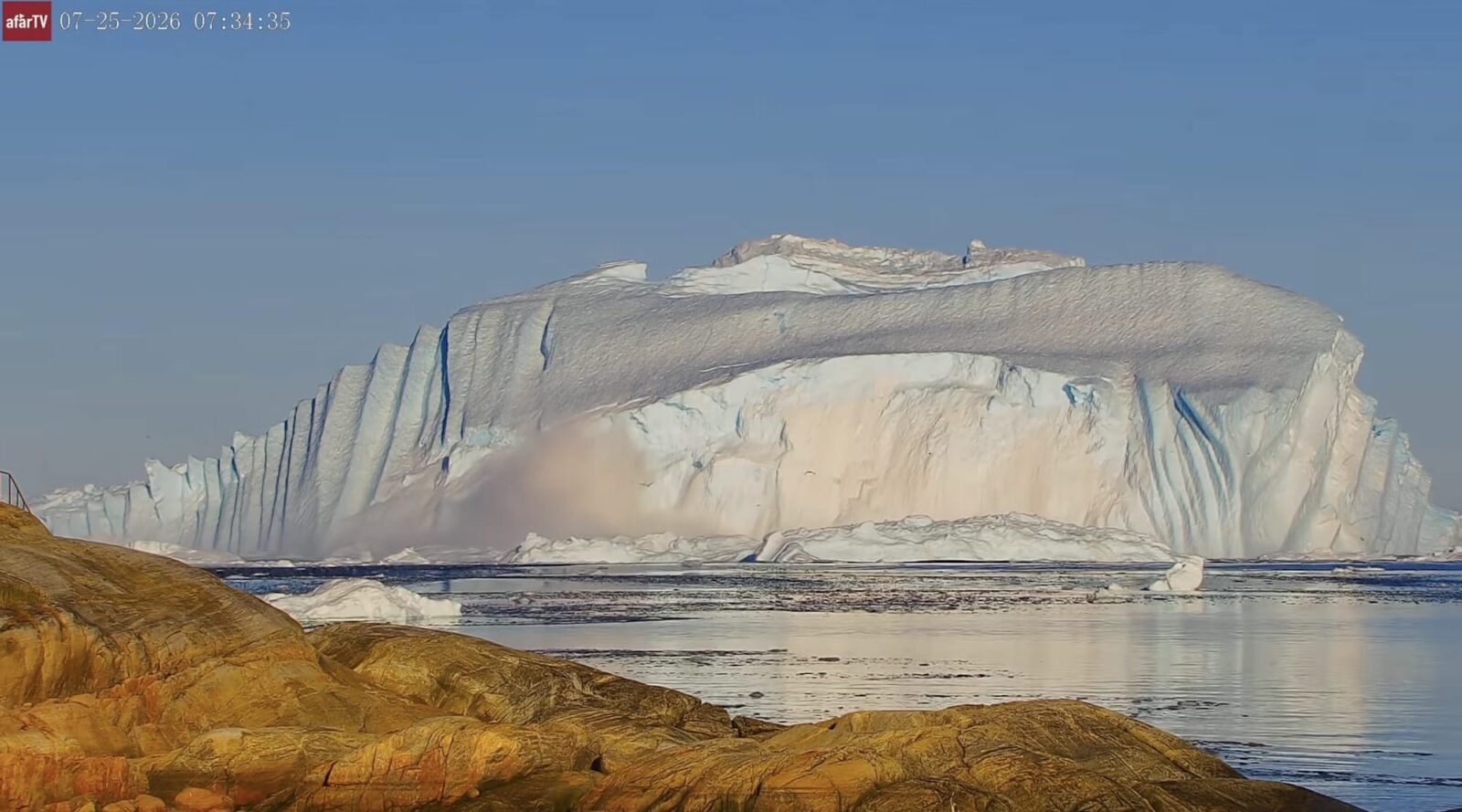
A towering iceberg off the western coast of Greenland has captured worldwide attention after dramatically flipping over in the waters near Ilulissat, creating enormous waves and providing a rare glimpse into the powerful forces shaping the Arctic.
The remarkable event occurred near the entrance to Ilulissat Icefjord, one of Greenland’s most famous natural landmarks and a UNESCO World Heritage Site. The iceberg suddenly rotated in the water, performing what observers described as a giant somersault as its immense weight shifted beneath the surface. The dramatic movement sent large waves across the surrounding waters and was witnessed by residents and visitors in the nearby town.
High-definition footage of the incident quickly spread across social media, attracting millions of views and sparking widespread interest in the dynamic behavior of Greenland’s icebergs. Scientists explain that such dramatic flips occur when melting changes an iceberg’s balance. As ice melts unevenly above and below the waterline, the iceberg’s center of gravity shifts until it becomes unstable and suddenly rolls over to find a new equilibrium.
Although these events are natural, experts note that they also serve as a powerful reminder of the rapid changes taking place across the Arctic. Greenland is home to one of only two massive ice sheets on Earth, the other covering Antarctica. The Greenland Ice Sheet blankets nearly 80 percent of the island and contains enough frozen water to significantly influence global sea levels.
In recent decades, rising global temperatures have accelerated the melting of Greenland’s glaciers and ice sheet. Scientists estimate that the island loses hundreds of billions of tonnes of ice each year, with the meltwater flowing into the oceans and contributing to rising sea levels around the world.
The iceberg involved in the dramatic flip likely originated from one of Greenland’s glaciers before drifting into Ilulissat Icefjord. Large icebergs can remain trapped near the mouth of the fjord for extended periods, gradually melting and breaking apart before eventually floating into the open waters of Disko Bay. During this process, changes in their shape and weight distribution can trigger sudden and powerful rotations like the one captured on video.
Researchers say iceberg rollovers are unpredictable and can be extremely dangerous. When a massive iceberg flips, it can generate strong waves capable of affecting nearby boats and shorelines. For that reason, authorities advise vessels and tourists to maintain a safe distance from floating icebergs, particularly those showing signs of instability.
Ilulissat Icefjord is one of Greenland’s most visited destinations and is internationally recognized for its breathtaking landscape of glaciers and drifting icebergs. The area offers scientists valuable insight into how glaciers respond to changing climate conditions while also attracting visitors eager to witness one of the planet’s most extraordinary natural environments.
Environmental experts continue to monitor Greenland closely as climate change accelerates ice loss across the Arctic. While the dramatic iceberg flip fascinated audiences worldwide, scientists say it also highlights the importance of understanding the ongoing transformation of polar regions and its potential impact on global weather patterns, ecosystems, and future sea-level rise.
The extraordinary footage has become one of the most talked-about natural events of the summer, combining the breathtaking beauty of Greenland’s icy landscape with a powerful reminder of the immense forces at work in one of the world’s fastest-changing environments.
Post Disclaimer
The views and content presented in this article, news report, or video are solely those of the respective author or creator and do not necessarily reflect the official policy or position of BW Times Digital Online E-Paper.











Leave a comment