















The Rocky Mountains are home to some of North America’s most fascinating historic towns, where frontier heritage, Indigenous culture, mining booms, and early settlement stories continue to shape local communities. From centuries-old Indigenous settlements to former silver and coal mining centres that later transformed into world-renowned tourism destinations, these towns offer visitors an opportunity to experience history while enjoying spectacular mountain scenery.
Each destination tells a unique story of the American West through preserved architecture, museums, historic landmarks, and cultural traditions that have endured for generations.
Jackson, Wyoming
Jackson remains one of Wyoming’s best-preserved frontier communities, retaining much of its Old West character around its famous town square lined with historic log buildings.
Long before European settlers arrived, the valley was home to Indigenous nations, including the Crow and Bannock peoples, who hunted and travelled throughout the region. During the early nineteenth century, legendary mountain men such as John Colter, Jim Bridger, and David Edward Jackson explored the valley, eventually giving the area its enduring name.
Permanent settlement began during the 1880s, with Jackson officially becoming a town in 1894 before incorporation followed two decades later.
Visitors can explore the Jackson Hole History Museum to learn about the area’s pioneer heritage, ranching history, and the development of nearby Yellowstone National Park. The historic Miller Cabin also preserves the lifestyle of one of the valley’s earliest homesteaders.
Its location near Grand Teton National Park and Yellowstone makes Jackson an ideal destination for both history enthusiasts and outdoor adventurers.
Cody, Wyoming
Founded in 1896 by legendary frontiersman William “Buffalo Bill” Cody, the town of Cody was designed as the eastern gateway to Yellowstone National Park.
Today, Buffalo Bill’s legacy remains central to the community’s identity. The Buffalo Bill Center of the West has become one of America’s premier museums dedicated to Western history, featuring extensive collections covering frontier life, Native American heritage, firearms, wildlife, and Western art.
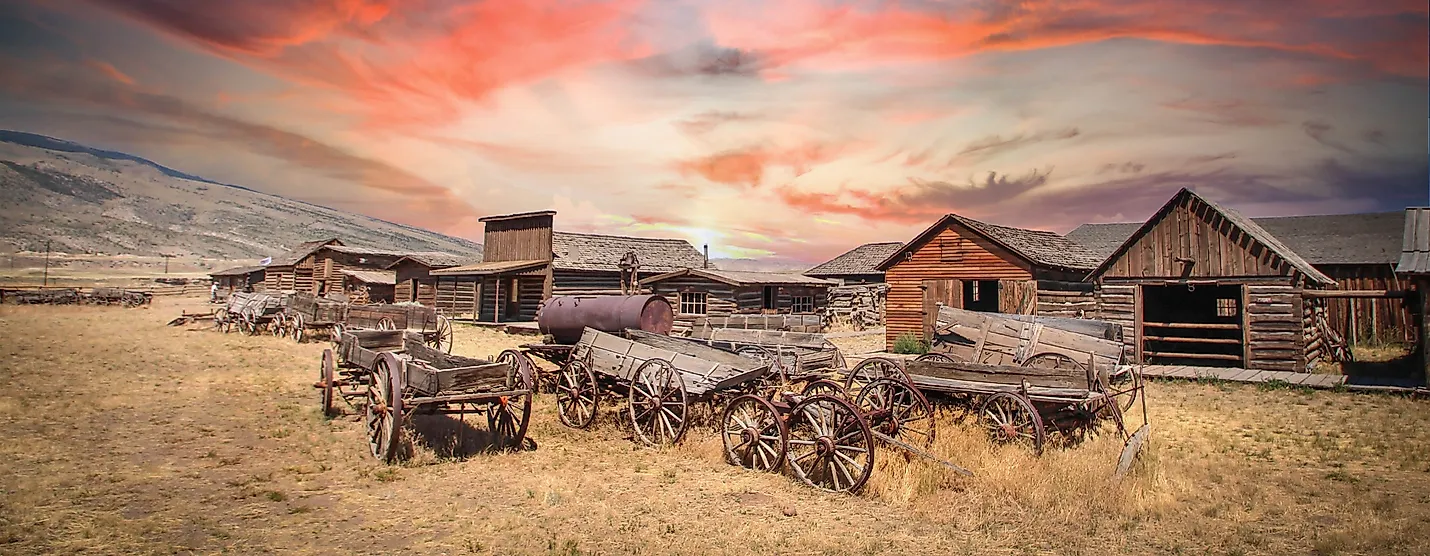
Visitors can also explore Old Trail Town, an outdoor museum preserving authentic frontier buildings, historic cabins, and structures associated with some of the American West’s most famous outlaws.
Cody continues to celebrate its frontier roots while serving as a popular destination for travellers exploring northwestern Wyoming.
Red Lodge, Montana
Red Lodge developed into one of Montana’s important coal mining communities during the late nineteenth century after settlement expanded throughout the region.
The town’s historic downtown remains filled with beautifully preserved commercial buildings dating back more than a century, reflecting its mining prosperity.
The Carbon County Historical Society and Museum documents the area’s industrial heritage through mining equipment, photographs, and exhibits that highlight the daily lives of workers who built the community.
One of Red Lodge’s most recognizable landmarks, the historic Pollard Hotel, has welcomed visitors since 1893 and continues operating today.
Nearby, the spectacular Beartooth Highway offers one of America’s most scenic mountain drives toward Yellowstone National Park.
Park City, Utah
Park City evolved from a booming silver mining settlement into one of North America’s leading winter sports destinations.
Originally settled along routes used by Mormon pioneers, the town experienced rapid growth after valuable silver deposits were discovered. Following a devastating fire in 1898, Park City rebuilt much of its downtown, creating the Victorian and historic architecture that continues to define Main Street today.
The Park City Museum provides visitors with detailed insight into the town’s mining history, devastating fire, and eventual transformation into an internationally recognized ski destination.
Historic farm buildings at the McPolin Farmstead and preserved mining sites throughout the surrounding mountains further illustrate the community’s rich heritage.
Aspen, Colorado
Aspen began as a silver mining camp during Colorado’s famous Silver Boom of the late nineteenth century.
Originally known as Ute City, the settlement was later renamed after the abundant aspen trees covering nearby mountainsides.
Although the collapse of silver prices during the 1890s nearly emptied the town, Aspen experienced a remarkable revival decades later as skiing transformed it into one of the world’s premier mountain resorts.
Historic landmarks such as Hotel Jerome, built in 1889, remain among Aspen’s best-known architectural treasures.
Visitors can also explore the Wheeler-Stallard Museum, the Wheeler Opera House, and the Aspen Art Museum, which together showcase both the town’s historic legacy and vibrant cultural scene.
Taos, New Mexico
Taos possesses one of the longest continuously inhabited histories in North America.
At the heart of the community stands Taos Pueblo, an adobe settlement that has been continuously occupied for nearly one thousand years and is recognized internationally as a UNESCO World Heritage Site.
Spanish explorers reached the region during the sixteenth century, while permanent colonial settlement followed during the early seventeenth century.
Over centuries, Taos became an important cultural crossroads where Indigenous, Hispanic, and later Anglo-American traditions blended together.
Visitors can explore Taos Plaza, the historic San Francisco de Asis Church, and the Harwood Museum of Art to gain a deeper appreciation of the region’s diverse artistic, cultural, and historical heritage.
Georgetown, Colorado
Often referred to as the “Silver Queen of the Rockies,” Georgetown emerged during Colorado’s mining boom after gold discoveries in 1859 and significant silver finds several years later.
Much of the town’s nineteenth-century architecture remains remarkably intact, preserving its historic appearance.
The Georgetown-Silver Plume Historic District contains numerous restored commercial buildings dating from the height of Colorado’s silver mining era.
Among its leading attractions is the Hotel de Paris Museum, home to thousands of historical artifacts illustrating life during the mining boom, while the Hamill House Museum offers visitors an authentic glimpse into Victorian-era living.
Georgetown remains one of Colorado’s finest examples of a preserved mining community.
Telluride, Colorado
Nestled within a dramatic box canyon in Colorado’s San Juan Mountains, Telluride developed after prospectors discovered gold in the surrounding region during the 1870s.
The town quickly expanded into one of Colorado’s important mining centres while preserving much of its Victorian architecture that still lines Colorado Avenue today.
The Telluride Historical Museum, located inside a former miners’ hospital dating back to 1896, tells the story of mining, local industry, and community development.
Historic landmarks such as the New Sheridan Hotel continue welcoming guests more than a century after opening, reflecting Telluride’s enduring connection to its frontier past.
Historic Communities That Preserve the Spirit of the Rockies
Although these communities have evolved into popular destinations for tourism, outdoor recreation, and cultural experiences, each continues to honour the history that shaped its identity.
Whether exploring Indigenous heritage at Taos Pueblo, discovering Buffalo Bill’s legacy in Cody, walking Victorian streets in Georgetown and Telluride, or learning about mining history in Aspen, Park City, and Red Lodge, visitors can experience chapters of North American history that remain visible in everyday life.
Together, these eight historic Rocky Mountain towns preserve the stories of exploration, settlement, industry, and resilience while offering unforgettable landscapes that continue attracting travellers from around the world.
Courtesy: worldatlas
Post Disclaimer
The views and content presented in this article, news report, or video are solely those of the respective author or creator and do not necessarily reflect the official policy or position of BW Times Digital Online E-Paper.










Leave a comment