













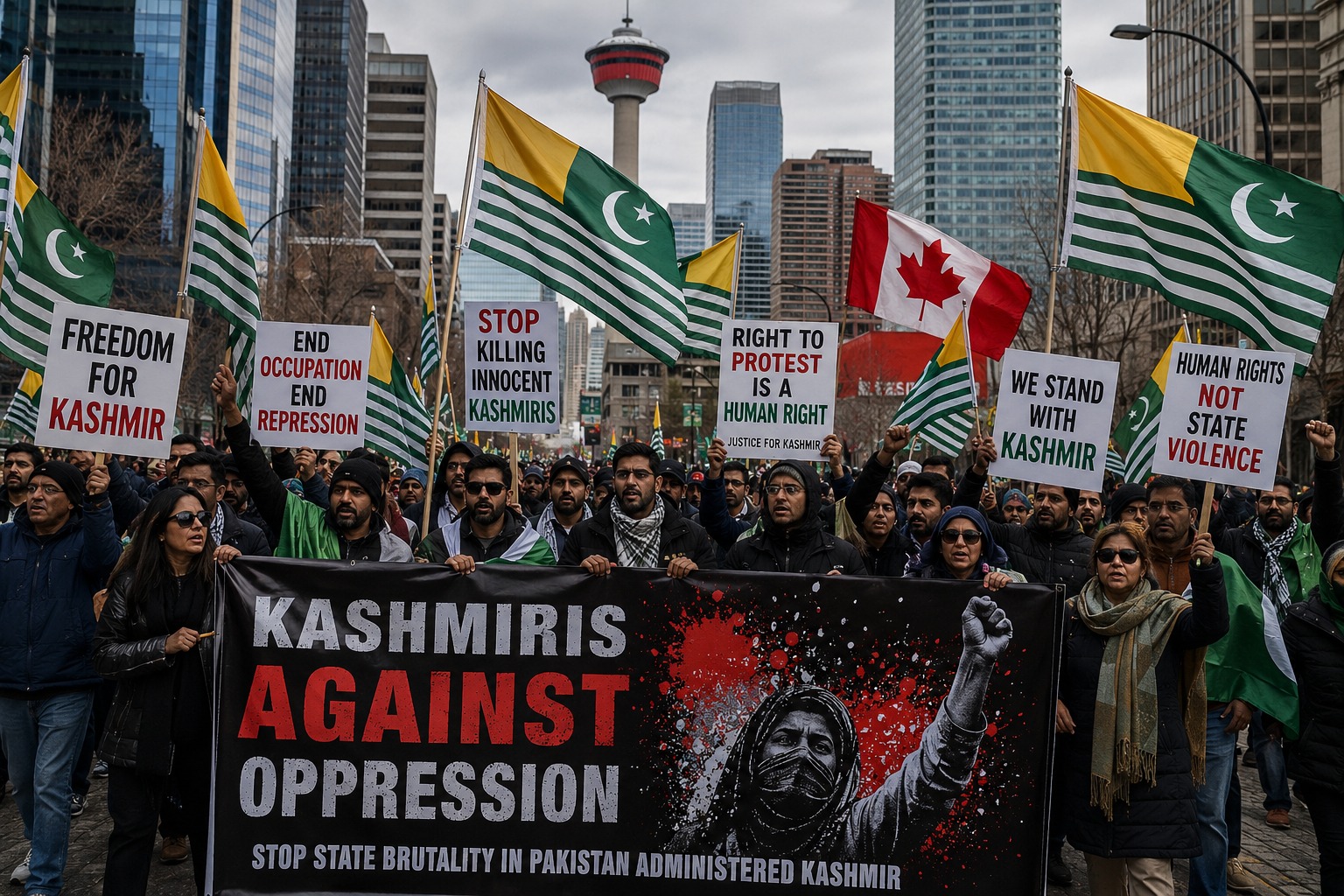
CALGARY, Alberta The streets of downtown Calgary became the center of a powerful political demonstration as members of the Kashmiri diaspora gathered to express their anger and frustration over what they describe as the continued use of force, intimidation, and political suppression against civilians in Pakistan-administered Kashmir. The protest reflected not only solidarity with affected communities thousands of kilometers away but also a growing sense of frustration among overseas Kashmiris who believe their voices have long been ignored.
Carrying Kashmiri flags, banners, and placards demanding justice, protesters marched through the city center, condemning what they characterized as a pattern of excessive state intervention and heavy-handed governance in the region. The demonstration was marked by passionate speeches, emotional testimonies, and calls for accountability from both civilian authorities and powerful state institutions.
For many participants, the issue extends beyond a single incident or recent confrontation. Speakers argued that the unrest witnessed in Pakistan-administered Kashmir is the result of years of accumulated grievances relating to governance, political representation, economic inequality, and the perceived marginalization of local voices in decision-making processes. According to demonstrators, the recent crackdown has deepened feelings of alienation and mistrust among ordinary Kashmiris.
Community leaders addressing the gathering stated that the use of force against protesters has further damaged confidence in institutions that are expected to protect citizens rather than confront them. Several speakers criticized what they described as a recurring tendency to treat public dissent as a security issue rather than a democratic expression of public concern.
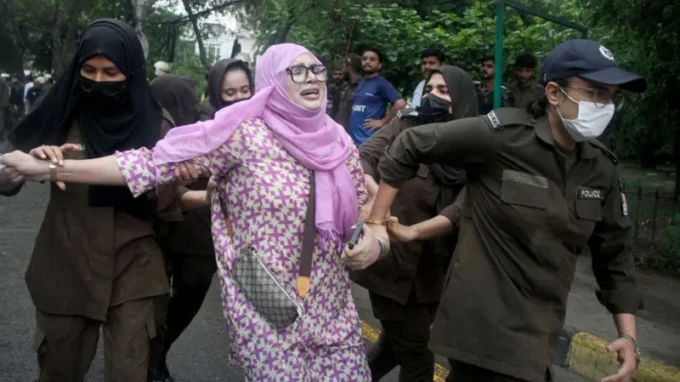
The Calgary protest was notable for the intensity of emotions displayed by participants. Many expressed sorrow over reports of casualties and injuries resulting from confrontations between protesters and security forces. Others voiced concern over arrests, restrictions, and measures that they believe have limited the ability of local residents to organize and communicate their grievances effectively.
A recurring theme throughout the rally was the belief that the people of Kashmir deserve greater respect for their political aspirations and civil rights. Protesters argued that communities should be able to raise concerns about governance, economic conditions, and public policy without fear of retaliation. They maintained that sustainable peace and stability can only emerge through dialogue, transparency, and meaningful engagement with local populations.
The demonstration also highlighted the increasingly active role of the Kashmiri diaspora in international advocacy. For many attendees, living in Canada has strengthened their commitment to democratic values, freedom of expression, and peaceful political participation. They argued that these principles should apply equally to Kashmiris regardless of where they reside.
Several participants emphasized that overseas communities have become an important voice for issues that often receive limited international attention. Through protests, public awareness campaigns, and engagement with elected representatives, diaspora groups seek to ensure that developments in Kashmir remain part of broader discussions about human rights, governance, and regional stability.
Critics at the Calgary gathering directed much of their frustration toward both political authorities and influential state institutions. They argued that genuine solutions cannot be achieved through coercive measures and that repeated reliance on force risks widening the divide between citizens and those who govern them. According to speakers, every attempt to suppress public anger without addressing its root causes merely postpones rather than resolves underlying tensions.
The protest also reflected broader concerns regarding accountability. Demonstrators repeatedly called for transparent investigations into incidents involving civilian casualties and allegations of excessive force. They argued that public confidence can only be restored when institutions are willing to examine their actions openly and ensure that justice is applied fairly and impartially.
Beyond political criticism, the gathering served as a reminder of the emotional bonds that connect diaspora communities to their homeland. Many participants spoke about relatives, friends, and communities directly affected by the unrest. For them, the crisis is not an abstract political issue but a deeply personal matter involving the safety and well-being of people they know and care about.
Observers noted that the demonstration remained peaceful despite the strong emotions expressed throughout the event. Organizers encouraged participants to focus on constructive advocacy and democratic engagement, emphasizing that their objective was to raise awareness rather than promote confrontation. The rally concluded with calls for continued activism, community unity, and international attention to developments in the region.
Political analysts suggest that the strong reaction from overseas Kashmiris reflects a growing expectation that governments and institutions must be more responsive to public concerns. In an era of global connectivity, events occurring in one part of the world can quickly mobilize communities across continents. The Calgary protest demonstrated how diaspora populations are increasingly using democratic platforms to influence public discourse and draw attention to issues affecting their regions of origin.
For many protesters, the central message was clear: lasting stability cannot be achieved through force alone. They argued that peace requires trust, accountability, and respect for the voices of ordinary citizens. Without meaningful dialogue and genuine efforts to address longstanding grievances, they warned that frustration and resentment are likely to persist.
As the demonstration concluded and participants dispersed through Calgary’s downtown streets, the sense of determination remained evident. Community members pledged to continue advocating for what they describe as justice, transparency, and respect for the democratic rights of Kashmiris. Their message was that the concerns emerging from Kashmir cannot simply be dismissed as temporary unrest but must be understood as part of a broader demand for dignity, representation, and accountable governance.
The Calgary protest ultimately underscored the depth of feeling within the Kashmiri diaspora and highlighted the continuing significance of Kashmir as an issue that resonates far beyond South Asia. Whether their calls lead to meaningful political change remains uncertain, but the demonstration sent a clear signal that many overseas Kashmiris are unwilling to remain silent when they believe fundamental rights and freedoms are under threat.
Post Disclaimer
The views and content presented in this article, news report, or video are solely those of the respective author or creator and do not necessarily reflect the official policy or position of BW Times Digital Online E-Paper.








Leave a comment