
















The Commonwealth Games are among the world’s oldest and most prestigious international multi-sport competitions, bringing together athletes from across the Commonwealth of Nations in a celebration of excellence, friendship and cultural diversity. Since the inaugural Games in 1930, the event has grown from a modest gathering of 11 nations into a global sporting festival featuring athletes from 74 Commonwealth Games Associations representing every inhabited continent.
The first Commonwealth Games, originally known as the British Empire Games, were held in Hamilton, Ontario, Canada, from 16 to 23 August 1930. Eleven nations participated: Australia, Bermuda, British Guiana (now Guyana), Canada, England, Northern Ireland, Newfoundland, New Zealand, Scotland, South Africa and Wales. Nearly 400 athletes competed in six sports: athletics, boxing, lawn bowls, rowing, swimming and diving, and wrestling. The success of the inaugural event established a tradition that continues today.
The Games were not held in 1942 and 1946 because of the Second World War. They resumed in Auckland, New Zealand, in 1950 and have since been staged every four years.
As the British Empire evolved into the modern Commonwealth, the Games also changed their name. They were known as the British Empire Games from 1930 to 1950, the British Empire and Commonwealth Games from 1954 to 1966, the British Commonwealth Games in 1970 and 1974, and have officially been called the Commonwealth Games since 1978.
Today, the Commonwealth consists of 56 independent member countries. However, the Games include 74 Commonwealth Games Associations (CGAs) because several overseas territories and dependencies compete separately. England, Scotland, Wales and Northern Ireland each field their own teams, while territories such as Bermuda, the Cayman Islands, Jersey, Guernsey, the Isle of Man, the Falkland Islands, Gibraltar, the Cook Islands and others also compete independently. Gabon and Togo, which joined the Commonwealth in 2022, are making their Commonwealth Games debut in Glasgow 2026.
Over nearly one hundred years, the Commonwealth Games have visited cities across four continents. Canada hosted the inaugural Games in Hamilton in 1930, followed by London (1934), Sydney (1938), Auckland (1950), Vancouver (1954), Cardiff (1958), Perth (1962), Kingston (1966), Edinburgh (1970), Christchurch (1974), Edmonton (1978), Brisbane (1982), Edinburgh (1986), Auckland (1990), Victoria (1994), Kuala Lumpur (1998), Manchester (2002), Melbourne (2006), Delhi (2010), Glasgow (2014), Gold Coast (2018), Birmingham (2022) and Glasgow again in 2026. Glasgow has become only the third city in Commonwealth Games history to host the event twice.
Australia is the most successful nation in Commonwealth Games history, having won more medals than any other country. England ranks second in the all-time medal standings, followed by Canada, New Zealand, India and Scotland. Australian athletes have traditionally dominated swimming, cycling and athletics, while England has excelled across a broad range of sports including gymnastics, netball, athletics, swimming and boxing.
Canada occupies a unique place in Commonwealth Games history. Besides hosting the inaugural Games, Canada has staged the event five times—Hamilton (1930), Vancouver (1954), Edmonton (1978), Victoria (1994) and will remain one of the Games’ most successful nations. Canadian athletes have earned hundreds of medals in swimming, athletics, wrestling, cycling, gymnastics and diving.
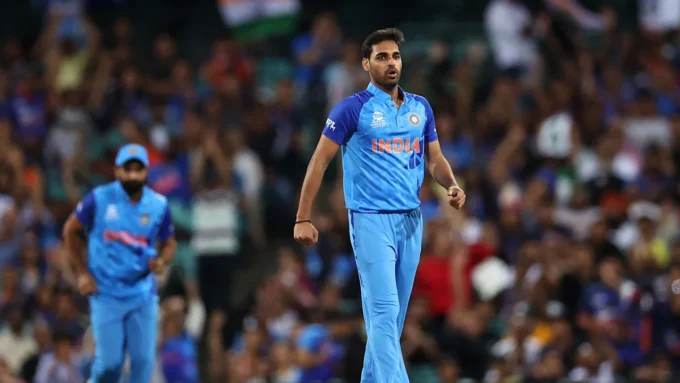
India has become one of the strongest Commonwealth sporting nations during the past two decades. Since hosting the 2010 Commonwealth Games in New Delhi, India has consistently performed among the leading countries in wrestling, boxing, badminton, weightlifting, shooting, table tennis and athletics. Indian athletes have become regular contenders for gold medals, highlighting the country’s growing investment in elite sport.
Only six teams have participated in every Commonwealth Games since 1930: Australia, Canada, England, New Zealand, Scotland and Wales. Their uninterrupted participation reflects the enduring importance of the Games within the Commonwealth sporting movement.
The Commonwealth Games are also recognised as pioneers in sporting inclusion. They were among the first major international multi-sport events to fully integrate Para sport into the main competition programme, ensuring athletes with disabilities compete for medals alongside able-bodied athletes. The Games have also achieved near gender parity, with almost equal numbers of medal events for men and women.
The Glasgow 2026 Commonwealth Games, officially the XXIII Commonwealth Games, are taking place from 23 July to 2 August 2026. Around 3,000 athletes from 74 Commonwealth Games Associations are competing in a streamlined programme featuring 10 sports and more than 200 medal events. The Games were relocated to Glasgow after the Australian state of Victoria withdrew as host because of rising costs.
As competition continues in Glasgow, the medal table changes daily. Australia, England, Canada, India, Scotland and New Zealand are once again among the leading contenders, while athletes from smaller Commonwealth nations continue to produce inspiring performances and historic victories. Current medal standings remain provisional until the Games conclude.
Beyond medals and records, the Commonwealth Games remain a powerful symbol of international friendship, mutual respect and sporting excellence. They provide a platform where established champions compete alongside emerging athletes, where different cultures meet in peaceful competition, and where sport strengthens the bonds among Commonwealth nations and territories.
Approaching its centenary in 2030, the Commonwealth Games continue to uphold the values of humanity, equality and fair play. From the 11 participating nations in Hamilton in 1930 to the 74 teams competing in Glasgow in 2026, the Games have become one of the world’s most enduring sporting traditions, inspiring generations of athletes and uniting millions of spectators across the Commonwealth.
Post Disclaimer
The views and content presented in this article, news report, or video are solely those of the respective author or creator and do not necessarily reflect the official policy or position of BW Times Digital Online E-Paper.







Leave a comment