















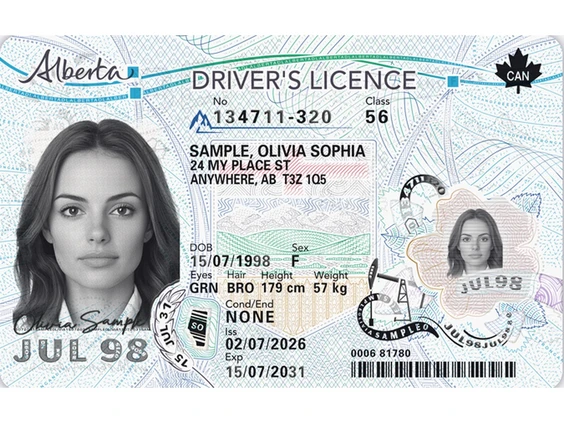
EDMONTON — A proposal by the Alberta government to include citizenship markers on provincial identification cards has sparked criticism from some residents who argue the measure could undermine privacy rights and make discrimination against newcomers easier.
In a letter published by the Edmonton Journal, Edmonton resident K.B. Goertzen questioned the need for citizenship information on provincial identification documents, arguing that Albertans already have access to passports when proof of citizenship is required.
The writer expressed concern that displaying citizenship status on everyday identification could force individuals, including permanent and temporary residents, to reveal personal information unnecessarily.
“People in Alberta, whether they are citizens, permanent residents, or temporary residents, have a right to privacy,” the letter stated, suggesting that immigration status should only be disclosed when legally required.
The letter also challenged government claims that countries such as Italy, Spain, Japan, and Brazil include citizenship markers on driver’s licences, calling for independent verification of those assertions.
The debate comes amid broader discussions about provincial autonomy and Alberta’s relationship with the federal government.
Another letter questioned Premier Danielle Smith’s position on Alberta sovereignty, arguing that her vision of a more autonomous Alberta remains unclear to many residents.
Edmonton resident Rob Arrand expressed confusion over what a “sovereign Alberta within a united Canada” would mean in practice and questioned the value of spending an estimated $100 million on referendums related to provincial-federal relations.
Others raised concerns about municipal spending and taxation policies. Sherwood Park resident Charles Williams questioned who paid for temporary grass turf installed at Commonwealth Stadium for a recent exhibition soccer match and what happened to the turf afterward.
Meanwhile, Edmonton resident P.J. Cotterill criticized proposed paid parking fees at attractions such as the Muttart Conservatory, Fort Edmonton Park, and the Edmonton Valley Zoo, arguing that the costs would disproportionately affect young families already paying admission fees.
Housing and urban development also emerged as a major concern among letter writers. Christine Prokop called for greater community consultation on neighbourhood redevelopment and urged city council to reconsider planning policies that allow increased housing density in established communities.
Rather than expanding development into mature neighbourhoods, Prokop suggested focusing growth on major redevelopment opportunities, including Blatchford, the former Northlands site, The Quarters, and downtown Edmonton.
Social disorder, homelessness, and addiction were also highlighted as pressing concerns. Jason Cook pointed to the more than 53,000 Canadians who have died from opioid-related causes over the past decade and supported calls for a coordinated national strategy on mental health, addictions, homelessness, and housing.
Cook argued that municipalities are increasingly left to manage the consequences of these crises without the authority or resources needed to address their root causes.
The collection of letters reflects the wide range of issues currently shaping public debate in Alberta, from privacy rights and provincial identity to housing, affordability, urban planning, and the ongoing opioid crisis. While opinions differ sharply, contributors agreed on one point: residents want a stronger voice in decisions that affect their communities and their future.
Courtesy: edmontonjournal
Post Disclaimer
The views and content presented in this article, news report, or video are solely those of the respective author or creator and do not necessarily reflect the official policy or position of BW Times Digital Online E-Paper.






Leave a comment