


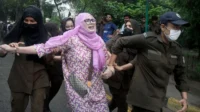








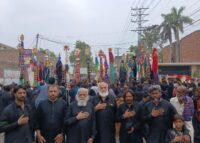



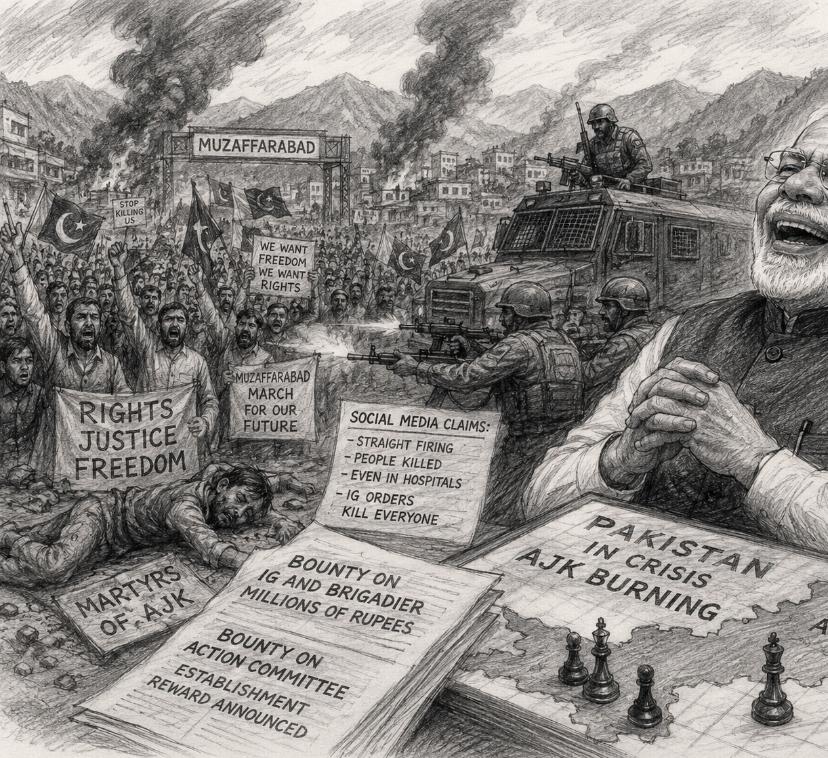
The streets of Azad Jammu and Kashmir are echoing with rage, grief and defiance as thousands of people from across the region move toward Muzaffarabad in what many observers describe as one of the most significant public mobilizations in recent memory. What began as political dissent has evolved into a wider confrontation that is shaking the foundations of public confidence and exposing a dangerous divide between the people and those who govern them.
Across towns, villages and cities, a growing number of Kashmiris say they no longer believe their voices are being heard through conventional political channels. The anger visible on the streets today is not the result of a single incident. It is the accumulation of years of frustration, distrust and resentment that many feel has reached a breaking point.
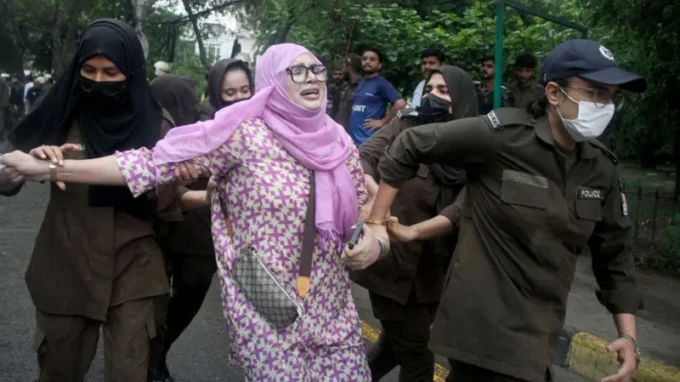
The latest unrest has plunged the region into a state of uncertainty. Families mourn loved ones lost during clashes, communities remain on edge and emotions continue to intensify with every passing day. Protesters insist that they are standing up for justice, accountability and political rights. Authorities maintain that security measures are necessary to preserve order. Between these competing narratives lies a population exhausted by conflict and desperate for answers.
What is undeniable is that the crisis has transformed the political landscape. Images circulating online show massive crowds, emotional gatherings and a population refusing to remain silent. Social media has become a powerful platform for Kashmiris determined to ensure that their grievances are seen and heard beyond the borders of the region.
Critics argue that heavy handed responses to public dissent risk deepening the crisis rather than resolving it. History has repeatedly shown that public anger cannot be permanently contained through force. When citizens feel ignored, frustration often grows stronger, creating an even wider gap between rulers and the ruled.
The events unfolding today have also ignited outrage among the Kashmiri diaspora. From the United Kingdom to North America, overseas Kashmiris are expressing solidarity with protesters and demanding greater accountability. Many believe the situation represents not merely a political dispute but a profound challenge to democratic principles and civil liberties.
The atmosphere in AJK is increasingly defined by mistrust. Protesters accuse the authorities of ignoring legitimate concerns, while officials warn against instability and disorder. As accusations and counteraccusations multiply, the possibility of constructive dialogue appears increasingly distant.
Perhaps the most troubling aspect of the current crisis is the growing sense among many ordinary citizens that institutions meant to protect public confidence are themselves becoming subjects of public criticism. Whether fair or unfair, that perception is spreading rapidly and has become a powerful force driving the protests.
Political analysts warn that every casualty, every confrontation and every new controversy risks pushing the region further into turmoil. The longer the crisis continues without a credible path toward reconciliation, the more difficult it may become to restore trust.
The people filling the roads toward Muzaffarabad are not merely participants in a protest movement. They represent a population demanding recognition, accountability and a meaningful response to their concerns. Their message is being delivered not through political speeches alone but through unprecedented public mobilization.
AJK now stands at a crossroads. One path leads toward dialogue, reform and renewed public confidence. The other leads toward deeper polarization, prolonged instability and a further erosion of trust. The decisions taken in the coming days will shape the region’s future for years to come.
For many Kashmiris, this moment is no longer simply about politics. It has become a test of whether public voices matter, whether grievances will be addressed and whether a peaceful resolution can emerge from a crisis that has already left deep scars on society.
As thousands continue their march and tensions remain high, one reality is becoming impossible to ignore. A region consumed by anger cannot find peace through confrontation alone. The demand being heard across AJK is not merely for order, but for justice, accountability and a future in which the voices of the people cannot be ignored.
Post Disclaimer
The views and content presented in this article, news report, or video are solely those of the respective author or creator and do not necessarily reflect the official policy or position of BW Times Digital Online E-Paper.








Leave a comment