

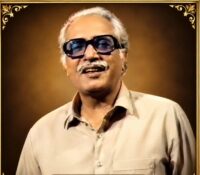







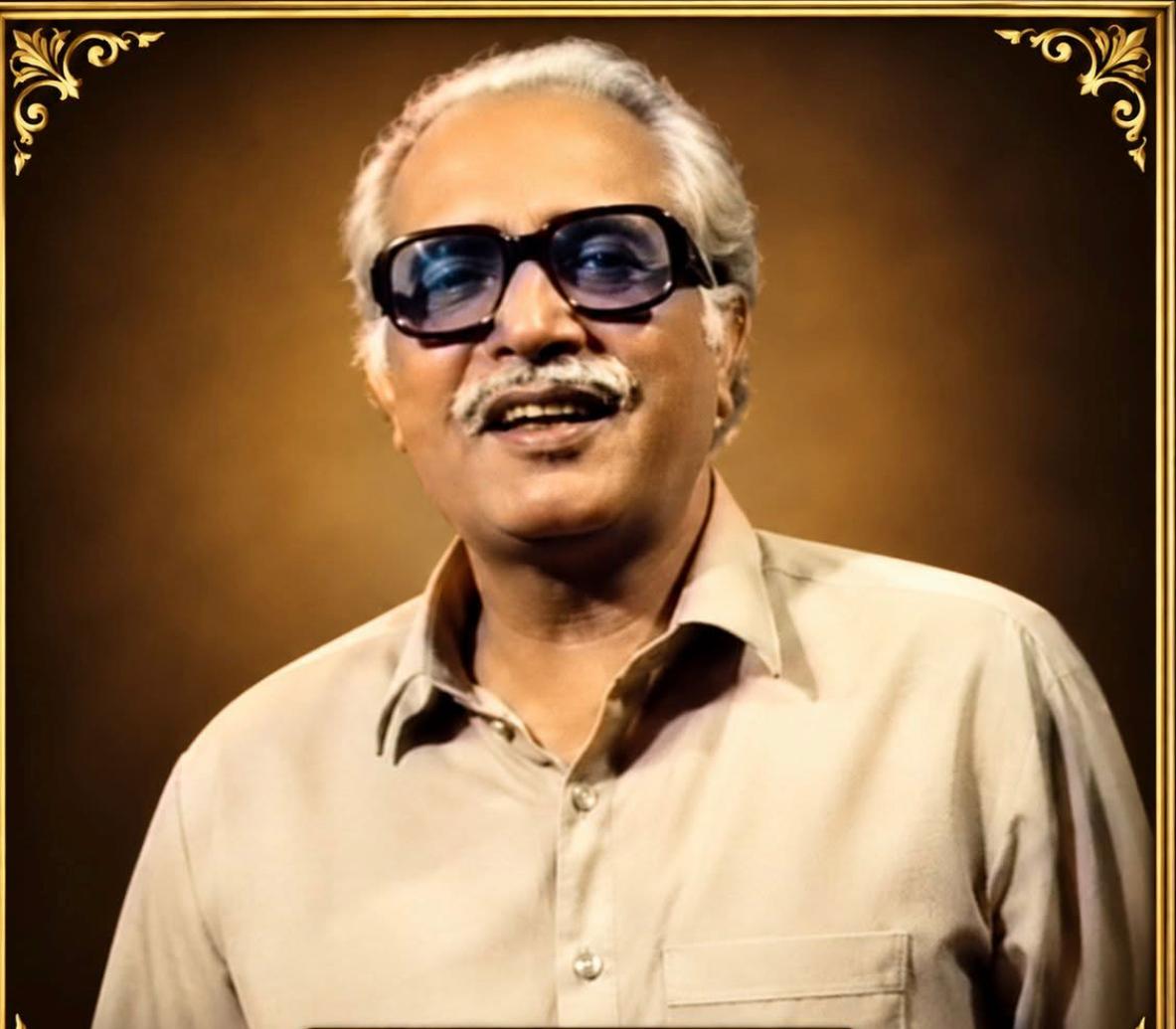
PESHAWAR: The cultural and literary history of Peshawar is closely linked with personalities who devoted their lives to preserving the language, traditions, history and collective memory of the region. Among the most distinguished of these figures was Akhundzada Mukhtar Ali Nayyer, a poet, writer, researcher, linguist, historian, lexicographer, critic, playwright and television scriptwriter who earned lasting recognition as the “Father of Hindko” or “Baba-e-Hindko.”
Born on August 16, 1935, in the historic Kohati Gate area of Peshawar, Mukhtar Ali Nayyer belonged to a family with a strong intellectual and literary tradition. His father, Akhundzada Qamar Ali, was known as a dramatist and journalist of his time and was reportedly honoured by the Viceroy of India for his literary services.
His family traced its roots to the Akhun Khel tradition, with family accounts associating his ancestors with Diwana Baba in Buner. The family is said to have migrated to Peshawar around 1814, eventually becoming part of the city’s rich cultural and literary landscape.
Mukhtar Ali Nayyer’s deepest literary and intellectual connection was with Peshawari Hindko. He regarded the language not merely as a means of everyday communication but as an important repository of the history, culture, folklore and identity of the people of Peshawar.
He was also familiar with Urdu, Persian and Pashto, which enabled him to work across several linguistic and literary traditions. His scholarship brought together language, history, folklore and the social life of old Peshawar.
A Teacher Who Became a Scholar
Nayyer received his early education at Edwardes High School in Peshawar. Available biographical material does not provide a complete and independently verified record of all his higher educational qualifications, and therefore it would be inappropriate to attribute specific degrees or institutions to him without stronger documentation.
He entered the teaching profession in 1962 and remained associated with education for approximately 24 years before retiring in 1986.
Teaching, however, was only one dimension of his career. His intellectual interests extended into poetry, prose, journalism, research, history, linguistics, grammar, folklore, literary criticism, drama and television writing.
His Mission to Give Hindko an Academic Identity
Mukhtar Ali Nayyer’s greatest contribution was arguably his effort to establish Hindko as a language worthy of systematic study and documentation.
He researched its grammar, vocabulary, idioms, folklore, oral traditions, classical poetry, prose and historical development. He also worked on the question of a suitable writing system for Peshawari Hindko.
Research on Hindko records that Nayyer produced an important grammar work, “Hindko Qawaid,” which became part of the early scholarly literature on the language.
His work demonstrated his belief that a language could not survive simply through spoken tradition. It needed books, dictionaries, grammar, literary criticism, documented history and a written record of its folklore.
For him, the preservation of Hindko also meant preserving the cultural memory of Peshawar.
A Major Literary Legacy
Among the works associated with Mukhtar Ali Nayyer are:
Hindko Qawaid
Tarikh-i-Hindko
Hindko Matalaan
Tarikh-i-Zaban-o-Adab-i-Hindko
Hindko Lok Kahaniyan
Azeem Gandhara aur Hindko Zaban
Hindko Nasr Di Kahani
Tarikh-i-Azadari Peshawar
His book “Hindko Lok Kahaniyan” remains particularly significant because it preserved traditional stories that had historically been transmitted from generation to generation through oral tradition. The Gandhara Hindko Board has subsequently published English translations and adaptations of stories from the book, including the well-known folktale “Bibi Jan aka Beejo.”
His historical work “Tarikh-i-Azadari Peshawar” was another important contribution, documenting aspects of the history and religious traditions of the old city.
His Contribution to PTV Peshawar
Mukhtar Ali Nayyer’s literary influence extended beyond books and newspapers and reached a much wider audience through Pakistan Television’s Peshawar Centre.
One of his best-known television works was the Hindko comedy programme and drama “Dekhda Janda Reh.” PTV’s own social-media archive identifies the programme as a PTV Peshawar production and credits Mukhtar Ali Nayyer as writer. Other archival listings identify Naseem Jaan as its director and place the programme in the 1980s.
The programme became an important part of Peshawar’s Hindko television culture. It combined humour, satire and social observation while giving Hindko-speaking audiences a programme in their own language.
The significance of “Dekhda Janda Reh” went beyond entertainment. It demonstrated that Hindko could effectively carry comedy, social commentary, characterisation and television drama. It also provided an important platform for performers associated with the Peshawar television scene.
Among those who gained particular recognition through the programme was celebrated actor Iftikhar Qaiser, who became widely known for his work in Hindko television comedy. Contemporary reporting has specifically noted that “Dekh Da Janda Ray” was a Hindko comedy series scripted by Mukhtar Ali Nayyer and that Qaiser’s performance in the programme helped establish his reputation.
“Hun Mein Bolaan Ke Na Bolaan”
Another memorable element associated with Nayyer’s television work was “Hun Mein Bolaan Ke Na Bolaan” — roughly, “Should I Speak Now or Should I Remain Silent?”
The segment became closely associated with Iftikhar Qaiser and his comic performance. According to reporting on Qaiser’s career, the Hindko segment was later adapted for national Urdu television as “Ab Main Boloon Ke Na Boloon.”
This transition from a regional Hindko television format to an Urdu national television presentation illustrates the broader influence of the creative work emerging from PTV Peshawar.
Bringing Hindko Folklore to Television
Nayyer was also involved in efforts to transform Hindko folk stories into dramatic television presentations. Rather than allowing these stories to remain confined to oral tradition, he helped bring them into the visual medium.
Later recollections of Peshawar’s literary and television circles have described how Hindko folklore was presented dramatically on television, helping introduce traditional stories and characters to a broader audience.
This was important at a time when television was becoming one of the most influential cultural institutions in Pakistan. For Nayyer, television was not simply entertainment; it could also serve as a means of preserving language and cultural heritage.
Editor of “Hindko Zaban”
Nayyer’s commitment to Hindko journalism was equally significant.
The monthly literary magazine “Hindko Zaban” was launched in Peshawar on March 23, 1973, with Mukhtar Ali Nayyer serving as its editor. The publication provided a platform for Hindko poets, writers and researchers.
The magazine initially continued until 1977 and was later revived in 1989. Its role was important at a time when Hindko literature was seeking a stronger institutional and publishing foundation.
A Historian of Old Peshawar
Nayyer’s interests extended far beyond language.
He was deeply fascinated by the old city of Peshawar — its streets, neighbourhoods, markets, customs, religious traditions, writers, poets, folk stories and social life.
His approach to history was closely connected with ordinary people. He understood that the history of a city does not exist only in official records. It also survives in the language spoken by its people, the stories told by its elders, the names of its streets, its proverbs, its customs and its collective memory.
This philosophy became a defining characteristic of his scholarship.
Preserving the Oral Tradition
One of Nayyer’s most valuable contributions was his effort to document material that might otherwise have disappeared.
Folk stories, idioms, proverbs, legends and popular poetry are often transmitted orally and can easily disappear when generations stop passing them on. By collecting and publishing such material, Nayyer helped transform oral tradition into a written cultural record.
His approach also reflected a broader understanding of linguistics: a language cannot be separated from the people and culture that speak it.
Recognition as “Baba-e-Hindko”
Nayyer’s sustained contribution to Hindko literature and scholarship earned him widespread recognition as Baba-e-Hindko, or the Father of Hindko.
The title reflected his role in developing Hindko scholarship and promoting the language through books, research, journalism and television.
His contribution to Hindko grammar has also been recognised in later academic discussions of the language.
National Recognition
The Government of Pakistan honoured Mukhtar Ali Nayyer with the Tamgha-i-Imtiaz in 1992 in recognition of his literary and intellectual services.
The award represented national recognition of a career devoted not only to literature but also to the preservation of a regional language and cultural heritage.
His Death and Continuing Legacy
Mukhtar Ali Nayyer died on June 12, 2009, at the age of 74. His death marked the loss of one of Peshawar’s prominent literary and linguistic figures.
His legacy, however, continued through his books, research, television scripts, folklore collections and the generations of writers and researchers influenced by his work.
His name has also remained part of the literary landscape of Khyber Pakhtunkhwa. In 2022, an award named after Mukhtar Ali Nayyer was among the literary awards announced by the Karwan-i-Hawa Literary Forum, reflecting the continuing recognition of his contribution to literature.
An Enduring Cultural Legacy
Mukhtar Ali Nayyer’s importance lies not simply in the number of books he wrote or television programmes he contributed to. His real achievement was his understanding that language is the memory of a people.
He worked to preserve the language of Peshawar, but in doing so he also preserved its stories, humour, folklore, history, customs and social character.
Through books such as Hindko Qawaid and Hindko Lok Kahaniyan, through literary journalism and through PTV Peshawar programmes such as Dekhda Janda Reh and the celebrated Hun Mein Bolaan Ke Na Bolaan segment, he brought Hindko into spaces where regional languages were not always given the recognition they deserved.
His life’s work helped establish Hindko as a subject of literary and academic inquiry while demonstrating its power as a language of poetry, humour, drama, history and cultural expression.
For Peshawar, Mukhtar Ali Nayyer was more than a writer. He was a chronicler of its cultural soul. For Hindko, he was one of its most determined advocates and scholars.
That is why the title “Baba-e-Hindko” continues to be associated with his name — a recognition of a lifetime spent documenting, defending and promoting one of the region’s important linguistic and cultural traditions.
Post Disclaimer
The views and content presented in this article, news report, or video are solely those of the respective author or creator and do not necessarily reflect the official policy or position of BW Times Digital Online E-Paper.







Leave a comment