















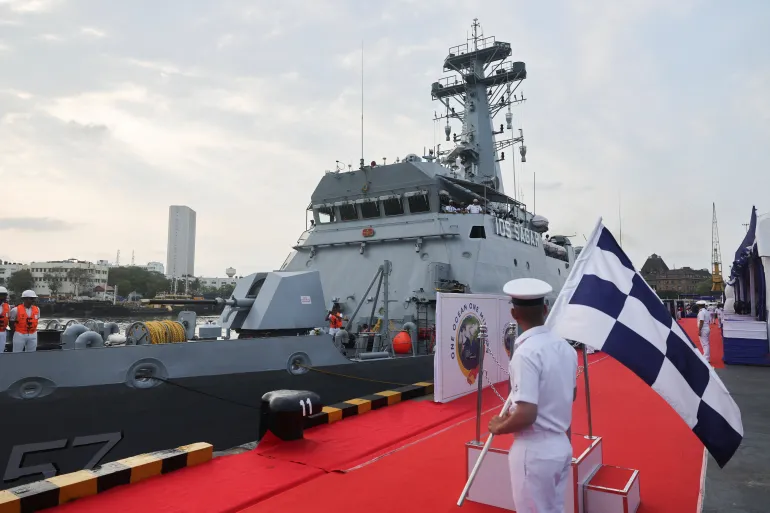
India has summoned Pakistan’s senior diplomatic representative in New Delhi following a collision involving naval vessels from the two countries in the Arabian Sea, in an incident that has added fresh tension to relations between the two nuclear armed neighbours.
India’s Ministry of External Affairs said Wednesday that a Pakistani naval vessel collided with an Indian Navy ship in international waters on Tuesday. New Delhi subsequently lodged a formal diplomatic protest with Pakistan over the incident.
The protest was delivered to Pakistan’s chargé d’affaires at the Pakistan High Commission in New Delhi. Indian officials described the conduct that led to the collision as unacceptable and unprofessional and called on Pakistan to ensure that its military forces comply with existing bilateral arrangements.
According to the Indian government, the incident involved a breach of a 1991 agreement between India and Pakistan governing the conduct of naval vessels and submarines in international waters.
The agreement requires naval ships and submarines belonging to the two countries to maintain a separation of at least three nautical miles while operating in international waters. India said the Pakistani vessel’s actions were inconsistent with those provisions.
Indian officials instructed Pakistan’s diplomatic representative to convey the protest to Islamabad and stressed the importance of ensuring that military units respect bilateral agreements designed to reduce the possibility of dangerous encounters.
India also instructed its chargé d’affaires in Islamabad to raise the matter directly with Pakistan’s Foreign Ministry.
Pakistan had not issued an immediate public response to the Indian protest at the time of reporting.
The naval incident comes at a particularly sensitive point in relations between the two countries. India and Pakistan remain without full ambassadorial representation in each other’s capitals, reflecting the continued deterioration in diplomatic ties over the disputed Kashmir issue.
The two countries have maintained limited diplomatic relations since 2019, when India revoked the special constitutional status previously granted to Jammu and Kashmir. Pakistan strongly opposed the decision and subsequently downgraded its diplomatic relationship with New Delhi.
The latest naval confrontation also marks the first reported direct military tension between the two countries since a four day conflict last year.
That confrontation represented one of the most serious military escalations between India and Pakistan in recent years. The two sides eventually moved away from direct fighting, but significant political and security tensions have remained.
The Arabian Sea has strategic importance for both countries. Their naval forces operate in waters that are vital for commercial shipping, energy transportation and regional security. Any incident involving military vessels therefore carries the potential for wider diplomatic consequences, particularly when relations are already strained.
The 1991 agreement cited by India was designed to establish basic rules for naval operations and reduce the possibility of accidents or misunderstandings at sea. Maintaining distance between military vessels is especially important in international waters, where ships from neighbouring countries may operate in relatively close proximity.
India’s decision to formally summon Pakistan’s diplomatic representative indicates that New Delhi considers the incident serious enough to warrant an official response.
At the same time, there was no immediate indication that the collision had triggered a broader military confrontation. The diplomatic protest focused on the alleged violation of the bilateral naval agreement and the need to prevent similar incidents in the future.
The absence of an immediate Pakistani response leaves questions about how Islamabad will characterize the incident and whether it will dispute India’s account of what happened at sea.
India and Pakistan have a long history of military confrontation. Since becoming independent from British rule in 1947, the two countries have fought three major wars. Two of those conflicts were directly connected to the dispute over Kashmir, which remains one of the central sources of hostility between them.
The Kashmir dispute has continued to shape relations between the two nuclear armed states for decades. Military confrontations, diplomatic crises and periods of relative calm have repeatedly alternated, making incidents involving their armed forces particularly sensitive.
The latest collision comes against that wider background.
For now, the dispute remains focused on the circumstances surrounding the naval encounter and India’s claim that Pakistan violated the separation requirements contained in the 1991 agreement.
India has called for military units from both countries to respect existing agreements and avoid conduct that could result in another dangerous incident.
Whether the episode remains an isolated naval accident or develops into a wider diplomatic dispute will depend partly on Pakistan’s response and on the actions of both countries’ military and diplomatic authorities in the days ahead.
With relations already strained and direct communication between the two governments limited, even a single encounter at sea can carry significance well beyond the immediate incident.
The latest episode therefore highlights the continuing fragility of India Pakistan relations and the importance of established military protocols intended to prevent routine encounters between their armed forces from becoming larger security crises.
Courtesy: aljazeera
Post Disclaimer
The views and content presented in this article, news report, or video are solely those of the respective author or creator and do not necessarily reflect the official policy or position of BW Times Digital Online E-Paper.









Leave a comment