











PESHAWAR, Pakistan: Pakistan’s escalating confrontation with former prime minister Imran Khan’s Pakistan Tehreek-e-Insaf (PTI) has entered a new and potentially volatile phase after emergency measures were imposed in Khyber Pakhtunkhwa, the province that has remained the party’s political stronghold for years.
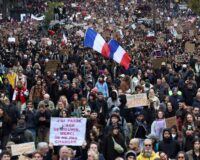
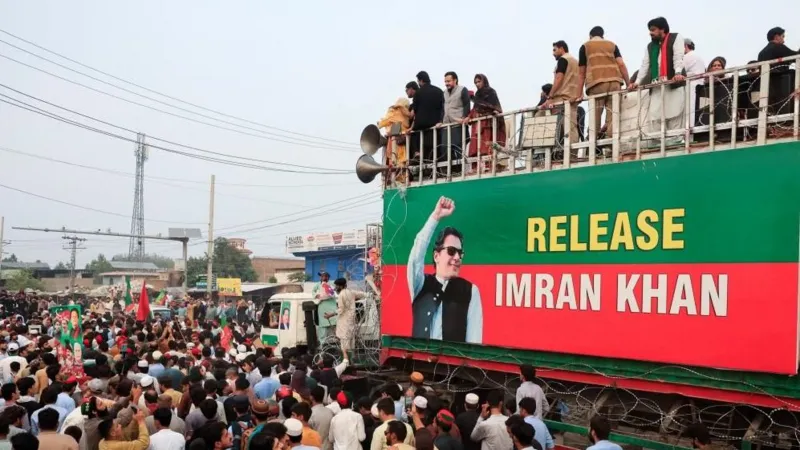
Roads were blocked with shipping containers, internet services were disrupted, schools were temporarily closed and security forces were deployed as authorities moved to contain protests demanding Khan’s release. The provincial government’s suspension has further intensified the political dispute, raising concerns that measures intended to restore order could instead fuel greater instability.
The federal government defended its decision by citing security threats and arguing that emergency measures were necessary to protect residents from terrorism. Federal Information Minister Attaullah Tarar accused the PTI-led provincial administration of having links with militant groups, an allegation he said would be supported with evidence. However, no supporting evidence had been publicly presented in his initial remarks.
Within days, some restrictions began to ease. Schools reopened in Peshawar and other parts of the province, while internet services were restored. Nevertheless, reports of a continuing crackdown on PTI activists and leaders suggested that the government remained determined to prevent further demonstrations.
Police did not publicly confirm the extent of any arrests, while several PTI figures reportedly went into hiding amid fears of detention. On Tuesday, dozens of supporters took to the streets in Bara, in Khyber district, the hometown of provincial Chief Minister Sohail Afridi. Reports of tear gas being used in the area added to tensions.
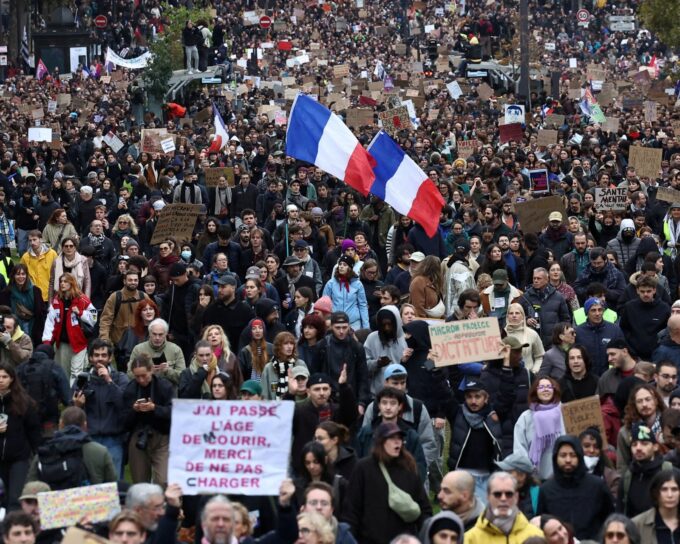
The emergency measures came after days of demonstrations in which thousands of PTI supporters marched through Khyber Pakhtunkhwa, demanding the release of their imprisoned leader. The timing has prompted questions about whether the government’s security justification fully explains its response to the protests.
Critics and political observers have questioned the connection between the demonstrations and the terrorism threat cited by federal officials. Some believe the decision reflects a broader determination to weaken an opposition party that continues to command significant public support in the province.
The PTI has governed Khyber Pakhtunkhwa for much of the past 13 years, making the province central to its political identity and organisational strength. The suspension of its provincial administration therefore represents more than a local administrative dispute. It strikes at one of the party’s most important centres of political power.
The protests were led by Chief Minister Afridi, whose whereabouts became a subject of conflicting claims. PTI representatives said he had been arrested, while the federal government maintained that he was in protective custody. The uncertainty surrounding his status has further complicated an already tense situation.
The latest developments followed earlier actions against Khan’s family and supporters. Three of his sisters were arrested in September on allegations that included mobilising political supporters. Their continued detention has added to accusations by the party that the authorities are using legal and security measures to restrict its political activities.
Khan himself has been imprisoned since August 2023 and has faced several corruption convictions, which he maintains are politically motivated. His removal from power followed a breakdown in relations with Pakistan’s powerful military establishment, a rift widely viewed as a major factor in the country’s continuing political turmoil.
Access to the former prime minister has also become a source of concern. His family and legal representatives have had limited opportunities to meet him over the past year, while questions about his health have intensified pressure on the authorities to provide greater transparency. Two of his sisters reportedly saw him in August, including one visit connected to concerns about his medical condition.
The government has previously accused Khan of violating prison regulations by using meetings to discuss politics. Officials have also argued that negotiations were attempted before emergency measures were announced, rejecting the suggestion that the decision was driven by a political agenda.
Yet the scale of the response has raised questions about whether the authorities are seeking to manage a security emergency or prevent an increasingly restless opposition from applying political pressure.
Analysts say growing concern over Khan’s health and prolonged imprisonment has contributed to frustration among PTI supporters. With the party facing pressure on multiple fronts, the latest restrictions may be intended to discourage further mobilisation and demonstrate that the government will not tolerate challenges to its authority.
However, such an approach carries considerable risks. Restricting public gatherings, disrupting communications and detaining political activists can suppress demonstrations temporarily without resolving the grievances driving them. For supporters who believe their leader is being unfairly targeted, these measures may strengthen rather than weaken their determination to protest.
The situation also highlights the difficulty of separating legitimate security concerns from political conflict. Khyber Pakhtunkhwa has faced serious militant violence, making public safety a significant concern. At the same time, allegations linking a political administration to terrorism require credible evidence and transparent scrutiny, particularly when they are used to justify extraordinary government action.
Without clear explanations and verifiable evidence, emergency measures risk deepening public suspicion and eroding confidence in state institutions. The absence of an open political process could also make it harder for the government to secure cooperation from communities whose support is essential for maintaining stability.
The crisis reflects a wider narrowing of political space in Pakistan, where relations between the government and the opposition have become increasingly confrontational. Instead of resolving disputes through sustained negotiations, both sides face mounting pressure to demonstrate strength to their respective supporters.
For the PTI, Khyber Pakhtunkhwa remains a crucial base from which it can maintain its political presence despite Khan’s imprisonment. For the federal government, preventing large-scale demonstrations is important to maintaining control. These competing objectives have brought the province to the centre of a national struggle over political power, civil liberties and the future of opposition politics.
The immediate reopening of schools and restoration of internet services may indicate a partial easing of restrictions, but the underlying dispute remains unresolved. The continued uncertainty surrounding provincial leaders, the treatment of detained activists and the lack of a clear political settlement leave considerable room for further confrontation.
Pakistan’s authorities may be able to limit demonstrations through security deployments and restrictions, but lasting stability will require more than controlling streets and communications. Transparent security investigations, respect for legal rights and meaningful political engagement will be essential if the country is to avoid another cycle of protest and repression.
For now, the measures imposed in Imran Khan’s political stronghold have intensified the standoff rather than ended it. Whether they ultimately weaken the PTI or strengthen its supporters’ sense of grievance may determine how the next chapter of Pakistan’s political crisis unfolds.
Courtesy: BBC
Post Disclaimer
The views and content presented in this article, news report, or video are solely those of the respective author or creator and do not necessarily reflect the official policy or position of BW Times Digital Online E-Paper.









Leave a comment