
















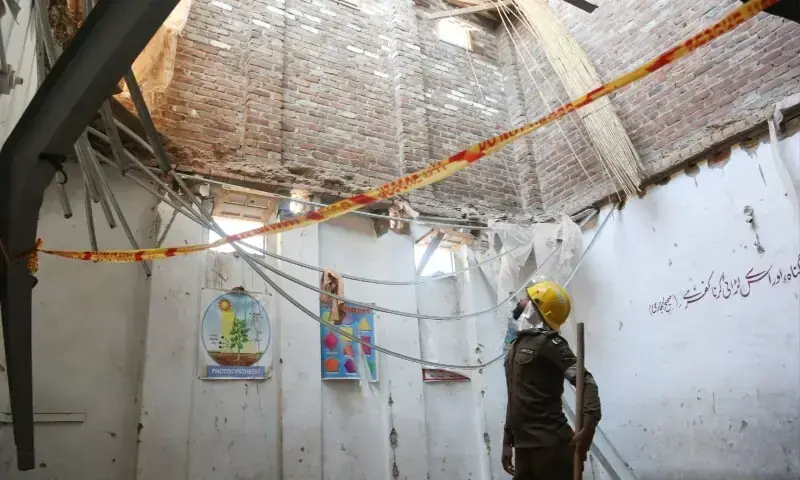
PESHAWAR, Pakistan, October 15, 2026: A devastating roof collapse at a private school in Peshawar claimed the lives of 30 children and a female teacher on Thursday, leaving families shattered and raising urgent questions about the safety of educational buildings across Pakistan.
The tragedy occurred at Al-Khair School in the Afridi Abad area of the Khyber Pakhtunkhwa provincial capital while students were attending morning classes. Children between the ages of seven and 14 were among those killed when part of the building collapsed, trapping pupils beneath concrete and debris.
Emergency rescue teams, police officers, local residents and volunteers rushed to the school as desperate parents gathered outside, searching for their children. Rescue workers struggled to reach those buried beneath the wreckage as the scale of the disaster became clear.
Officials at Lady Reading Hospital confirmed that 31 people had died, including 30 students and one female teacher. Hospital spokesperson Muhammad Asim initially reported a higher death toll before issuing a revised figure. According to the hospital’s casualty records, 61 people were brought to the facility, with 30 patients discharged after receiving medical treatment.
An emergency was declared at the hospital as ambulances transported victims from the collapsed building. Medical teams worked to treat injured children while families waited anxiously for information about their loved ones.
Rescue 1122 spokesperson Bilal Ahmad Faizi said the collapse involved one roof falling onto another, crushing the classroom beneath and trapping children inside.
The force of the structural failure caused extensive destruction, leaving rescue personnel facing a dangerous operation as they searched through the rubble for survivors.
Peshawar Deputy Commissioner Afaq Wazir later confirmed that the rescue operation had concluded after teams cleared the debris and established that no injured children remained trapped at the site.
The collapse turned what should have been an ordinary school morning into a scene of unimaginable grief.
Parents who had sent their children to school expecting them to return home safely instead found themselves searching through rubble, rushing to hospitals and waiting for news that no family should ever have to receive.
One parent, Samiullah, said he received a telephone call from home at approximately 8:50 a.m. and reached the school around 10 minutes later. Six of his children attended the institution.
He described rescuing three girls, all younger than eight, from the wreckage. At one point, he feared his own son had been killed because the boy’s classroom was located beneath the collapsed upper floor.
His son survived because he had briefly left the classroom to drink water before the roof came down.
Another local resident, Sohail, described scenes of panic after his niece escaped from the building and informed relatives about the disaster.
When he reached the school, he found several children trapped beneath the debris, some buried almost to their necks. Residents immediately began pulling them free while waiting for emergency personnel.
The accounts of parents and witnesses illustrated both the terrifying speed of the collapse and the desperate efforts made by ordinary citizens to save children.
Initial findings raised serious concerns about the condition of the school building.
Peshawar Capital City Police Officer Dr Mian Saeed Ahmed said the structure was weak and had been subjected to excessive weight from additional construction. According to his preliminary assessment, the overloaded roof contributed to the collapse.
The explanation has intensified questions about how a building allegedly unable to support its own structural load was permitted to operate as a school.
Authorities have launched an investigation to determine whether construction violations, inadequate inspections or regulatory failures contributed to the disaster.
Khyber Pakhtunkhwa Governor Faisal Karim Kundi expressed profound sorrow over the deaths and ordered a detailed investigation into the circumstances surrounding the collapse.
He directed authorities to conduct structural safety audits of educational institutions throughout the province to identify dangerous buildings and ensure corrective measures are taken before another tragedy occurs.
The governor also attended funeral prayers for the victims and announced financial compensation for affected families.
Under the announced relief package, families of those killed will receive Rs1 million each, while injured victims will receive Rs200,000.
Kundi said investigators would examine how the school obtained the necessary authorisation to operate, including identifying the officials responsible for issuing its no-objection certificate.
He promised a transparent investigation and accountability for those found responsible.
The provincial Elementary and Secondary Education Department also established a fact-finding committee to examine the incident.
The committee includes Javid Iqbal, chairman of the Private Schools Regulatory Authority, and Muhammad Farooq, deputy secretary of the education department, along with an additional member to be selected.
Its responsibilities include determining the causes of the collapse, identifying contributing factors, recommending preventive measures and establishing whether institutional negligence played a role.
Khyber Pakhtunkhwa Inspector General of Police Zulfiqar Hameed directed senior police officials to supervise rescue operations and instructed traffic authorities to establish a clear emergency route for ambulances.
The objective was to ensure that injured children could be transported to hospitals without delays caused by traffic congestion.
The tragedy also prompted a response from Pakistan’s federal leadership.
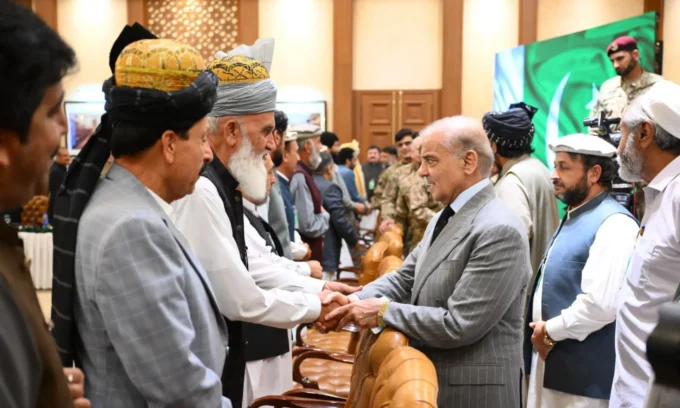
Prime Minister Shehbaz Sharif expressed deep sorrow over the deaths and instructed authorities to provide the injured with the best available medical treatment.
He contacted Governor Kundi to obtain details of the incident and requested a comprehensive report.
According to information provided to the prime minister, the school owner had been arrested and an investigation was underway.
Shehbaz directed officials to examine every aspect of the collapse and take legal action against anyone found responsible.
Deputy Prime Minister and Foreign Minister Ishaq Dar said the prime minister had taken serious notice of the disaster and emphasised that protecting children must remain a national priority.
President Asif Ali Zardari also expressed shock and grief, saying the tragedy had affected the entire nation.
He called for a thorough investigation and urged authorities to ensure that educational institutions comply with appropriate building safety requirements.
Pakistan Peoples Party Chairman Bilawal Bhutto-Zardari described the loss of young lives as heartbreaking, particularly for parents who had sent their children to school in the morning without imagining they would never return.
Member of the National Assembly Aseefa Bhutto-Zardari also offered condolences and stressed that schools must remain places where children are protected rather than exposed to preventable dangers.
The tragedy drew concern from international humanitarian organisations and human rights advocates.
UNICEF representative in Pakistan Pernille Ironside extended condolences to the affected families and offered support for psychological and social assistance to children, parents and communities dealing with the aftermath.
UNICEF urged authorities to ensure that both public and private schools undergo regular structural inspections and meet enforceable building safety standards.
The organisation emphasised that every child has the right to learn in a secure environment without facing threats to their life.
The Human Rights Commission of Pakistan expressed outrage over the deaths, arguing that the collapse should not be treated simply as an unavoidable accident.
The commission pointed to preliminary reports suggesting that the building’s weak structure and excessive construction load had contributed to the disaster.
It demanded an independent investigation with a clear deadline, public disclosure of the findings and accountability not only for the school owner but also for any regulatory authorities whose failures allowed an unsafe building to remain operational.
The commission also called for compensation for affected families and mandatory structural inspections of schools across the country.
The Peshawar tragedy is the latest in a disturbing series of deadly building collapses involving educational institutions in Pakistan.
On June 30, 14 children were killed when the roof of a private tuition centre collapsed in Lahore’s Kahna area.
Earlier, four children died and 20 others were injured when a classroom roof collapsed at a private school in Dera Ghazi Khan. An investigation into that incident found that construction work was being carried out to extend the building when the collapse occurred.
In July, three girls between the ages of three and 13 died when part of a government primary school’s outer wall collapsed near Umerkot.
During the same month, a child was killed and at least five people were injured when the roof of an under-construction private school building collapsed in Lahore’s Baghbanpura neighbourhood.
These incidents have repeatedly exposed concerns about weak construction, inadequate supervision, unauthorised building modifications and the enforcement of safety regulations.
The latest disaster raises a fundamental question about whether lessons from previous tragedies have resulted in meaningful changes.
While financial compensation and official investigations may provide some assistance to grieving families, they cannot restore the lives of the children who died.
Preventing future disasters will require independent structural inspections, stronger oversight of private educational institutions, strict enforcement of construction regulations and clear accountability for officials who approve unsafe buildings.
The investigation must also establish whether warning signs existed before the collapse and whether school administrators or regulatory authorities failed to act on them.
For families in Afridi Abad, however, the immediate reality is one of devastating personal loss.
Classrooms that should have been filled with lessons, laughter and childhood ambition became the site of a national tragedy.
As Peshawar mourns 30 children and their teacher, the disaster stands as another painful reminder that school safety cannot be treated as an administrative formality.
The responsibility now rests with provincial and federal authorities to ensure that the promises of investigations, inspections and accountability lead to concrete action.
For Pakistan, the deaths of these children must become a turning point in the enforcement of school building safety standards, rather than another tragedy followed by condolences and forgotten commitments.
Courtesy: dawn
Post Disclaimer
The views and content presented in this article, news report, or video are solely those of the respective author or creator and do not necessarily reflect the official policy or position of BW Times Digital Online E-Paper.












Leave a comment