















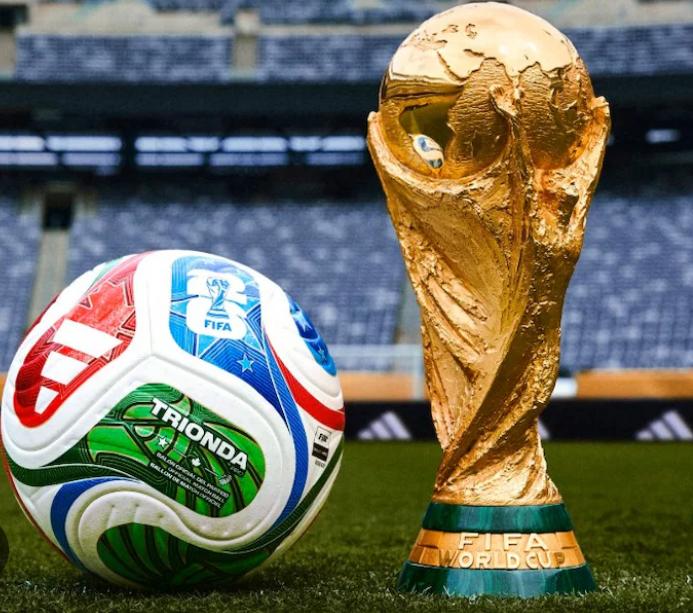
The FIFA World Cup 2026 has entered one of the most exciting phases of the tournament, with the group stage now complete and the Round of 32 officially underway. For the first time in the history of the FIFA World Cup, 48 national teams participated in the finals, making this the largest tournament ever organized by FIFA. Hosted jointly by Canada, the United States, and Mexico, the expanded competition has delivered thrilling football, unforgettable upsets, record-breaking attendances, and a truly global celebration of the world’s most popular sport.
The new tournament format has transformed the competition. Instead of the traditional 32-team event, FIFA expanded the World Cup to 48 nations divided into 12 groups of four teams each. Every team played three group-stage matches. At the conclusion of the group stage, the top two teams from each group automatically qualified for the knockout rounds, while the eight best third-placed teams also advanced. This means that a total of 32 teams reached the Round of 32, marking another historic first for the FIFA World Cup.
The qualification system rewarded consistency while ensuring that more nations remained in contention until the final group matches. Several traditional football powers comfortably secured their places in the knockout stage, while a number of emerging football nations also made history by advancing beyond the group phase for the first time.
The Round of 32 is a straight knockout competition. Every match must produce a winner. If scores remain level after 90 minutes, teams play 30 minutes of extra time. Should the deadlock continue, the contest is decided by a penalty shootout. From this stage onward, every match carries enormous significance because one defeat ends a team’s World Cup journey.
The 32 qualified teams are then reduced to 16 teams in the Round of 16. The winners progress to the quarterfinals, leaving just eight nations still dreaming of lifting football’s greatest prize. The quarterfinal winners advance to the semifinals, where only four teams remain. The losing semifinalists compete in the third-place playoff, while the winners meet in the World Cup Final to determine the new world champions.
The progression through the tournament is therefore straightforward.
Forty-eight teams began the competition.
Thirty-two teams qualified for the knockout stage.
Sixteen teams reached the Round of 16.
Eight teams advanced to the quarterfinals.
Four teams qualified for the semifinals.
Two teams reached the final.
One nation will become FIFA World Cup 2026 champion.
The expanded tournament has provided opportunities for countries from every continent to compete against the world’s elite. FIFA’s objective in increasing the number of participants was to make the World Cup more inclusive while promoting football’s development globally. Fans have witnessed new rivalries, fresh storylines, and competitive matches involving nations that previously struggled to qualify under the old 32-team format.
Host nations Canada, the United States, and Mexico have embraced the tournament with remarkable enthusiasm. Stadiums across North America have welcomed millions of supporters, creating electric atmospheres filled with national colours, songs, and celebrations. Cities hosting matches have experienced significant economic activity as international visitors contribute to tourism, hospitality, transportation, and local businesses.
The quality of football has remained exceptionally high despite concerns that expansion might reduce competitiveness. Instead, the tournament has showcased the rapid growth of football across Asia, Africa, North America, and Oceania. Several underdog nations have challenged established football powers, proving that the global gap in football standards continues to narrow.
Tactically, the tournament has reflected the modern evolution of football. High pressing, rapid counterattacks, disciplined defensive structures, and sophisticated data analysis have become defining characteristics of many successful teams. Coaches have relied heavily on squad rotation due to the demanding schedule, while sports science and recovery management have played increasingly important roles.
Individual stars have once again captured worldwide attention. Established superstars have delivered moments of brilliance, while a new generation of young players has announced itself on football’s biggest stage. Goalkeepers have produced spectacular saves, defenders have displayed remarkable resilience, midfielders have dictated the tempo of matches, and strikers have delivered decisive goals that have shaped the tournament.
Technology has also continued to influence the competition. The Video Assistant Referee system has remained an essential part of officiating, helping referees review critical incidents involving goals, penalties, red cards, and mistaken identity. Semi-automated offside technology has further improved decision-making by providing quicker and more accurate offside rulings, reducing lengthy delays while maintaining fairness.
Discipline has been another major factor during the World Cup. Teams have balanced aggressive pressing with the need to avoid unnecessary yellow and red cards that could affect squad availability during the knockout rounds. Experience has often proved invaluable as veteran players have guided younger teammates through the pressure of international football’s biggest event.
For Canada, hosting the World Cup represents a defining moment in the country’s sporting history. Canadian supporters have embraced the tournament with extraordinary passion, demonstrating the continued growth of football nationwide. Regardless of results on the pitch, the event has significantly strengthened football’s profile across the country and inspired a new generation of players.
Mexico has once again demonstrated its rich football culture by providing vibrant crowds and passionate support, while the United States has showcased world-class stadiums and organizational capabilities befitting one of the largest sporting events ever staged.
Financially, FIFA World Cup 2026 is expected to become the most commercially successful edition in history. Global broadcasting audiences, sponsorship agreements, ticket sales, hospitality packages, and digital engagement have reached unprecedented levels. Social media platforms have amplified every goal, save, celebration, and controversy, allowing billions of fans to participate in the tournament regardless of where they live.
As the competition moves deeper into the knockout rounds, the pressure intensifies. Every match now carries the weight of national expectations, with players aware that one moment of brilliance—or one costly mistake—can determine whether their country’s World Cup dream continues or ends.
The remaining contenders face an increasingly difficult path. Each victory requires tactical discipline, physical endurance, mental resilience, and exceptional individual performances. History has repeatedly shown that knockout football rewards teams capable of handling pressure while capitalizing on the smallest opportunities.
The FIFA World Cup has always represented more than a football tournament. It is a global celebration that unites cultures, inspires millions, and creates memories that last for generations. The expanded 2026 edition has reinforced that tradition by bringing together more nations than ever before while maintaining the drama, unpredictability, and excitement that define the world’s greatest sporting event.
With the Round of 32 determining which nations continue their pursuit of football immortality, supporters around the world eagerly await the next chapter. Only 32 teams remain in contention, but with each knockout round that number will continue to shrink until just one nation stands alone, lifting the FIFA World Cup Trophy as the champion of the world.
Post Disclaimer
The views and content presented in this article, news report, or video are solely those of the respective author or creator and do not necessarily reflect the official policy or position of BW Times Digital Online E-Paper.













Leave a comment