














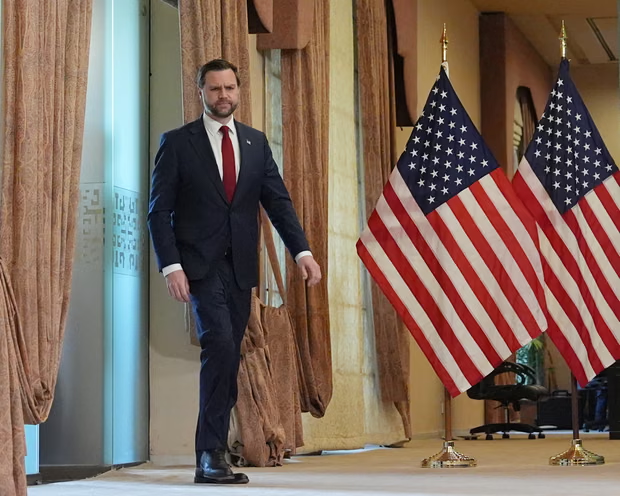
High-level negotiations between the United States and Iran have failed to produce a breakthrough, with JD Vance blaming Tehran’s refusal to abandon its nuclear ambitions as the primary reason for the deadlock.
The talks, held in Islamabad, marked the first direct engagement between the two countries in more than a decade. Despite nearly 21 hours of discussions, both sides emerged without an agreement, raising uncertainty over the fragile ceasefire in the region.
Vance stated that the core demand from Washington remains unchanged — a clear and verifiable commitment from Iran to not pursue nuclear weapons or the capabilities to rapidly develop them. He emphasized that this objective aligns with the policy direction of Donald Trump, who remained closely involved during the negotiations.
Iranian officials, however, pushed back strongly. Mohammad Bagher Ghalibaf, who led Tehran’s delegation, said the United States failed to build sufficient trust, despite what he described as constructive proposals from Iran. Iranian representatives insisted that Washington must take meaningful steps if it expects progress in future rounds.
Pakistan played a key mediating role, with Shehbaz Sharif hosting the delegations and urging both sides to maintain dialogue. Foreign Minister Ishaq Dar called on all parties to uphold the ceasefire and avoid further escalation.
The discussions come amid a broader regional conflict that has already caused thousands of casualties across Iran, Lebanon, Israel and Gulf states. The outcome of the talks is seen as critical to determining whether the current pause in hostilities will hold.
A major concern tied to the negotiations is the status of the Strait of Hormuz, a vital global energy corridor that Iran has restricted during the conflict. The United States has indicated efforts to ensure safe passage through the waterway, while Iran continues to use it as leverage in negotiations.
Additional points of contention include Iran’s demands for access to frozen financial assets, control over maritime routes and compensation for war-related damages. Meanwhile, Washington is focused on ensuring regional stability, maintaining open shipping lanes and limiting Iran’s nuclear program.
Despite the breakdown, both sides have signalled that talks are not over. Pakistani mediators have indicated that further discussions could take place in the coming days, although significant differences remain unresolved.
The failure to reach an agreement highlights the deep mistrust between the two nations and underscores the complexity of resolving a conflict that involves nuclear concerns, regional security and global economic interests.
Courtesy: theguardian
Post Disclaimer
The views and content presented in this article, news report, or video are solely those of the respective author or creator and do not necessarily reflect the official policy or position of BW Times Digital Online E-Paper.









Leave a comment