














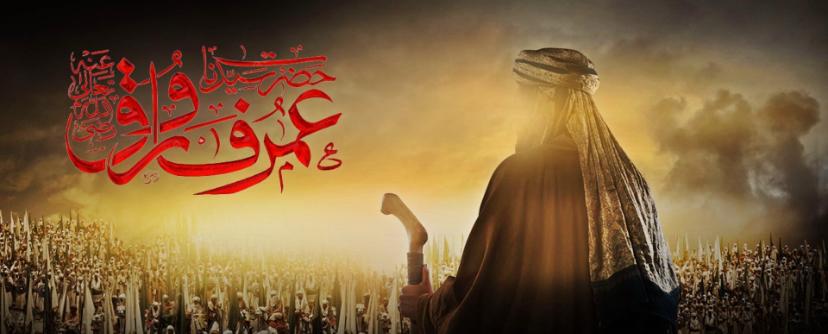
The arrival of Muharram, the first month of the Islamic calendar, reminds Muslims of many significant events in Islamic history. Among these is the martyrdom of Hazrat Umar ibn Al-Khattab (RA), the second Caliph of Islam and one of the closest companions of the Holy Prophet Muhammad (PBUH). Hazrat Umar (RA) was martyred on the first day of Muharram in 24 AH (644 CE), marking the end of an era that transformed the Muslim world and established foundations of justice, governance, and social welfare that continue to inspire humanity.
Hazrat Umar (RA) was born in Makkah around 584 CE into the respected Banu Adi clan of the Quraysh tribe. Before embracing Islam, he was known for his strength, courage, intelligence, and leadership qualities. Initially, he strongly opposed the message of Islam. However, his life changed dramatically when he accepted Islam after hearing verses of the Holy Quran. His conversion became a turning point for the Muslim community, as it strengthened the position of Muslims in Makkah and enabled them to practice their faith more openly.
The Holy Prophet Muhammad (PBUH) held Hazrat Umar (RA) in high esteem. His unwavering faith, honesty, and dedication earned him a special place among the companions. He became one of the most trusted advisors of the Prophet (PBUH) and participated in all major events of the early Islamic period. His courage on the battlefield and wisdom in matters of governance distinguished him among his peers.
Following the death of Hazrat Abu Bakr Siddiq (RA), Hazrat Umar (RA) became the second Caliph of the Muslim Ummah in 634 CE. His ten-year caliphate is regarded as one of the most remarkable periods in Islamic history. Under his leadership, the Islamic state expanded rapidly, reaching regions that now include parts of Iraq, Syria, Egypt, Palestine, Iran, and beyond. Despite these vast conquests, Hazrat Umar (RA) remained humble and deeply committed to justice.
One of the defining characteristics of Hazrat Umar’s rule was his commitment to accountability. He believed that every ruler was responsible before Allah for the welfare of the people. Numerous accounts describe how he would patrol the streets of Madinah at night to ensure that no citizen suffered from hunger, poverty, or injustice. He often carried food on his own shoulders to help needy families and considered public service a sacred responsibility.
Hazrat Umar (RA) introduced many administrative reforms that laid the foundation for effective governance. He established the public treasury known as Bait-ul-Mal, organized the judicial system, developed administrative provinces, introduced welfare programs for widows, orphans, and the poor, and implemented systems for taxation and public accountability. His reforms reflected a vision of governance based on fairness, consultation, and social justice.
His sense of justice became legendary. Both Muslims and non-Muslims received equal treatment under the law. Historical accounts recount that he did not hesitate to hold governors and officials accountable if they abused their authority. His famous statement, “Since when have you enslaved people when their mothers gave birth to them free?” remains a timeless declaration of human dignity and equality.
Hazrat Umar (RA) was also known for his simplicity. Despite ruling one of the largest empires of his time, he lived a modest life. His clothes were often patched, and he avoided luxury and extravagance. He believed that a leader should live like the ordinary people he served. This humility earned him immense respect and love from the Muslim community.
The Islamic calendar itself is one of Hazrat Umar’s enduring contributions. During his caliphate, the Hijri calendar was formally established, with the migration (Hijrah) of the Prophet Muhammad (PBUH) from Makkah to Madinah serving as its starting point. Today, Muslims around the world continue to follow this calendar for religious observances and historical remembrance.
The martyrdom of Hazrat Umar (RA) occurred during the final days of Dhul Hijjah in 23 AH. While leading the Fajr prayer in Masjid al-Nabawi in Madinah, he was attacked by Abu Lu’lu’ah, a Persian slave who stabbed him with a poisoned dagger. The attack shocked the Muslim community and left the Caliph critically wounded. Despite his injuries, Hazrat Umar (RA) remained concerned about the unity and future of the Muslim Ummah. He appointed a council of senior companions to select the next Caliph and advised Muslims to remain steadfast in faith and justice.
After suffering from his wounds for several days, Hazrat Umar (RA) passed away on the first day of Muharram in 24 AH. His death marked the loss of one of Islam’s greatest leaders. He was buried beside the Holy Prophet Muhammad (PBUH) and Hazrat Abu Bakr Siddiq (RA) in Madinah, a distinction reflecting his immense status and contributions to Islam.
The martyrdom of Hazrat Umar (RA) during the opening days of Muharram carries deep historical significance. As Muslims begin a new Islamic year, they remember a leader whose life embodied courage, integrity, justice, and devotion to Allah. His example demonstrates that true leadership is based not on power or wealth but on service, humility, and accountability.
Today, more than fourteen centuries after his passing, Hazrat Umar’s legacy continues to inspire people across the world. His principles of justice, equality, and good governance remain relevant in modern societies. Scholars, historians, and leaders frequently study his administration as a model of ethical leadership and public service.
As Muharram begins, Muslims reflect on the sacrifices and contributions of great personalities who shaped Islamic history. Among them, Hazrat Umar ibn Al-Khattab (RA) stands as a towering figure whose life transformed nations and whose martyrdom reminds believers of the importance of steadfast faith and righteous leadership. His remarkable achievements, unwavering commitment to justice, and profound devotion to Islam ensure that his memory remains alive in the hearts of Muslims for generations to come.
Post Disclaimer
The views and content presented in this article, news report, or video are solely those of the respective author or creator and do not necessarily reflect the official policy or position of BW Times Digital Online E-Paper.











Leave a comment