










A deadly assault in central Gaza Strip has once again highlighted the continuing insecurity inside the enclave, after residents and local sources reported that armed men entered Al-Maghazi Refugee Camp under the cover of aerial bombardment, leaving multiple civilians dead and many others wounded. Casualties were rushed to Al-Aqsa Martyrs Hospital in nearby Deir al-Balah by every available means, including ambulances, private cars, trucks, and motorized carts, as emergency rooms quickly filled with grieving families and injured survivors. Witnesses described scenes of panic and confusion, with relatives carrying victims through crowded hospital corridors while doctors struggled to respond to another sudden wave of trauma cases.
According to local eyewitnesses, the violence began when an armed Palestinian faction identified by residents as forces linked to Shawqi Abu Nasira moved into the eastern edge of the camp, an area situated close to the so called yellow line where Israeli military withdrawal had earlier reshaped front line positions after the ceasefire arrangements reached last year. Residents said gunfire erupted almost immediately as armed men entered residential lanes, with civilians claiming homes came under direct fire and that families inside were caught in the middle of the confrontation. Several witnesses said local young men attempted to resist the armed entry into the neighborhood, leading to clashes that escalated rapidly when aircraft and drones were seen overhead.
Multiple residents described how the fighting intensified once aerial strikes began hitting the same area where exchanges of fire were taking place. Witnesses said injured people remained on the ground only a short distance from homes, but rescuers and relatives were unable to reach them because of continuing gunfire and repeated targeting from above. Several accounts described quadcopter drones operating over the neighborhood while missiles struck nearby positions, forcing families to stay indoors even as wounded civilians called for help. Local accounts said movement in open streets became nearly impossible during the most intense period of the assault.
The militia accused by residents has been identified locally as the Free Homeland Forces, a faction linked to Shawqi Abu Nasira, a former Palestinian Authority security officer whose group operates in territory east of the central Gaza dividing line. The faction has previously drawn attention because of openly acknowledged coordination with Israeli authorities, including public statements in earlier media appearances in which Abu Nasira described logistical and security cooperation. The group later released video footage claiming responsibility for the operation and describing it as an action against Hamas affiliated targets, though no independent verification immediately confirmed those battlefield claims.
Local security statements issued by Gaza based authorities alleged that armed collaborators attempted to surround homes, detain residents, and seize belongings before facing resistance from families in the area. According to those statements, air support then followed when the armed group failed to fully enter targeted homes. Hamas itself did not immediately issue a direct formal political statement on the confrontation, but local affiliated security voices warned that accountability would follow for those involved in attacks on civilians.
The latest incident comes despite the ceasefire environment that officially reduced major front line offensives months ago but has failed to stop near daily violence across different parts of Gaza. Residents across central and northern areas continue to report shootings, shelling, drone attacks, and intermittent air raids even after broader diplomatic efforts aimed at reducing direct combat. In central Gaza, the pressure has become especially severe as displaced families remain concentrated in shrinking civilian zones while armed factions, military movements, and humanitarian shortages overlap in the same crowded geography.
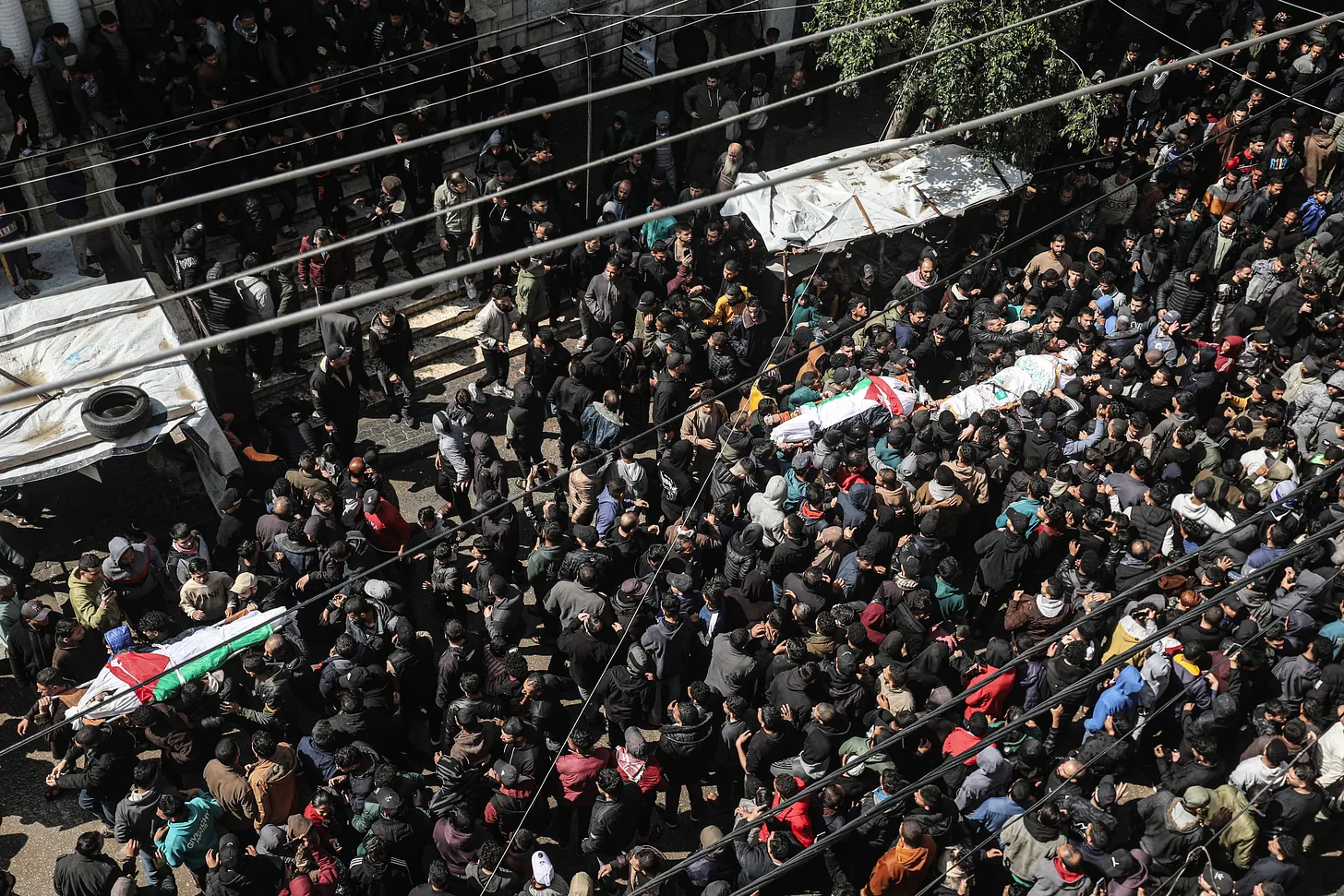
Outside Al-Aqsa Martyrs Hospital, funeral scenes unfolded as mourners carried bodies through hospital grounds and nearby streets, calling for justice and condemning attacks on already exhausted civilians. Family members described the dead as ordinary residents struggling to survive under blockade conditions, with many saying those killed had no involvement in armed activity and were simply trapped inside homes when the violence began. For residents of Al-Maghazi Refugee Camp, the attack has added another layer of fear to daily life in a camp where displacement, food shortages, and repeated conflict have already pushed families to the edge of survival.
Courtesy: dropsitenews
Post Disclaimer
The views and content presented in this article, news report, or video are solely those of the respective author or creator and do not necessarily reflect the official policy or position of BW Times Digital Online E-Paper.










Leave a comment