

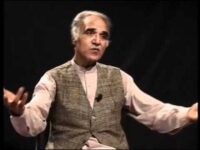











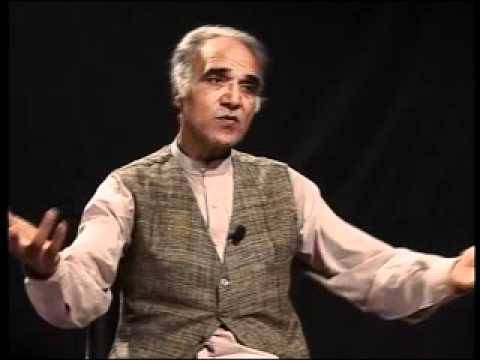
PESHAWAR — The cultural history of Peshawar’s radio, theatre and television cannot be discussed without remembering Iftikhar Qaiser, one of the region’s most versatile and beloved performers. An actor, writer, poet and theatre artist, Qaiser devoted more than four decades of his life to the performing arts and became a familiar face to audiences across Pakistan.
Born Iftikhar Hussain in Peshawar in 1956, he adopted the professional name Iftikhar Qaiser and went on to establish a distinctive identity in Hindko, Pashto and Urdu entertainment.
His artistic career began when he was still very young. Available records place the beginning of his professional journey in the early 1970s, with both Radio Pakistan and PTV Peshawar associated with the early stages of his career. Dawn reported in 2016 that he had launched his acting career in his early teens through a play at PTV Peshawar and had subsequently appeared in hundreds of Hindko, Pashto and Urdu plays.
For more than 40 years, Qaiser remained connected with Pakistani television, radio and stage. His career coincided with an important period in the development of regional broadcasting, when PTV’s provincial centres provided writers, actors and artists with opportunities to bring local languages and cultures to television audiences.
Among the productions that established his lasting reputation was the popular Hindko comedy programme “Dekhda Janda Reh”, associated with renowned Hindko writer Mukhtar Ali Nayyar.
It was through this programme that Qaiser became nationally recognized for the unforgettable expression:
“Ab Main Boloon Ke Na Boloon.”
The line became so closely associated with him that it effectively became his artistic signature. According to the Associated Press of Pakistan, he was particularly remembered for the dialogue from Mukhtar Ali Nayyar’s Hindko comedy show, which was broadcast during the late 1980s and 1990s.
The popularity of the character demonstrated Qaiser’s extraordinary understanding of timing, language and audience psychology. His humour was rooted in the everyday life and linguistic character of Peshawar, allowing viewers to see familiar people and situations reflected in his performances.
But Qaiser was far more than a comedian.
Those who worked with him remembered him as an actor capable of handling a wide range of characters. He performed comedy as well as serious and tragic roles, moving between different genres and languages with considerable ease.
Former PTV producer Shaukat Ali recalled working with Qaiser in the Pashto drama “Zaulanay” and the Urdu mini-series “Talaash.” He described him as an adaptable performer who could work across languages without difficulty.
His television career also included work in the Pashto comedy programme “Rang Pa Rang.” During the period when Urdu comedy programmes such as “50-50” were attracting large national audiences, regional comedy productions from PTV’s provincial centres were also developing strong local followings. Qaiser became one of the recognizable performers of that regional television tradition.
His talent eventually reached audiences far beyond Khyber Pakhtunkhwa. He appeared in Urdu productions and became part of the broader national television landscape.
Qaiser’s artistic abilities were not confined to acting. He was also a writer and poet, and accounts of his career describe him as a complete performing artist who was involved in scriptwriting and other aspects of production. Dawn described him as an actor, writer and poet and noted that his work extended to stage, radio and television.
His life also reveals the difficult economic realities faced by many regional artists.
Before making the performing arts his full-time profession, Qaiser worked as a Building Inspector with the Town Municipal Administration. He eventually resigned from the job and chose to make his passion for acting his profession.
His decision reflected the depth of his commitment to the arts. Yet the same career that brought him national recognition did not always provide financial security. His fellow artists later spoke about the difficulties faced by performers in Peshawar, where opportunities for professional work were limited.
His artistic career also extended into cinema. Available accounts record that he worked in four Pashto films, although he later moved away from Pashto cinema because of limited opportunities for quality work.
Another lesser-known aspect of his career was his connection with the regional audio-recording industry. According to biographical information associated with his work, he recorded an Hindko audio cassette through Pasha Music Centre in Karachi, including the popular Hindko song “Mirza Jatt Da Puttar.” The cassette cover reportedly carried the phrase “Chana Jor Garam, Babu Main Laya Mazedaar.” This part of his career represents the wider regional entertainment culture of the pre-digital era, when artists reached audiences through commercially produced audio cassettes as well as radio and television.
Qaiser’s contribution to the performing arts eventually received national recognition. He was awarded the President’s Pride of Performance, one of Pakistan’s major national honours for outstanding contributions to the arts.
His career was also associated with the 2010 Regional Excellence Award, according to biographical records provided about his work.
Beyond awards and famous dialogues, however, Qaiser’s greatest contribution was his ability to bring regional culture into mainstream entertainment.
His work in Hindko was particularly significant. At a time when Urdu dominated much of national television, regional-language programmes provided audiences with an opportunity to hear their own languages, humour and cultural experiences on screen.
Through programmes such as “Dekhda Janda Reh,” Qaiser became part of that cultural movement.
His partnership with writers and fellow performers helped create a distinctive Peshawar television style — one that combined humour, social commentary, local expressions and strong characterisation.
His contribution also extended across linguistic boundaries. He could perform in Hindko, Pashto and Urdu, making him one of the artists capable of connecting different audiences within Pakistan’s diverse cultural landscape.
His fellow artists remembered him not only for his talent but also for his dedication to his profession.
Qaiser’s final years were marked by serious illness. He had been suffering from health complications and was hospitalized in Peshawar shortly before his death. He passed away on September 17, 2017, at the age of approximately 61.
His death was widely mourned by artists and audiences. Dawn reported that his passing shocked fellow artists and fans and recalled the legacy of a performer who had worked across stage, television and radio.
Today, September 17 marks the anniversary of his death. Nine years after his passing, Pakistan’s national broadcaster continues to remember him as an accomplished actor, writer and poet whose career lasted more than four decades.
For the people of Peshawar, however, Iftikhar Qaiser represents more than an entry in the history of Pakistan Television.
He represents an era.
An era when artists built their careers through radio, theatre and television; when regional languages had a distinctive place on the national broadcaster; when a single memorable dialogue could make an actor a household name; and when Peshawar’s writers and performers created television that reflected the city’s unique character.
His famous words, “Ab Main Boloon Ke Na Boloon,” remain his most recognizable artistic signature. Yet behind that one unforgettable line was a much larger body of work — decades of acting, writing, poetry, radio, theatre and television.
Iftikhar Qaiser was a product of Peshawar’s rich cultural tradition, but his work reached far beyond the city.
He demonstrated that an artist rooted in a regional language could become a national figure without abandoning the cultural identity that shaped him.
His legacy therefore belongs not only to Hindko television or PTV Peshawar, but to the wider history of Pakistani performing arts.
Iftikhar Qaiser died on September 17, 2017, but the voice, humour, characters and cultural spirit he brought to the screen continue to live in the memories of generations of viewers.
Post Disclaimer
The views and content presented in this article, news report, or video are solely those of the respective author or creator and do not necessarily reflect the official policy or position of BW Times Digital Online E-Paper.








Leave a comment