










It was 1978, I had passed the 8th grade in my native homeland, Azad Kashmir. Most of my time was spent playing, fishing in the nearby stream, and wandering about aimlessly. Although my mother was not a highly educated person, but she was surely a wise lady. She could visualise where my neglect of education was leading. She also knew very well that my father made absolutely no compromise when it came to kids’ education and conduct. Consequently, she made the difficult decision of moving me to live with my father in Quetta. When I look back at my journey of life, I realise that my mother’s decision might have played a decisive role in setting the direction of my life. My father was a junior commissioned officer in Pakistan Army – posted in Quetta in those days. One of my maternal uncles Abdul Qayyum (late) was also working there as a journalist for the newspaper “Roznama Mashriq”. When I heard of my mother’s decision, I was overwhelmed by strange feelings. I felt a peculiar excitement at the prospect of travelling to a new place like Baluchistan, yet I was also sad at the thought of being separated from my mother, siblings and childhood companions.
I am recalling a bright yet quiet and melancholy day in May 1978, when I boarded the first bus from my village with my maternal uncle Abdul Qayyum and travelled via Mirpur to Jhelum. I was about to board a train for the first time in my life train. The Quetta Express, which was bound for Quetta, departed from Jhelum Railway Station at 3:30pm. The train reached Quetta in twenty-four hours, travelling through Lahore, Multan, Bahawalpur, Sukkur, Jacobabad and Sibi, and crossing the Bolan Range before entering the valley of Quetta. During this journey I observed enchanting views of plains, rivers, forests, deserts, green fields and mountains. Before entering Quetta Valley, the dark-brown, dry and desolate mountains of the Bolan Pass appeared as terrifying as they were mysterious. The Quetta Express snaked through the barren mountains like a green serpent. Whenever the train passed through a tunnel, I was frightened. Beyond Sibi, we reached a place called Mach. From there, the gradient was so steep that another engine was coupled to the rear of our train.
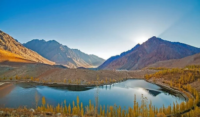
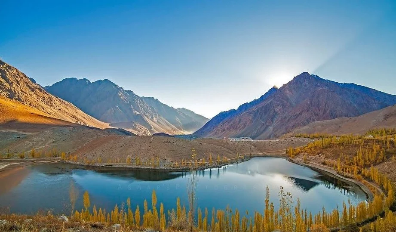
The Quetta Valley lies in a long and deep depression surrounded by mountains. These mountains are known as Chiltan, Takatu, Mehrdar—also known as Murdar—and Zarghun. Quetta stands approximately 1,680 metres, or 5,510 feet, above sea level. Its climate is dry and moderate, making it suitable for growing grapes, apples, peaches, plums, apricots, almonds, pears and pomegranates. Because of its exceptionally fine fresh fruit, Baluchistan is also called “the orchard of Pakistan.” Wheat, barley and maize are cultivated here as well. The region also contains forests of juniper and pistachio trees. Baluchistan is also home to archaeological sites such as Mehr-Garh, which is regarded as one of the world’s oldest agricultural settlements. These sites offer evidence of the region’s extremely ancient civilizational heritage.
Baloch culture is based on tribal traditions, hospitality, honour and the traditional systems of the Jirga and Kachhari, in which tribal chiefs and elders play a role in resolving disputes. The traditional dress of men consists of a loose shirt and wide-legged shalwar, together with a turban, as well as the famous Balochi sandals known as Mari-cut. A Baluchi house and youth must carry a weapon all the time. Women’s clothing is distinguished by heavy hand- embroidery and designs in characteristic bright colours, which are symbols of Baloch identity. Among the traditional foods, Sajji, Kaak bread and meat-based dishes are particularly famous. At celebrations, the Balochi Diwan or Gadan, folk music and the traditional dance known as Lewa hold a prominent place. Alongside Balochi, Brahui, Pashto and other local languages are spoken, making Baluchistan a culturally diverse region with a strong and distinctive identity.
It was an exciting evening when I reached to my father in Quetta Cantonment. There, my father, Subedar Muhammad Ashraf resided in a JCOs (Junior Commissioned Officers) Mess in front of EME (Electrical and Mechanical Engineering) Centre. This was a Victorian building of British era , that had a large compound all around that contained walnut orchards, a sitting place and dining room. My father took me to unit and showed me around , the places that caught my attention were the sports stadium, cinema house and central library. Then my father took me to market and got me new dresses and shoes. I have not come across a more caring man in my life other than my father.
After a week of my orientation and adjustment to the new environment my father took me to the Federal Government High School, Quetta Cantonment, to have me enrolled in the 9th grade. However, the headmaster, Mr Aslam Qureshi, refused to admit me as a regular student because I had failed the English part of the entrance test. Later, I came to understand that he had wanted to challenge me—and that challenge proved extremely valuable in my later life. Mr Qureshi was a smartly turned-out, medium-height polished man who always wore a suit and tie. He was clean-shaven, with curly grey hair. He used a famous hair oil called “Kala Kola,” because we could smell its fragrance. After combing his hair, he would sweep it neatly backwards, making it look as though a roof had been plastered. He wore thick-lensed spectacles and taught mathematics to the 9th and 10th grades. I remember that Mr Qureshi had a calligraphic handwriting.
Watching my gloomy face, Mr Qureshi allowed me to attend the 9th grade as a private student. I accepted the challenge and began working hard to master English vocabulary, grammar and creative writing. During the summer days when my father took afternoon siesta, I took my English book to walnut orchard and crammed the vocabulary by writing the difficult words over and over again. As a result, I stood first in English throughout the entire school in the matriculation examination. Later, in the intermediate examination, I also stood first in English throughout the Junior Cadet Battalion- PMA Kakul. I still remember that I received Charles Dickens’s novel Great Expectations as a prize. That foundation of English language laid in my matriculation made me a translator and writer later in my life.
Keeping in mind my behaviour after 8th grade, and following my mother’s advice, without wasting a day my father enrolled me in college for intermediate. The pre-medical programme at Federal Government Degree College, Quetta Cantonment commenced immediately. The first-year pre-medical class was full of colour and excitement. This was partly because several mischievous boys from my former school had joined it, along with a few beautiful girls. I enjoyed the romantic mischief associated with the awakening of adolescence among my male and female classmates.
In the first year, I found the massive biology textbook, Inquiry into Life, extremely dry, boring and tedious. Secretly, I postponed my plan to become a doctor, but I continued my studies out of fear of my father and attraction for fun in the first year. The college principal and professor of English, Hamid Ali, was a highly capable teacher. From him, we learned the meaning of English poetry and polished our spoken English. The Urdu professor was named Fazal Hussain Samim. From him, I learned to understand the poetry of Ghalib, Mir and Dagh. I have never encountered a better explanation of Ghalib’s poetry anywhere in my life. Besides being a poet in Urdu and Punjabi, Fazal Hussain Samim was wrote drama serials for Pakistan Television. Within a month or two, thanks to such accomplished teachers as Mr Samim and Mr Hamid Ali, I began to take pleasure in the poetry of Ghalib, Mir, Faiz, William Wordsworth, John Keats and other poets. It is the valuable contribution of these teachers such as Mr Qureshi, Mr Hamid Ali and Fazal Hussain Samim that I am now an established translator and interpreter of Urdu and Punjabi. During the past decade, I have translated nine books and written one of my own. In addition, for the last seven years I have been regularly contributing foe an online magazine; Humsub.com.pk. I remember , spending my Saturdays and Sundays in the Quetta Station Library located near Television Station.
We lived in Quetta Cantonment, near Robert Market. There was a tank unit close to our military quarters. Whenever I sat studying on the veranda, the unit’s subalterns would pass along the road. They wore black overalls and black caps, and golden pips shone on their shoulders. I liked them very much and wondered whether I, too, could become an army officer. One day I mentioned this to my father. He told me that he had applied for a Short Service Commission but had not been selected. Nevertheless, it had always been his wish that one of his sons should become a military officer. My desire to join the army therefore grew even stronger.
I remember a beautiful summer evening in Quetta in 1980. As soon as my father returned from work, he drew my attention to an advertisement published in the newspaper. The Pakistan Army had announced that boys who had passed matriculation could join the army as commissioned officers through the Junior Cadet Battalion.
Normally, candidates seeking a commission in the army were required to be between eighteen and twenty-two years of age and to have passed the intermediate examination. However, in 1976, the Pakistan Army had introduced the Junior Cadet Scheme. Under this scheme, candidates who had passed matriculation were selected for the army and, over a period of two years, introduced to intermediate education and military life before being sent to the Pakistan Military Academy, or PMA. The scheme was discontinued in 1989.
I sent in my application for the Junior Cadet Course and began preparing for the Army’s written examination and the ISSB(Inter Services Selection Board). Over the next few months, I passed the written examination, medical examination, ISSB and the other stages of the selection process. I was selected to become a commissioned officer in Pakistan Army. Thus, in November 1980, I bade farewell to the lively atmosphere of Federal Government Degree College, Quetta, and set off for Kakul, Abbottabad, to join Junior Cadet Battalion.
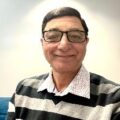
 About the Author: Born in 1964 – Samahni Valley of Kashmir, Naeem Ashraf went to the University of Engineering and Technology (UET) Lahore and the Virtual University (VU) of Pakistan. He served in the Pakistan Army for 28 years, retiring as a Colonel. Following his military career, he dedicated himself to his lifelong passion for literature, focusing on fiction translation. Over the past decade, he has translated nine fiction and non-fiction books between English and Urdu. Living in Alberta, Naeem Ashraf can be contacted at munasajk@gmail.com.
Post Disclaimer
The views and content presented in this article, news report, or video are solely those of the respective author or creator and do not necessarily reflect the official policy or position of BW Times Digital Online E-Paper.







Leave a comment