













The release of Pakistan’s controversial diplomatic cipher through the investigative platform Drop Site has shaken political discussions across the world and reopened one of the darkest and most explosive chapters in Pakistan’s modern political history. What was once dismissed by many political opponents as a conspiracy theory has now returned as an international scandal raising serious questions about Pakistan’s sovereignty, democracy, foreign policy independence, and the power structure controlling the country.
For millions of overseas Pakistanis, especially supporters of former Prime Minister Imran Khan, the publication of the alleged cipher is not just another political leak. They see it as a historic disclosure exposing how global power politics and domestic institutions allegedly combined to remove an elected government. Across Canada, the United Kingdom, the United States, Europe, and the Gulf countries, discussions have intensified over whether Pakistan’s democratic system truly functions independently or whether major national decisions are still influenced by external pressure and internal unelected power centers.
The cipher itself allegedly contains details of a meeting between Pakistan’s former ambassador to Washington and senior American diplomat Donald Lu during March 2022, shortly before Imran Khan lost power through a no confidence vote. According to the leaked contents, American officials expressed serious dissatisfaction with Khan’s foreign policy positions, especially his stance regarding the Russia Ukraine war and his visit to Moscow at the exact moment Russian forces entered Ukraine.
For Imran Khan and his supporters, this moment became the foundation of what they describe as an international regime change operation. Khan repeatedly argued that Pakistan was punished because he refused to follow a foreign dictated foreign policy. He publicly declared that Pakistan would not become “anyone’s slave” and insisted that an independent nation has the right to maintain relations with all global powers, including Russia, China, and the West.
The controversy surrounding the alleged statement that “all will be forgiven in Washington” if Khan were removed has become one of the most debated diplomatic phrases in Pakistan’s history. To PTI supporters, this sentence represents direct political pressure from a superpower toward a sovereign state. Critics say it reflects diplomatic frustration rather than proof of conspiracy. But regardless of interpretation, the leak has reopened painful questions about how much control Pakistan truly has over its own political destiny.
The most disturbing aspect of the Drop Site publication is not only what the cipher allegedly says but why such a sensitive diplomatic document surfaced publicly years later. Political observers are now asking whether the leak itself is part of another larger geopolitical game. Some believe powerful international actors wanted to send a message to Pakistan’s establishment. Others think factions within Pakistan leaked the document to settle internal scores or expose hidden alliances. Another theory circulating widely among overseas Pakistanis is that the leak was meant to embarrass both Washington and Pakistan’s military establishment simultaneously.
The timing of the leak has created even deeper suspicion. Pakistan is already facing economic collapse, political polarization, institutional mistrust, media censorship allegations, terrorism concerns, and a growing disconnect between the state and the public. Into this crisis comes a leaked diplomatic cable suggesting foreign involvement in the removal of a prime minister. For many citizens, especially young Pakistanis abroad, this has intensified fears that the country’s democratic structure has become dangerously weak.
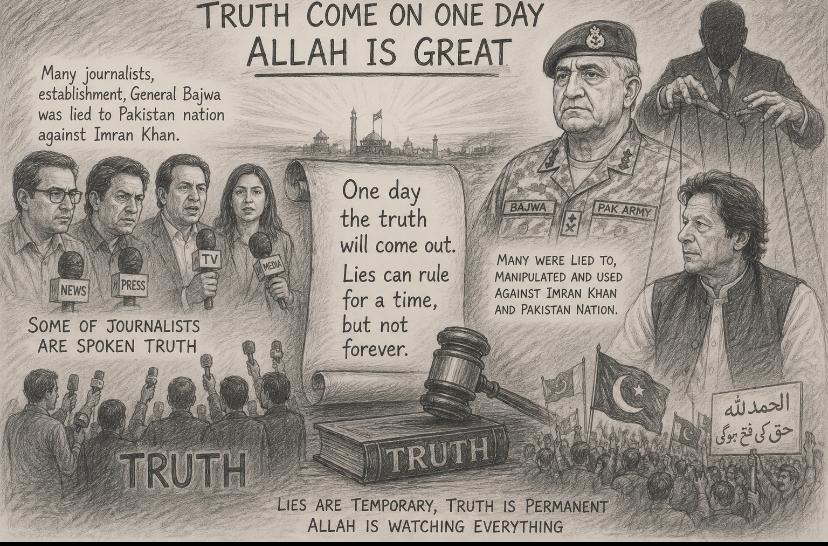
The role of Pakistan’s establishment has once again become central to the debate. Former Army Chief General Qamar Javed Bajwa remains one of the most criticized figures among PTI supporters. They accuse him of abandoning Khan’s government and helping engineer political change behind the scenes. Former DG ISPR Major General Babar Iftikhar also comes under criticism because military spokespersons strongly rejected Khan’s conspiracy narrative during press conferences in 2022.
At that time, government allied media personalities and several television anchors dismissed the cipher controversy as political theater. Critics of the media now argue that parts of Pakistan’s journalism industry acted more like defenders of state narratives than independent investigators. Overseas Pakistanis especially accuse some journalists of attempting to discredit Khan while ignoring deeper questions about foreign pressure and institutional interference.
However, Khan’s opponents continue to reject the idea that he was removed solely because of foreign conspiracy. They argue that his government collapsed due to political mismanagement, economic difficulties, and loss of parliamentary support. They also point out that Khan himself once enjoyed strong relations with the same establishment he later accused of betrayal.
Still, the Drop Site disclosures have dramatically changed the public atmosphere. Even people who once doubted Khan’s claims are now questioning why the alleged diplomatic communication appears so politically sensitive. The issue is no longer limited to whether there was a conspiracy. The larger issue now is whether Pakistan’s elected governments possess genuine authority or whether real power lies elsewhere.
The Russia Ukraine war remains at the center of this storm. Khan attempted to maintain neutrality during the conflict while refusing to fully align with Western policy positions. His supporters claim this independent approach triggered anger in Washington and among Pakistani power circles who preferred closer Western alignment. They argue that Pakistan’s foreign policy after Khan’s removal became noticeably more compliant toward Western expectations.
Many overseas Pakistanis now describe the cipher issue as proof that Pakistan’s political system remains trapped between elected governments and invisible power structures. Some compare the situation to Cold War style interventions where strategic countries become battlegrounds for international influence. Others fear Pakistan has become so dependent economically and diplomatically that true sovereignty now exists only symbolically.
The leak has also damaged public trust in institutions. If the cipher is authentic, many ask why the Pakistani public was not told the full truth from the beginning. If it is misleading or incomplete, critics ask why authorities failed to transparently address public concerns. Either way, the controversy has deepened distrust between citizens and state institutions.
Perhaps the most painful question emerging from this entire saga is one that many overseas Pakistanis now openly ask: Is Pakistan still fully sovereign, or has the state become too fragile to resist internal and external pressure?
For supporters of Imran Khan, the answer is deeply alarming. They believe Pakistan’s democracy was hijacked, its institutions politicized, and its national independence compromised. To them, Khan’s imprisonment represents more than legal accountability. They see it as punishment for challenging both domestic power centers and international influence.
Critics argue that this view is exaggerated and emotionally driven. But even they admit the cipher controversy has exposed serious structural weaknesses inside Pakistan’s political system. The battle is no longer only about Imran Khan. It has become a struggle over who truly controls Pakistan’s future.
The Drop Site disclosures have transformed the cipher from a local political controversy into a global discussion about diplomacy, intelligence, media narratives, military influence, and democratic legitimacy. What once sounded like a political slogan is now part of an international conversation watched closely by journalists, analysts, governments, and overseas Pakistanis worldwide.
And as this debate grows louder, one reality becomes increasingly clear: the biggest crisis facing Pakistan may no longer be political instability alone. It may be the growing fear among its own people that the country’s democratic institutions, national sovereignty, and independent decision making are slowly slipping away under the weight of power struggles both inside and outside the state.
Post Disclaimer
The views and content presented in this article, news report, or video are solely those of the respective author or creator and do not necessarily reflect the official policy or position of BW Times Digital Online E-Paper.










Leave a comment