















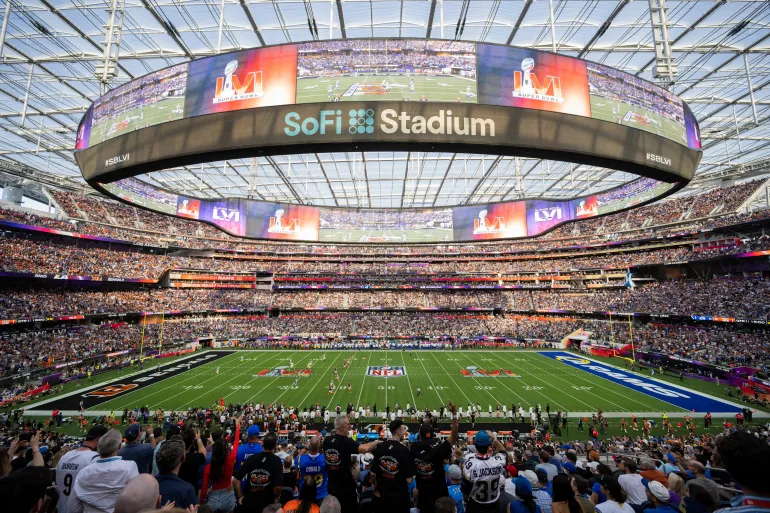
A major labour and immigration debate is emerging ahead of the World Cup in Los Angeles as hospitality workers connected to the city’s main tournament venue call on FIFA to ensure immigration enforcement agencies stay away from event operations.
The demand comes from Unite Here Local 11, a union representing approximately 2,000 cooks, bartenders, servers and food service staff assigned to the stadium that will host eight matches during the tournament.
The venue is internationally known as SoFi Stadium, although tournament branding will identify it as Los Angeles Stadium during World Cup competition.
Union representatives say workers remain without a labour agreement as the tournament approaches and fear that immigration enforcement presence could create anxiety among staff and visitors.
Their most direct demand is for a public commitment that U.S. Immigration and Customs Enforcement and border enforcement agencies will not take part in stadium related operations.
This request follows public comments suggesting federal immigration authorities may have a visible role during major tournament security planning.
For workers in Los Angeles, where many hospitality employees come from immigrant families, the issue carries strong emotional and practical significance.
Union officials argue that even the perception of enforcement activity near a global sporting venue could affect attendance, workplace confidence and operational stability.
The union has also warned that strike action remains possible if concerns are ignored.
That creates pressure not only on FIFA but also on stadium ownership led by Kroenke Sports & Entertainment.
Beyond immigration concerns, the union is linking labour negotiations to wider economic demands.
Workers want formal protections against job loss caused by automation or artificial intelligence during tournament operations.
That includes assurances that food service, concessions and hospitality roles will remain staffed by union workers rather than replaced by temporary technology driven systems.
Affordable housing has also become part of the labour campaign.
Union representatives argue that major international sporting events generate enormous revenue while many hospitality workers continue facing severe housing costs in Inglewood and nearby communities.
They are calling for support mechanisms including workforce housing funds, tighter short term rental controls and tax measures that could support lower income residents.
This reflects a broader pattern seen in host cities worldwide where mega events often trigger debate about who benefits economically.
While global sponsors and event organizers receive major commercial returns, local labour groups increasingly demand direct community commitments.
Los Angeles will host one of the tournament’s most high profile schedules, including the United States opening match against Paraguay.
That raises the visibility of any unresolved labour dispute.
A strike involving stadium food and hospitality workers during the tournament would create major operational pressure.
The union says it has repeatedly sought direct meetings with FIFA but believes its concerns have not yet received sufficient attention.
As tournament planning intensifies, FIFA faces the challenge of balancing global event management with highly local labour realities.
The issue also reflects how modern sporting events increasingly intersect with immigration politics, employment rights and urban affordability debates.
For Los Angeles, the World Cup is no longer only about football.
It is also becoming a test of how global sport responds to local social pressure.
Courtesy: Aljazeera
Post Disclaimer
The views and content presented in this article, news report, or video are solely those of the respective author or creator and do not necessarily reflect the official policy or position of BW Times Digital Online E-Paper.











Leave a comment