







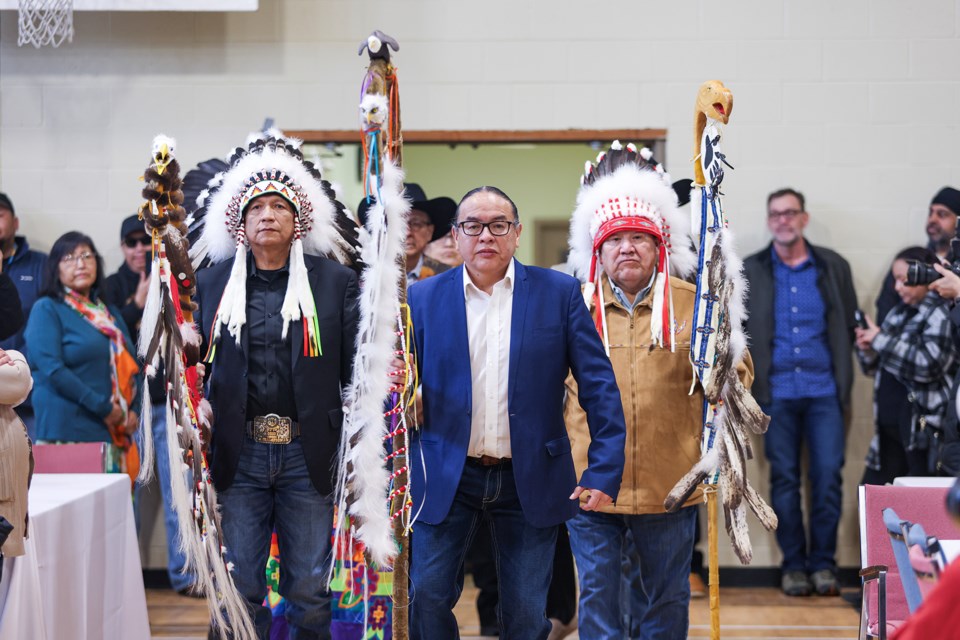
ÎYARHE NAKODA, ALBERTA – Leaders of the three Stoney Nakoda First Nations have welcomed the outcome of Alberta’s recent referendum, but say significant work remains to repair relationships with the provincial government following concerns over treaty rights and Indigenous sovereignty.
In an October 21 letter addressed to Alberta Premier Danielle Smith, Bearspaw First Nation Chief Darcy Dixon, Chiniki First Nation Chief Aaron Young and Goodstoney First Nation Chief Clifford Poucette called on the provincial government to take meaningful steps toward rebuilding trust with Indigenous communities.
The chiefs said the referendum process had created serious divisions and damaged relationships between First Nations and the provincial government. They emphasized that treaty rights and the nation-to-nation relationship between Indigenous peoples and the Crown should never have been considered matters open to renegotiation through a provincial referendum.
According to the letter issued by the Treaty 7 First Nations Chiefs’ Association, rebuilding confidence will require deliberate and sustained efforts from the Alberta government.
The chiefs have requested meetings with Premier Smith and relevant provincial ministers to discuss concrete measures that recognize treaty obligations and establish a respectful path forward.
Chief Darcy Dixon said restoring the relationship will require both sides to listen to one another and demonstrate a renewed commitment to mutual respect.
He acknowledged that cooperation with the provincial government has been challenging in recent years and said the responsibility now rests with the government to demonstrate how it intends to move forward.
“Now, the cards are on the government’s table,” Dixon said, emphasizing that meaningful engagement will be necessary to rebuild a constructive relationship.
Stoney Nakoda Communities Show Strong Support for Remaining in Canada
Ahead of the October 19 referendum, Stoney Nakoda leadership organized community meetings to give members an opportunity to discuss concerns about their future, treaty rights and their place within Alberta and Canada.
Chief Dixon said community members participated actively in these discussions and expressed their views about Indigenous history, territorial rights and the importance of protecting their lands.
He noted that many community members emphasized that First Nations existed on these territories long before Alberta became a province and that their rights and connections to their traditional lands cannot simply be changed by political decisions.
Unofficial results from Elections Alberta showed that 96 per cent of the 1,195 voters in Stoney Nakoda communities supported remaining in Canada. The result was considerably higher than the provincial average of approximately 75 per cent.
The strong participation reflected the importance of the referendum for Indigenous communities, particularly amid concerns about the implications of Alberta’s political future for treaty relationships.
Indigenous Voter Participation Reaches New Levels
The referendum also saw increased participation from First Nations communities across Alberta.
An Elections Alberta spokesperson confirmed that several First Nations voting stations recorded turnout above projected levels.
The number of Indigenous communities hosting voting locations also increased. A total of 36 First Nations communities had voting locations during the 2026 referendum, compared with 33 communities during the 2023 provincial election.
Sarah Elmeligi, Alberta NDP MLA for Banff-Kananaskis, welcomed the high level of Indigenous participation.
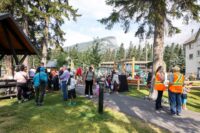
Speaking at a community gathering on Stoney Nakoda First Nation on October 20, the day after the referendum, Elmeligi said the overwhelming support for remaining in Canada was an important outcome.
She also highlighted the increased Indigenous vote, describing it as a significant development in provincial democratic participation.
The increased turnout demonstrated that Indigenous communities were actively engaging in discussions about Alberta’s political future and the potential consequences for their rights and relationships with governments.
Chiefs Seek Broader Reconciliation Across Alberta
Beyond their direct relationship with the provincial government, the three chiefs are also calling for efforts to address divisions that emerged across Alberta during the referendum campaign.
Their letter stressed that the government must recognize the concerns raised by Indigenous communities and work toward restoring confidence through meaningful dialogue rather than relying solely on political statements.
For Stoney Nakoda leadership, the next phase will require discussions that respect Treaty 7 commitments and recognize the historical and constitutional relationship between First Nations and the Crown.
The chiefs expressed their willingness to participate in discussions aimed at building a future that includes Indigenous peoples and other Albertans while respecting existing treaty obligations.
“There is work to be done and we are prepared to begin engaging in discussions that will see a future for our people and Albertans in Treaty 7,” the chiefs stated in their letter.
As Alberta moves beyond the referendum, the response from the provincial government will be closely watched by First Nations leaders seeking clarity on how treaty relationships, Indigenous rights and government responsibilities will be respected.
For the Stoney Nakoda First Nations, the referendum results have provided an opportunity to reinforce their position, but the larger challenge now lies in rebuilding trust and establishing a lasting relationship with the Alberta government based on recognition, respect and meaningful engagement.
Courtesy: rmoutlook
Post Disclaimer
The views and content presented in this article, news report, or video are solely those of the respective author or creator and do not necessarily reflect the official policy or position of BW Times Digital Online E-Paper.









Leave a comment