

















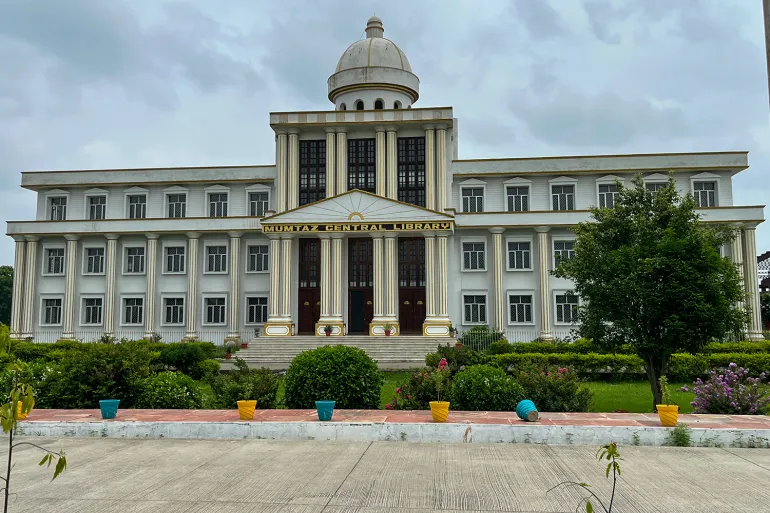
Students, alumni and local residents have intensified protests in the northern Indian state of Uttar Pradesh after authorities ordered the demolition of most buildings at Mohammad Ali Jauhar University, a move that has sparked widespread concern over the future of thousands of students.
The university, located in Rampur district and founded by veteran Muslim politician Azam Khan, has become the centre of a growing political and legal dispute after the Rampur Development Authority ordered the demolition of 38 of its 40 buildings. Officials allege that the majority of the structures were constructed without the required approvals and violate planning regulations.
The demolition order instructed the university to remove the buildings by August 5, warning that authorities would carry out the demolition themselves and recover the costs if the institution failed to comply. However, an interim stay issued by the state administration has temporarily delayed the process while legal proceedings continue.
University officials say the stay order does not cancel the demolition but simply postpones the deadline until the courts determine the legality of the order. The institution is seeking a ruling that would permanently overturn the demolition notice.
The announcement has triggered continuous demonstrations outside the university gates, where students and graduates have gathered in large numbers, demanding that the state government withdraw the order and protect the institution.
For nearly 3,000 students enrolled in a wide range of academic programmes, the uncertainty has raised fears about their education and future careers. Many protesters say they chose the university because of its academic environment, affordability and accessibility, and they worry that relocating to other institutions may not be possible.
Several students have argued that the university plays an important educational role in Rampur, a district where literacy rates remain among the lowest in Uttar Pradesh. They believe demolishing the campus would deprive thousands of young people of higher education opportunities.
Female students have expressed particular concern, saying the university provides a secure environment that encouraged many families to allow their daughters to pursue higher education. Some fear that if the campus is closed, many women may not be permitted by their families to continue studying elsewhere.
The state government has reportedly established counselling centres to assist students in transferring to other colleges and universities. However, many students have rejected the proposal, insisting they want to complete their education at Mohammad Ali Jauhar University.
The university was established after the Mohammad Ali Jauhar Trust was formed in 2003 and officially opened three years later. Named after freedom fighter Mohammad Ali Jauhar, the institution has grown into one of the region’s major centres for higher education.
Its founder, Azam Khan, has remained one of Uttar Pradesh’s most prominent Muslim political leaders for decades. A senior member of the Samajwadi Party, he served multiple terms in the state legislature, held ministerial positions and also represented Rampur in India’s Parliament.
Since the Bharatiya Janata Party formed the Uttar Pradesh government in 2017 under Chief Minister Yogi Adityanath, Khan has faced numerous criminal and legal cases involving allegations that include land acquisition irregularities, forgery and hate speech. Several of those cases relate directly to the university.
Khan spent more than two years in prison before receiving bail in 2022 and has since faced additional convictions in separate legal cases. His supporters maintain that the investigations and legal proceedings are politically motivated because of his long-standing opposition to the ruling BJP. Government officials reject those allegations and insist that all legal actions have followed due process.
Opposition leaders have criticised the demolition order, arguing that it represents political retaliation against an institution closely associated with the Samajwadi Party and one that primarily serves minority communities. They contend that the university has become a symbol of educational opportunity for thousands of students from disadvantaged backgrounds.
The Bharatiya Janata Party has defended the action, stating that the issue concerns illegal construction rather than politics or religion. Party representatives argue that no institution can be exempt from planning laws and that authorities are simply enforcing existing regulations.
As legal proceedings continue, uncertainty remains over the university’s future. Students, faculty members and local residents have pledged to continue peaceful demonstrations while awaiting the court’s decision.
The outcome of the case is expected to have significant implications not only for Mohammad Ali Jauhar University but also for higher education, urban development regulations and the broader political debate surrounding educational institutions in Uttar Pradesh.
Courtesy: aljazeera
Post Disclaimer
The views and content presented in this article, news report, or video are solely those of the respective author or creator and do not necessarily reflect the official policy or position of BW Times Digital Online E-Paper.









Leave a comment