












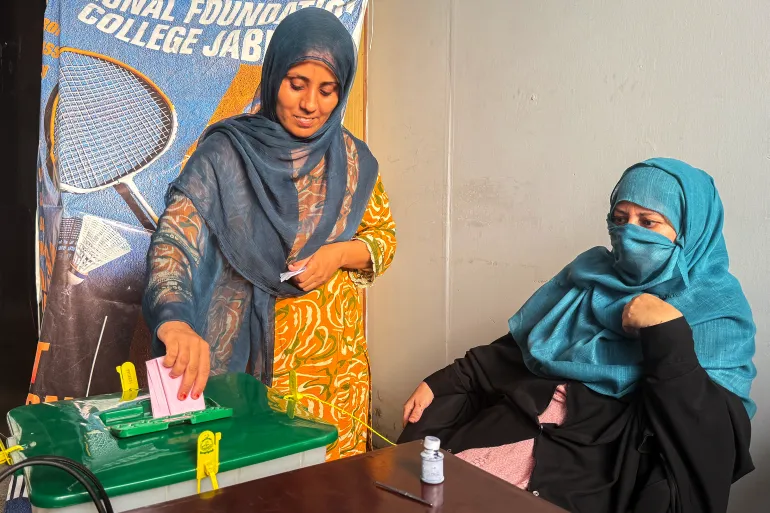
Pakistan-administered Kashmir has begun the first phase of its local legislative elections under heightened security following weeks of political unrest, deadly violence and widespread public protests. Polling started on Monday in the Mirpur district, marking the opening stage of a three-phase electoral process designed to address security concerns across the region.
Authorities divided the elections into three rounds after citing the need to deploy security forces more effectively in areas affected by recent disturbances. The move comes after months of instability that have raised concerns over public safety and the credibility of the electoral process.
Around 3.8 million eligible voters are expected to participate in the elections across the disputed Himalayan region. However, turnout during the opening hours in Mirpur appeared relatively low, with hot weather and ongoing political uncertainty believed to have influenced voter participation.
The elections follow weeks of unrest that have claimed dozens of lives. Since early June, violent clashes between protesters and security forces have resulted in nearly 40 deaths, making this one of the most challenging election periods in the region’s recent history. Demonstrations that initially focused on economic issues gradually evolved into a broader political movement demanding significant electoral and governance reforms.
Authorities have maintained strict security measures across the territory, including widespread restrictions on mobile phone and internet services. The communication blackout has affected daily life and has also become a major issue during the election campaign.
Several candidates argued that the internet shutdown made it extremely difficult to reach voters and communicate campaign messages. Without access to digital platforms, many candidates returned to traditional campaigning methods, travelling across mountainous communities, holding public meetings and visiting households to engage directly with residents.
Independent candidates said the lack of communication services placed additional pressure on campaigns, particularly in remote areas where physical travel requires considerable time and resources. Despite these challenges, many continued campaigning through face-to-face interaction with local communities.
The political atmosphere has been further complicated by the government’s decision to ban the Jammu Kashmir Joint Awami Action Committee under anti-terrorism legislation. The movement gained widespread public support during demonstrations calling for lower electricity prices and subsidised flour before expanding its demands to include broader constitutional and electoral reforms.
Among its principal demands is the removal of 12 reserved assembly seats allocated to Kashmiri refugees. Supporters of the movement argue that these seats disproportionately influence the composition of the regional legislature because many of the representatives reside outside the territory while participating in its political process.
Following the ban, several leaders of the movement have been arrested, while others have either gone into hiding or continue organising protests from various locations across the region. Sit-in camps remain active in Rawalakot, which has become one of the main centres of the protest movement.
Supporters of the banned committee have urged residents to boycott the elections, arguing that meaningful political reform should take priority before new representatives are elected. They maintain that participation would legitimise an electoral system they believe requires significant changes.
The local administration has defended the election arrangements, saying the phased voting schedule is necessary to ensure public safety and maintain order during the polling process. Security personnel have been deployed in large numbers around polling stations and other sensitive locations to prevent further violence.
Officials have appealed to citizens to exercise their democratic right peacefully while assuring voters that security measures are intended to protect both election staff and the public.
The elections are being closely watched as an important indicator of the political climate in Pakistan-administered Kashmir following months of unrest. Observers believe the outcome could influence future discussions on governance, electoral reforms and public demands for greater political representation.
As the remaining phases of voting approach, authorities continue to monitor the security situation closely while political parties and independent candidates seek to connect with voters despite ongoing communication restrictions and heightened tensions.
The results of these elections are expected to shape the region’s political landscape at a time when demands for accountability, institutional reform and economic relief remain at the centre of public debate.
Courtesy: aljazeera
Post Disclaimer
The views and content presented in this article, news report, or video are solely those of the respective author or creator and do not necessarily reflect the official policy or position of BW Times Digital Online E-Paper.






Leave a comment