














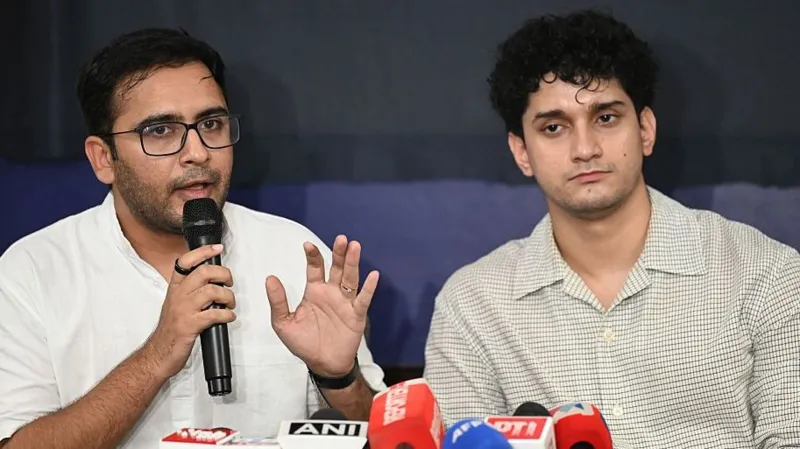
NEW DELHI, India: Two prominent leaders of India’s Cockroach Janta Party (CJP), a youth-led pressure group demanding electoral reforms, have been remanded to five days of judicial custody after police arrested them for allegedly entering a restricted protest site in the national capital.
Saurav Das and Ashutosh Ranka appeared before a magistrate on Wednesday following their detention at Jantar Mantar, a well-known venue for public demonstrations in Delhi. The authorities recently removed the site from the list of officially authorised locations for protests.
The two activists were part of a group that allegedly climbed over a locked gate and crossed police barricades on Tuesday to reach the protest site. Their demonstration was part of a broader campaign demanding electoral transparency and the resignation of Chief Election Commissioner Gyanesh Kumar over allegations of irregularities in voter registration. The Election Commission has denied wrongdoing.
Police accused Das, Ranka and fellow activist Ajinkya Shinde of trespassing, violating prohibitory orders, breaching a peace bond and obstructing public officials. The activists have denied the allegations.
The court ordered Das and Ranka to remain in judicial custody for five days, while Shinde was released on a personal bond. The two detained leaders can apply for bail before a higher court.
The arrests have drawn criticism from opposition politicians, who say the authorities must protect the right to peaceful protest and allow citizens to question public institutions.
Rahul Gandhi, a senior opposition leader who has separately been campaigning against the Election Commission, condemned the arrests and described them as an act of cowardice. He expressed solidarity with peaceful demonstrators seeking to exercise their constitutional rights.
Gandhi said that students, young people, journalists and opposition groups were raising concerns under different banners but shared a common demand for accountability and constitutional protections.
Former West Bengal chief minister Mamata Banerjee and former Delhi chief minister Arvind Kejriwal also criticised the arrests and voiced support for the CJP.
CJP founder Abhijeet Dipke accused the government of suppressing dissent and challenged Prime Minister Narendra Modi to formally declare an emergency. His remarks recalled India’s 1975 to 1977 Emergency, when civil liberties were curtailed under the government of then Prime Minister Indira Gandhi.
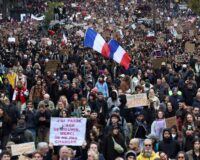
The latest arrests followed a weekend of demonstrations during which police detained hundreds of people, including journalists and activists. Many were later released. Videos circulating online appeared to show officers forcibly moving protesters into buses as security personnel attempted to prevent demonstrators from reaching Jantar Mantar.
Authorities imposed extensive security measures across Delhi, deploying thousands of police and paramilitary personnel. Several metro stations were temporarily closed as officials sought to restrict access to the protest area.
After the weekend demonstrations, police removed Jantar Mantar from the list of authorised protest venues and designated three alternative locations: Ramlila Maidan, Burari Ground and CBD Ground.
The CJP criticised the decision, arguing that moving demonstrations away from the established site would reduce their visibility and make it more difficult for protesters to attract public attention.
Despite the restrictions, activists returned to Jantar Mantar on Tuesday. Videos shared by Dipke and other group members showed Das and Ranka climbing over barricades while carrying Indian flags and chanting slogans against the election chief.
Dipke declared that authorities could not eliminate resistance simply by withdrawing official permission for demonstrations.
Ratna Singh, who heads the CJP’s legal team, alleged that the detained activists were denied access to lawyers for several hours before being taken to Parliament Street Police Station in a private vehicle at approximately 3 a.m. local time.
She also rejected police claims that CJP leaders had publicly called on others to join the demonstration, describing the allegation as false.
The controversy surrounding the CJP reflects growing tensions over electoral procedures, unemployment, education and government accountability. The organisation began as an online satire movement before developing into a broader youth-led pressure group.
Its unusual name originated after Chief Justice of India Surya Kant compared some unemployed young people to cockroaches during a court hearing in May. The judge later said his remarks had been misunderstood, but the comment became a rallying point for young activists frustrated by limited employment opportunities and concerns about public institutions.
The group gained momentum during student-led protests over alleged examination irregularities and demands for education reforms. Those demonstrations eventually contributed to the resignation of federal Education Minister Dharmendra Pradhan, according to the movement’s account of its rise.
The CJP launched its latest nationwide campaign in Mumbai on 2 October, following a newspaper report alleging that Election Commissioner Gyanesh Kumar had ignored objections from two fellow commissioners over changes to voter registration procedures.
The report said commissioners Sukhbir Singh Sandhu and Vivek Joshi had raised concerns on multiple occasions over a period of 10 months about decisions allegedly made without their knowledge. The issues reportedly included changes affecting voter databases and electoral rolls.
The Election Commission rejected the allegations, maintaining that its decisions had been unanimous.
At the centre of the dispute is the Special Intensive Revision of electoral rolls, a voter verification exercise that opposition parties claim could unfairly affect voter participation and benefit Modi’s Bharatiya Janata Party. The government and the Election Commission have denied claims of political interference.
Although the CJP and opposition parties have not organised joint demonstrations, their protests have coincided in several cities, drawing attention to overlapping concerns about electoral transparency and the treatment of dissent.
The five-day remand of Das and Ranka has added another flashpoint to the dispute. As the investigation and possible bail proceedings continue, the case is likely to intensify debate over the boundaries of public protest, police powers and the right to challenge institutions in the world’s largest democracy.
Courtesy: BBC
Post Disclaimer
The views and content presented in this article, news report, or video are solely those of the respective author or creator and do not necessarily reflect the official policy or position of BW Times Digital Online E-Paper.











Leave a comment