















The United States Navy is confronting a significant shortfall in strike capability after a routine review revealed that more than 2,000 missile launch cells will be lost as older vessels approach retirement. The gap is raising concerns within the Pentagon about how to maintain firepower during a critical transition period.
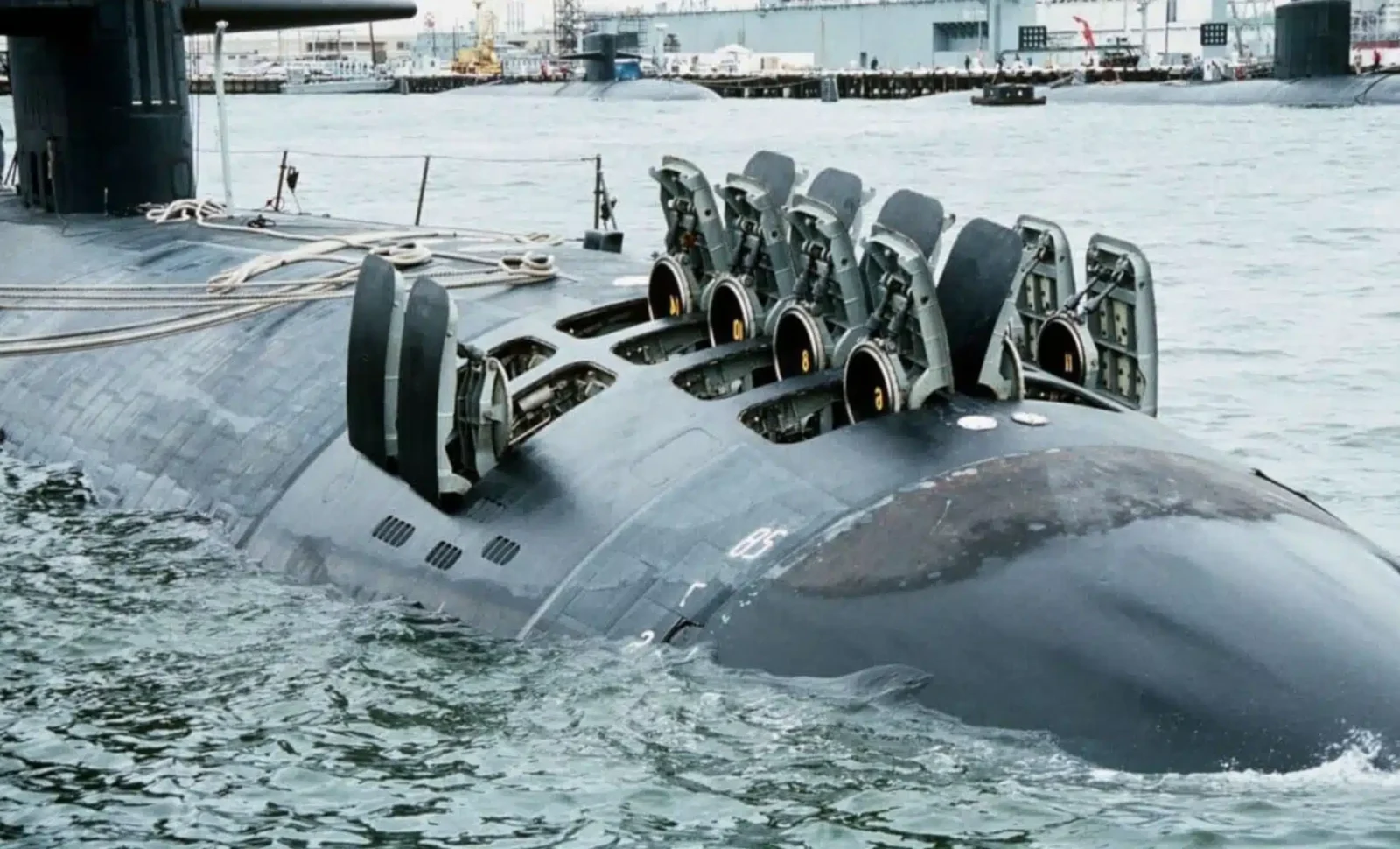
The issue centres on four aging Ohio-class submarine vessels — the USS Ohio, USS Michigan, USS Florida and USS Georgia — which together carry 616 Tomahawk-capable launch tubes. These submarines, originally designed for nuclear missions, were converted in the early 2000s to carry conventional cruise missiles, making them some of the most powerful strike platforms in the fleet.
When combined with the planned retirement of several Ticonderoga-class cruiser warships, the total loss is estimated at 2,080 vertical launch system cells. This reduction represents a major decrease in the Navy’s ability to sustain long-range strike operations.
Each Ohio-class guided-missile submarine carries up to 154 Tomahawk missile launch tubes — far more than any other platform. Their ability to operate undetected for extended periods and deliver large-scale missile strikes makes them uniquely valuable in modern naval warfare.
The Navy has planned to offset this loss with newer Virginia-class submarine vessels equipped with the Virginia Payload Module. While these submarines increase missile capacity compared to earlier models, each carries significantly fewer missiles than the Ohio-class boats, meaning multiple new submarines would be needed to match the lost firepower.
At the same time, the Columbia-class submarine program — intended to replace older nuclear deterrence submarines — is facing delays and rising costs. These submarines are designed for strategic nuclear missions and will not compensate for the loss of conventional strike capability.
Compounding the issue are shipyard constraints across the United States. Reduced industrial capacity, labour shortages and construction backlogs have slowed the production of new vessels, making it difficult to replace aging platforms on schedule.
Military planners have already begun factoring the reduced missile capacity into operational strategies, including war-gaming scenarios and deployment planning. The loss of these submarines is expected to affect how long naval forces can remain deployed and how many sustained strikes they can carry out without resupply.
Despite the growing concerns, no official changes have been announced to delay the retirement of the aging submarines. For now, the Navy must balance maintaining its existing fleet while preparing for a future where its overall missile capacity could be significantly reduced.
Courtesy: dailygalaxy
Post Disclaimer
The views and content presented in this article, news report, or video are solely those of the respective author or creator and do not necessarily reflect the official policy or position of BW Times Digital Online E-Paper.











Leave a comment