















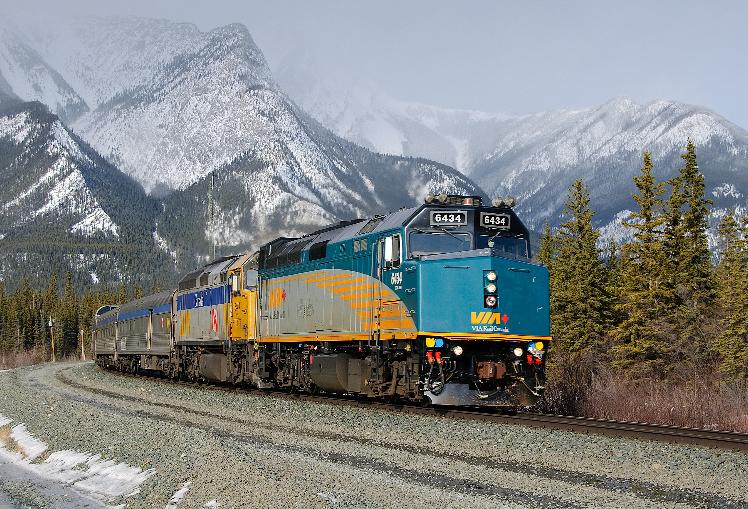
The history of traveling by train in Canada is a powerful story of ambition, survival, and nation-building. Railways did far more than move people and goods—they helped create a unified country out of distant colonies separated by forests, mountains, rivers, and vast empty plains. From the earliest experiments with rail transport to modern passenger services, the Canadian railway system reflects both technological progress and the social and political evolution of the nation.
Before railways, transportation in early Canada depended heavily on waterways. Rivers and lakes, especially the St. Lawrence system, served as the main routes for trade and travel. However, these routes were unreliable during winter when they froze, cutting off communication and commerce for months. Roads, on the other hand, were often muddy, rough, and difficult to navigate. This created a strong need for a more dependable, year-round transportation system, which led to the introduction of railways.
The first significant railway in Canada was the Champlain and St. Lawrence Railroad, completed in 1836. It ran between La Prairie and Saint-Jean-sur-Richelieu in what is now Quebec. Though short in distance, it marked the beginning of a new era. The railway was designed to bypass difficult river navigation and speed up trade between Montreal and the United States. It used steam locomotives inspired by British designs, reflecting the influence of early railway development in England.
The invention of the railway itself is closely associated with George Stephenson, whose work in the early 1800s revolutionized transportation. His locomotives proved that steam-powered trains could move heavy loads quickly and reliably. Canada, still a British colony at the time, adopted these innovations and adapted them to its unique geography, which included extreme weather conditions and rugged terrain.
As the idea of rail transport gained popularity, railway construction spread across different regions. In the mid-19th century, colonies such as Upper Canada and Lower Canada began building their own lines. These railways were initially short and disconnected, serving local economic needs such as transporting timber, fur, and agricultural products. However, political leaders soon realized that a larger, interconnected railway system could strengthen economic ties and improve communication between regions.
The push for a national railway became stronger after Canadian Confederation in 1867. At that time, the newly formed country included only a few provinces in the east, while the western territories remained distant and loosely connected. One of the key conditions for British Columbia joining Confederation was the promise of a railway linking it to the rest of the country. This promise led to one of the most ambitious infrastructure projects in Canadian history: the construction of the Canadian Pacific Railway.
The completion of the Canadian Pacific Railway completion was a defining moment. Stretching from eastern Canada to the Pacific coast in Vancouver, the railway crossed some of the most challenging landscapes in the world, including the Rocky Mountains. Building it required enormous financial investment, political determination, and human effort.
Thousands of workers were employed, including a large number of immigrants from China. These workers were often assigned the most dangerous tasks, such as blasting tunnels through mountains and laying track along steep cliffs. Working conditions were extremely harsh, with low wages, long hours, and significant risk of injury or death. Despite these challenges, their contribution was essential to completing the railway, and their legacy remains an important part of Canadian history.
The railway had immediate and far-reaching impacts. Economically, it opened up the western interior for settlement and development. Farmers moved into the Prairies, where fertile land became accessible thanks to rail transport. Grain could now be shipped efficiently to eastern ports and international markets. Natural resources such as timber and minerals could also be transported more easily, fueling industrial growth.
Railways also played a crucial role in immigration. Newcomers arriving in eastern ports could travel inland by train, helping populate and develop remote regions. Entire communities and towns were established along railway lines, many of which grew into major cities. The railway stations became centers of activity, linking people and ideas across vast distances.
In the early 20th century, railway expansion continued with the creation of additional lines. However, not all railway companies were financially successful. Several struggled with high construction costs and limited profits. To address this, the government formed the Canadian National Railway in 1919 by combining several failing railways into a single public system. This move ensured the continuation of rail services and created one of the largest railway networks in North America.
During both world wars, Canadian railways played a vital role in transporting troops, equipment, and supplies. Trains became essential to the war effort, demonstrating their strategic importance beyond economic purposes. After the wars, railways continued to support industrial growth and national development.
However, by the mid-20th century, the dominance of railways began to decline. The rise of automobiles and the expansion of highway systems gave people more flexibility in travel. Air travel also became more accessible, offering faster long-distance journeys. As a result, passenger train services saw a decrease in demand, though freight rail remained strong.
To preserve passenger services, the government established Via Rail in 1977. This organization took over most intercity passenger operations and continues to run trains across the country. Via Rail connects major cities such as Toronto, Montreal, and Calgary, offering a reliable and scenic travel option.
Train travel in Canada today is very different from its early days, yet it still carries a sense of history and adventure. Long-distance routes, especially those crossing the Rocky Mountains, are known for their breathtaking views. Passengers can experience landscapes that are inaccessible by road or air, including remote forests, rivers, and mountain passes. These journeys attract tourists from around the world and highlight the natural beauty of Canada.
Modern freight railways remain a backbone of the Canadian economy. Companies like Canadian Pacific Railway and Canadian National Railway transport vast quantities of goods across the country and into the United States. Advances in technology have made trains more efficient, safer, and environmentally friendly compared to earlier generations.
There is also growing interest in the future of rail transport in Canada. Discussions about high-speed rail, particularly in densely populated regions, continue to gain attention. While such projects face challenges related to cost and geography, they reflect a renewed recognition of the importance of railways in sustainable transportation.
The cultural significance of railways in Canada cannot be overstated. Trains have been featured in literature, art, and national storytelling as symbols of connection and exploration. They represent the determination to overcome distance and build a unified nation despite geographical obstacles.
In conclusion, the history of railways in Canada is a story of vision, resilience, and transformation. From the early days of the Champlain and St. Lawrence Railroad to the monumental achievement of the Canadian Pacific Railway, trains have shaped the country in profound ways. Influenced by pioneers like George Stephenson and driven by the needs of a growing nation, Canada’s railway system connected people, supported economic growth, and helped define the nation’s identity. Even in the modern era, train travel continues to play an important role, offering both practical transportation and a link to the country’s rich historical legacy.
Post Disclaimer
The views and content presented in this article, news report, or video are solely those of the respective author or creator and do not necessarily reflect the official policy or position of BW Times Digital Online E-Paper.











Leave a comment