








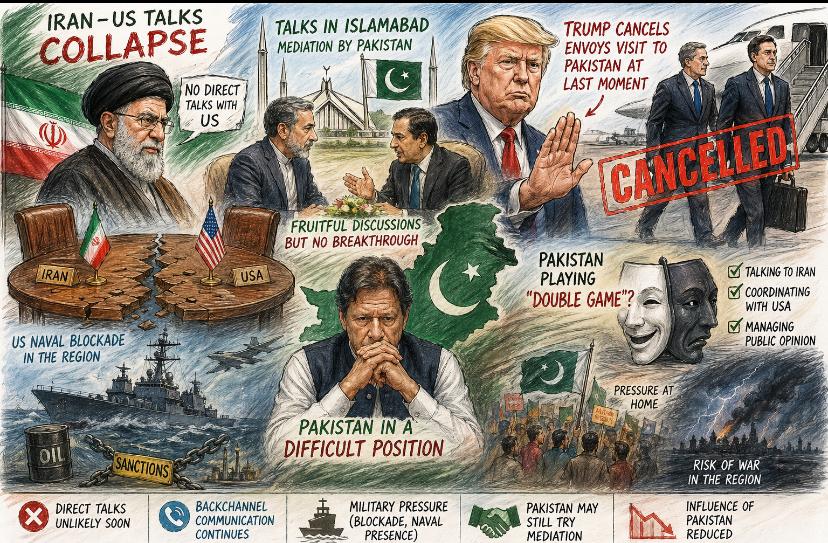
Diplomatic efforts between the United States and Iran have encountered a significant setback after Washington abruptly cancelled a planned visit by senior envoys to Pakistan. The move highlights a widening divide between the two countries over how negotiations should proceed, even as tensions remain high following recent conflict in the region.
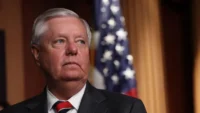
The United States had been preparing to send its special envoy, Steve Witkoff, along with senior adviser Jared Kushner, to Islamabad for a new round of talks. Pakistan was expected to act as a mediator, facilitating indirect discussions aimed at reinforcing a fragile ceasefire and exploring a broader diplomatic settlement. However, in a last minute decision, President Donald Trump called off the trip, signaling frustration with the pace of negotiations and a shift in Washington’s approach.
The cancellation of the visit came as a surprise to observers who had viewed the planned meeting as a possible opening for renewed dialogue. According to U.S. officials, the decision reflected a belief that further travel and indirect engagement would not produce meaningful progress unless Iran showed a clearer willingness to negotiate on key issues. President Trump expressed impatience with delays in the diplomatic process and suggested that Iran should take the initiative if it wants a resolution. This position places the responsibility for restarting talks on Tehran and reinforces Washington’s broader strategy of maintaining pressure while leaving the door open for negotiations under specific conditions.
At the center of the U.S. position are security concerns and geopolitical priorities. Washington continues to push for limits on Iran’s nuclear program along with guarantees for regional stability, especially the uninterrupted flow of oil through the Strait of Hormuz. From the U.S. perspective, these demands are essential for any agreement. Officials argue that without firm commitments from Iran, any ceasefire or diplomatic understanding would remain temporary. This has led to a negotiating posture that emphasizes leverage through economic and political pressure combined with conditional openness to talks. Some analysts believe this approach may be contributing to the stalemate, as insisting that Iran make the first move risks reinforcing Tehran’s view that negotiations are being conducted on unequal terms.
Iran has taken a different approach. Officials in Tehran have made it clear that they are not willing to engage in direct talks with the United States under current conditions. Instead, they prefer indirect negotiations through intermediaries such as Pakistan, which they consider a more balanced framework. Iranian leaders have rejected what they describe as excessive U.S. demands and argue that negotiating under continued economic and military pressure would weaken their position. As a result, Tehran has emphasized the need for a reciprocal approach that includes confidence building steps before formal talks begin. The absence of Iran’s foreign minister from Islamabad during the critical period further reinforced this stance and effectively halted immediate diplomatic progress.
Pakistan continues to present itself as a neutral facilitator seeking to reduce tensions between the two sides. Officials in Pakistan have emphasized their willingness to host talks and maintain communication channels between Washington and Tehran. Islamabad’s position focuses on diplomacy and regional stability, with leaders encouraging continued engagement through mediation rather than confrontation. At the same time, Pakistan has avoided taking sides and has maintained working relations with both countries in an effort to remain a credible intermediary.
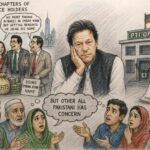
However, Pakistan’s role has also drawn criticism from some observers who argue that it is attempting to balance relations with both the United States and Iran for its own strategic advantage. Former Prime Minister Imran Khan is often mentioned in this debate, as his political legacy continues to influence public and political discourse on foreign policy. According to critics, if Pakistan succeeds in facilitating peace talks, it could improve its image domestically and present itself positively to the public. At the same time, they argue that the broader political environment in Pakistan remains complex, with questions raised about consistency and credibility among major stakeholders, including the government and the establishment, due to policies that are seen as conflicting or overly aggressive. Supporters of Pakistan’s approach, however, maintain that engaging with multiple sides is a practical strategy aimed at reducing tensions and protecting national interests.
The breakdown in talks comes at a sensitive moment, as a fragile ceasefire remains in place after weeks of heightened conflict that disrupted global energy markets and raised concerns about a wider regional crisis. Both the United States and Iran have strong reasons to avoid renewed confrontation, yet deep mistrust continues to shape their relationship and complicate diplomatic efforts.
The current situation reflects fundamentally different views on how negotiations should proceed. The United States favors direct talks with clear conditions, while Iran prefers a gradual approach based on indirect engagement and reciprocal steps. These differences are rooted in broader strategic thinking and make it difficult to establish a common starting point for negotiations.
The cancellation of the Pakistan visit has left diplomacy at an uncertain stage. Although neither side has ruled out future talks, there is no clear timeline for when or how discussions might resume. Pakistan is expected to remain involved as a mediator, but meaningful progress will depend on whether Washington and Tehran can find common ground. For now, the situation remains unresolved, and the risk of further escalation continues to cast a shadow over the region.
Post Disclaimer
The views and content presented in this article, news report, or video are solely those of the respective author or creator and do not necessarily reflect the official policy or position of BW Times Digital Online E-Paper.







Leave a comment