













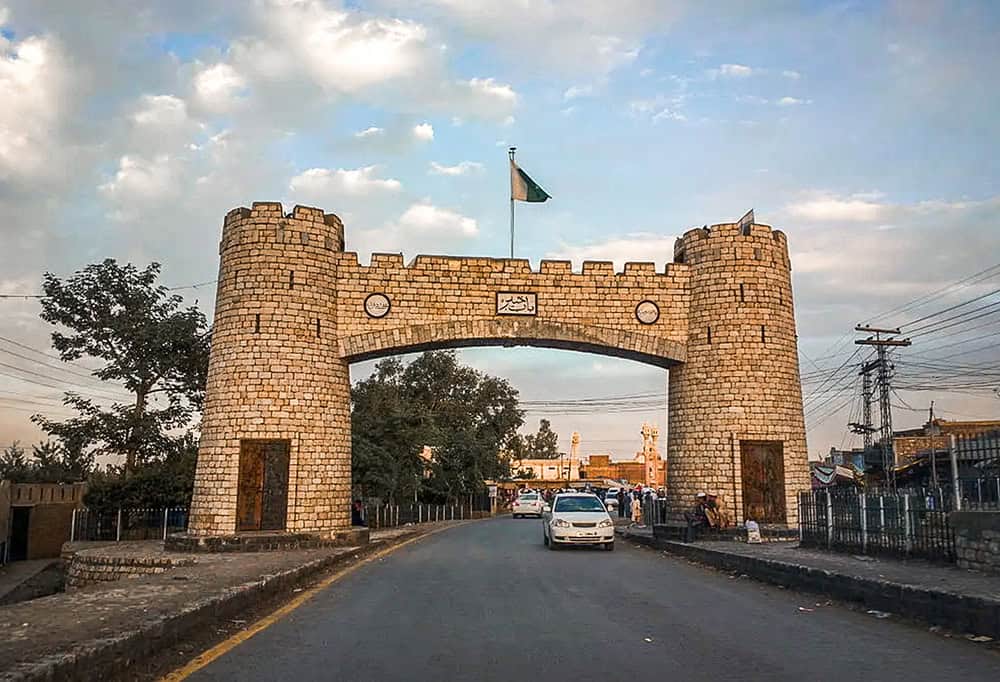
You can’t see all of Peshawar all at once. It unfolds like a story told by an elegant, thoughtful storyteller, with winding routes, friendly people who live there, and a past that is so intimately connected that the ground itself feels heavy with emotions. One of South Asia’s oldest cities, Peshawar has sustained continuous human habitation. It is located at the mouth of the historic Khyber Pass. It is a living record of hundreds of years of trade, migration, and cultural disputes.
This city has been the guardian between Central Asia and the Indian subcontinent for more than 2,500 years. People who traded, studied, or conquered have walked through its corridors, leaving behind pieces of language, religion, and culture. Unlike many other historic capitals, where museum glass conceals the past, Peshawar’s history is incredibly authentic. It is a part of daily life and is happening right now.
The city centre has many old buildings and markets. The air smells like Peshawar, which is a blend of the fragrance of woodsmoke, roasting spices, and strong green tea.Life’s cycle seems both old and out of control.
The “Street of Storytellers”, also known as the famous Qissa Khwani Bazaar, is proof of this way of thinking. It is still a community centre, and it used to be a place where travellers could share news from faraway places over steaming cups of qahwa. Even though professional storytellers are no longer around, people still talk to each other. Stories still fill the bazaar, connecting the modern resident to a long history of oral tradition.
Pashtunwali, the Pashtun people’s code of morality, is what makes Peshawar what it is. It stresses hospitality (melmastia) and strength. People from other countries often see Peshawar only through the lens of global news stories about wars. But joining a Peshawari family is a radical act of giving without expecting anything in return.
Artisans work hard to make things out of wood in this city, students argue in class, and businesses treat strangers like they are regular customers. The city’s real strength is its calm dignity, which keeps it morally strong as it deals with the problems of the 21st century.
Through their design, the city’s buildings tell the story of human civilisation. The landscape here is a mix of different generations. The beautiful Mahabat Khan Mosque and the nearby Gandharan monuments offer us a look at a Buddhist past. The mosque’s beautiful floral frescoes and white marble minarets, which were built in the 17th century, are still thought to be a great example of Mughal creativity. The mosque serves as a reminder of a period when art, religion, and city planning seamlessly converged. It is a peaceful place in the middle of the city’s busy energy.
Post Disclaimer
The views and content presented in this article, news report, or video are solely those of the respective author or creator and do not necessarily reflect the official policy or position of BW Times Digital Online E-Paper.











Leave a comment