












As the Holy Month of Ramadan Begins, Soaring Costs Deepen Hardship in Pakistan
Ramadan Mubarak to Muslims around the world, whether they are living in Islamic countries or in non-Muslim societies. This sacred month brings a special atmosphere that touches nearly every corner of the globe. From the Middle East to North America, from Europe to South Asia, Ramadan is not only a time of fasting but also a season of reflection, generosity, and unity.
During this blessed month, Muslims pray more than usual. Mosques are filled for Taraweeh prayers, homes echo with recitation of the Qur’an, and communities gather for Suhoor and Iftar. In 22 Arab countries, daily routines shift to accommodate fasting. Although life during the rest of the year may not always reflect strict religious practice, Ramadan often brings a visible transformation. Governments in many of these countries attempt to support citizens by regulating food prices, extending business hours at night, and providing assistance to those in need. These efforts are usually directed toward all residents, whether Muslim or non-Muslim, reflecting the Islamic principle of justice and compassion as taught by Prophet Muhammad (PBUH).
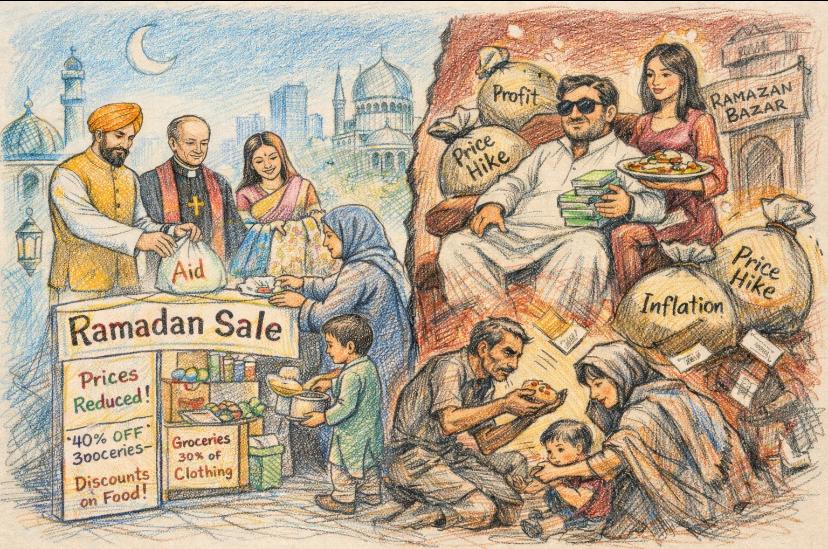
A similar spirit can be seen in many non-Muslim countries such as the United States, Canada, the United Kingdom, and across Europe—home to nearly 50 countries. In these nations, Ramadan has become widely recognized. Supermarkets and local shops often offer special discounts on dates, halal meat, and traditional foods. It does not matter whether the shop owner is Muslim, Christian, Jewish, Hindu, or from any other faith; respect for Ramadan is increasingly visible. Major cities decorate community centers, and interfaith organizations host open Iftar events to build bridges between communities.
Politicians and government officials frequently attend or host Iftar dinners, inviting people from diverse backgrounds. These gatherings symbolize inclusion and solidarity. In many places, non-Muslims willingly participate in Iftar meals, fast for a day in support of their Muslim neighbors, or volunteer at food banks distributing meals to the needy. Ramadan, therefore, becomes more than a religious obligation; it becomes a shared social experience that promotes understanding and harmony.
India, for example, has a Muslim population that rivals or even exceeds that of Pakistan in numbers. Despite political tensions and concerns raised about minority issues under the BJP government, Ramadan is still observed widely and openly across Indian cities and villages. Bangladesh, a Muslim-majority country, is often viewed as making steady social and economic progress, and Ramadan there is marked by community programs, charity drives, and collective prayers.
In contrast, many people feel that Pakistan faces significant challenges. As a Muslim country, expectations are high, especially during Ramadan. Islamic teachings emphasize that evil forces, symbolized by Satan, are restrained during this holy month. Yet many citizens express frustration over ongoing injustice, corruption, inflation, and inequality. Rising prices during Ramadan can burden ordinary families instead of easing their difficulties. Critics argue that when systems fail to protect the weak and ensure fairness, the spirit of Ramadan is undermined.
Across various institutions, from top leadership to lower administrative levels, there are concerns that some individuals misuse even a small amount of authority to demonstrate power rather than serve the public. This behavior contradicts the core message of Ramadan, which calls for humility, patience, and accountability. Fasting is not only about abstaining from food and drink; it is about self-control, ethical conduct, and empathy for the less fortunate.
However, Ramadan also brings hope. It reminds Muslims everywhere that reform begins at the individual level. Communities organize charity campaigns, distribute ration packages, and support struggling families. Young volunteers step forward to help manage traffic near mosques, arrange Iftar for laborers, and raise funds for hospitals. Social media campaigns encourage kindness, forgiveness, and unity.
Ultimately, Ramadan is a global reminder of shared humanity. Whether in Islamic countries or non-Muslim societies, the essence of the month remains the same: devotion to God, service to people, and commitment to justice. If individuals and leaders alike embrace these values sincerely, the blessings of Ramadan can extend far beyond thirty days, shaping societies with compassion, fairness, and mutual respect throughout the entire year.
Post Disclaimer
The views and content presented in this article, news report, or video are solely those of the respective author or creator and do not necessarily reflect the official policy or position of BW Times Digital Online E-Paper.








very true