











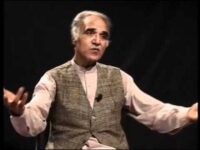






Nobel Peace Prize laureate and prominent Iranian human rights activist Narges Mohammadi says ordinary Iranians are bearing the greatest burden of prolonged conflict, economic hardship and intensifying government repression, warning that growing pressure has left people with little room to live freely.
Mohammadi, 54, spoke in an interview from outside Iran while continuing to face the possibility of being returned to prison. She said the combination of war, economic difficulties and restrictions on civil liberties has created a severe crisis for Iranian society.
She said the pressure on ordinary people has increased substantially over the past year and a half, with repression becoming more widespread as the country has faced the consequences of war and economic instability.
Despite the difficult circumstances, Mohammadi said she continues to see signs of resistance among Iranians, particularly younger people who have become increasingly aware of their rights and more willing to challenge restrictions imposed by the authorities.
She pointed to the nationwide protests that followed the death of Mahsa Amini in 2022 as an important turning point. Amini, a 22 year old woman, died in hospital after being detained over Iran’s strict rules governing women’s clothing.
Mohammadi said the movement that emerged after Amini’s death changed public attitudes and created a new generation of Iranians who are more conscious of their rights.
She said that people continuing to stand up for themselves gives her hope despite the government’s intensified response.
Mohammadi’s comments come as her memoir, titled A Woman Never Stops Fighting, is being published internationally. She wrote much of the book while imprisoned, with fellow inmates helping her secretly move portions of the manuscript outside prison.
The memoir was originally begun during an earlier period of imprisonment in Tehran’s Evin prison. She said handwritten material she had prepared was lost when she was transferred to another facility, forcing her to begin the process again.
During her latest imprisonment, fellow prisoners helped smuggle individual pages out of the facility in small quantities. Mohammadi said their assistance made it possible for her story to eventually reach readers outside Iran.
Mohammadi Describes Detention as Life Threatening
Mohammadi also described the circumstances surrounding her most recent arrest and detention, saying she was seriously beaten by security forces after being detained in December in the northeastern city of Mashhad.
She had been attending a memorial event for human rights lawyer Khosrow Alikordi, who was found dead in his office. Mohammadi was arrested while delivering a public speech at the gathering.
She was subsequently sentenced to seven and a half years in prison for attending the rally. Her accumulated sentences now total 16 years, along with more than 100 lashes. She said the corporal punishment has not been carried out, but she spent lengthy periods in solitary confinement.
According to Mohammadi, security forces repeatedly struck her in the head during her detention. She said her injuries were serious, yet she remained in solitary confinement for approximately two months despite her deteriorating condition.
She eventually lost consciousness on May 1. Nearly 10 days later, she was released on bail and transferred to a hospital in Tehran, where she remained for about two weeks.
Mohammadi said she is now recovering but continues to deal with the consequences of her imprisonment and injuries.
Her history of imprisonment stretches back decades. She has repeatedly been detained for her human rights advocacy and was serving a prison sentence when she received the 2023 Nobel Peace Prize.
She has accumulated prison sentences totaling 44 years and has spent approximately 10 years behind bars, including 161 days in solitary confinement.
Memories of War Shaped Her Opposition to Conflict
Mohammadi said her opposition to war was shaped by experiences from childhood during the Iran Iraq war in the 1980s.
Although she was young at the time, she remembers the atmosphere of repression, political executions and the treatment of political opponents in Iranian prisons.
Those experiences, she said, contributed to her deep opposition to war and its impact on civilians.
She also recalled her reaction when she learned that Evin prison had been damaged during the 12 day conflict between Israel and Iran in 2025. She was outside prison at the time.
The incident reinforced what she described as the convergence of war, discrimination, authoritarianism and violations of human rights in Iran.
For Mohammadi, these pressures are not separate crises. She views them as forces that increasingly affect ordinary people at the same time, leaving civilians to absorb the consequences.
Women Remain a Major Source of Inspiration
Mohammadi said her commitment to human rights was influenced by women whose experiences showed her how individuals can challenge social and political conditions.
She specifically remembered the influence of her mother and other women whose lives demonstrated the possibility of changing themselves, their communities and future generations.
She said these stories helped shape her belief that awareness and resistance can continue even under severe restrictions.
Her activism has repeatedly focused on women’s rights, freedom of expression and opposition to the death penalty. Her work has also made her one of the most prominent Iranian critics of the country’s treatment of political prisoners and activists.
Her Nobel Peace Prize recognition brought international attention to her campaign, but she remained imprisoned for much of that period.
Future Return to Prison Remains Possible
Although Mohammadi is currently outside prison while recovering from her health problems, her legal situation remains unresolved.
Her sentences are presently suspended, and she has said she could be required to return to custody if Iran’s judiciary orders her to do so.
She has also been prohibited from travelling abroad since 2009, preventing her from freely joining her husband and two children, who live in exile in France.
Mohammadi’s continued legal uncertainty means that her temporary freedom does not represent a permanent end to her imprisonment.
For now, she says she is focused on recovery and continuing to speak about the conditions facing Iranian people.
Her message remains centered on the human cost of conflict and repression. While acknowledging the scale of the difficulties confronting Iran, she maintains that growing public awareness, particularly among younger Iranians, represents a source of hope.
For Mohammadi, the continuing willingness of people to demand their rights demonstrates that repression has not eliminated resistance. Instead, she argues, years of conflict and restrictions have strengthened the determination of many Iranians to seek greater freedom and dignity.
Courtesy: apnews
Post Disclaimer
The views and content presented in this article, news report, or video are solely those of the respective author or creator and do not necessarily reflect the official policy or position of BW Times Digital Online E-Paper.








Leave a comment