










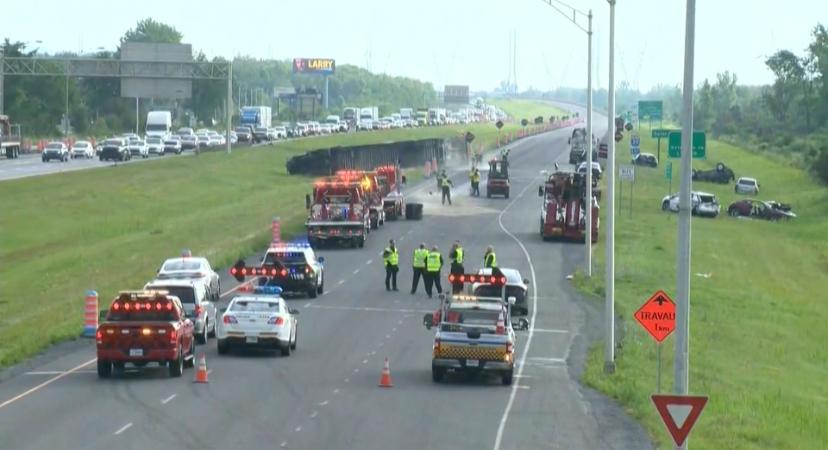
The fatal highway crash near Montreal in July 2022 has evolved from a tragic incident into a defining case study on distracted driving, commercial transport responsibility, and the limits of enforcement in preventing avoidable deaths. With truck driver Baljeet Singh now pleading guilty in court, the focus is no longer on what happened but on why it happened and what it reveals about systemic risks on Canadian roads.
The collision on Highway 30 was not the result of sudden mechanical failure or unpredictable road conditions. It occurred in a clearly marked construction zone where traffic had already slowed. Yet Singh, operating a 53 foot tractor trailer, failed to adjust his speed. What followed was a devastating chain reaction crash that killed Nancy Lefrançois and her young son and left multiple others seriously injured. The scale of destruction underscores a critical reality that when heavy commercial vehicles are involved even a minor lapse in attention can have disproportionately severe consequences.
What makes this case particularly alarming is the degree of distraction involved. Investigators established that Singh had used his mobile phone 18 times in the hour before the crash and was reportedly engaged in a game at the moment of impact. This reflects sustained cognitive disengagement from driving rather than a brief glance. Research in traffic psychology shows that such distractions severely impair reaction time situational awareness and decision making capacity. The dashcam evidence suggesting a 0.35 second reaction window becomes almost irrelevant because a driver who is not mentally present cannot respond effectively regardless of available time.
Equally concerning are the broader compliance failures revealed during the investigation. Reports of repeated lane changes failure to rest and disregard for safety protocols point to a pattern rather than an isolated mistake. In the commercial trucking sector fatigue and time pressure are well documented risk factors. While regulations exist to enforce rest periods and safe operation enforcement often depends on monitoring systems that are not always strictly followed. This raises an important question about how much systemic pressure contributes to unsafe behavior.
Singh’s departure from Canada after the crash and his later arrest in California following travel through India adds another dimension to the case. While his extradition demonstrates international legal coordination the delay highlights challenges in ensuring timely accountability when suspects cross borders.
This case is part of a broader pattern in Canada. The Humboldt Broncos Bus Crash remains one of the most painful reminders of how road safety failures can devastate communities. Incidents in Ottawa and Toronto involving distracted operators have reinforced the same concern that divided attention behind the wheel continues to cost lives. Across British Columbia distracted driving is still identified as a leading cause of fatal crashes.
Despite stricter penalties including fines demerit points and license suspensions distracted driving persists. This suggests that enforcement alone cannot solve the problem. Many drivers continue to underestimate the danger and treat mobile phone use as manageable multitasking rather than a serious impairment.
From an analytical perspective the Montreal crash illustrates three intersecting failures individual negligence regulatory limitations and societal attitudes toward distraction. Addressing only one of these will not prevent future tragedies. Stronger enforcement technologies industry reforms and more effective public awareness are all necessary to reduce risk.
The human cost remains the most powerful reminder. The loss of two lives in a single moment of inattention is not just a statistic but a lasting impact on families and communities. Singh’s guilty plea may close the legal process but it cannot undo the consequences.
This case makes it clear that distracted driving is not a minor violation. It is a high risk behavior with consequences as severe as impaired driving. Until that reality is fully recognized similar tragedies will continue to occur on Canadian roads.

Post Disclaimer
The views and content presented in this article, news report, or video are solely those of the respective author or creator and do not necessarily reflect the official policy or position of BW Times Digital Online E-Paper.









Leave a comment