














Iranian President Masoud Pezeshkian has rejected any suggestion that Tehran will surrender to the United States, delivering a defiant address at the United Nations as tensions between Washington and Tehran continue to escalate.
Speaking at the UN General Assembly in New York on Wednesday, Pezeshkian accused the United States and Israel of attacking Iran and said his country had acted in self defence.
His remarks came a day after U.S. President Donald Trump warned that Washington could take further military action against Iran, including what he described as the possible “annihilation” of the Islamic Republic if no agreement is reached.
Pezeshkian told world leaders that Iranian civilians had been victims of attacks during the conflict. During his speech, he displayed photographs of schoolchildren who Iran says were killed during the opening days of the war in March, along with an image of former Iranian Supreme Leader Ali Khamenei.
“We have only defended ourselves. We are not terrorists,” Pezeshkian said, according to remarks delivered at the General Assembly.
He said Iran would continue to defend itself while maintaining that diplomacy remained the preferred route toward ending the conflict.
Pezeshkian also rejected the idea that pressure from Washington would force Tehran to abandon its position.
“We will never bow our head or bend at the knee,” he said.
The Iranian president’s appearance at the United Nations came amid heightened diplomatic and military tensions between the two countries. It was also notable because Pezeshkian became the first Iranian leader to address the UN on U.S. soil while Iran was engaged in an ongoing war with the United States.
The U.S. delegation did not remain in the chamber for the Iranian president’s address. American officials walked out when Pezeshkian began speaking.
U.S. Secretary of State Marco Rubio criticized Tehran’s presentation of itself as a victim, arguing that Iran had itself been responsible for violations of human rights and international norms.
The exchange followed Trump’s address to the General Assembly on Tuesday, during which he defended the U.S. campaign against Iran and said Washington had prevented Tehran from obtaining a nuclear weapon.
Trump presented two possible paths for Iran, saying the country could reach an agreement with the United States or face further military action.
He also raised the possibility of destroying the Islamic Republic if negotiations failed.
Iran’s delegation had walked out during Trump’s speech the previous day.
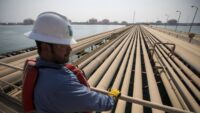
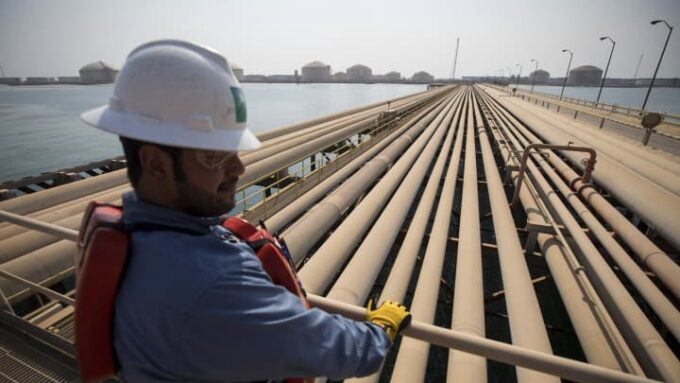
The conflict has also placed the Strait of Hormuz at the centre of international concern. The strategically important waterway carried a significant share of global oil and liquefied natural gas shipments before the war.
Pezeshkian said Iran would not accept a situation in which other countries benefited from the strait while Iranian access to shipping remained restricted.
He also criticized the continued presence of foreign military forces in the region, arguing that an expansion of military deployments would not contribute to peace.
Tensions have also grown over new U.S. sanctions targeting Iranian civilian aviation. Washington has threatened secondary sanctions against countries that permit Iranian aircraft to operate from their airports.
Iranian officials have responded with warnings of possible consequences for neighbouring countries that comply with the U.S. measures.
At the same time, there have been signs of a possible diplomatic opening.
U.S. officials said Trump was open to meeting Pezeshkian while both leaders were in New York. Trump also said his envoys, Steve Witkoff and Jared Kushner, had held a productive meeting with Iranian representatives on the sidelines of the UN gathering.
Iran, however, played down the significance of the discussions. The talks were conducted indirectly with Qatar serving as a mediator.
Iranian Foreign Ministry spokesperson Esmail Baghaei said Tehran’s position remained unchanged, including demands that Washington lift restrictions affecting Iranian ports and release frozen Iranian assets.
The latest diplomatic contacts represent the first indirect discussions between U.S. and Iranian officials since a June ceasefire broke down within weeks over disagreements surrounding shipping arrangements.
The Strait of Hormuz remains a major point of contention. Tehran has sought greater control over shipping through the waterway and has demanded fees from vessels using the route, while Washington has rejected those demands.
The continuing tensions have also affected global energy markets. Oil prices have remained volatile as traders monitor developments involving Iran, the Strait of Hormuz and regional conflicts involving Iran aligned groups.
Pezeshkian’s UN speech comes after more than a year of unsuccessful attempts to reach a durable agreement between Tehran and Washington.
The latest escalation follows a series of military confrontations that have repeatedly disrupted diplomatic efforts. Previous fighting between Israel and Iran resulted in the deaths of senior Iranian military and political figures and contributed to the collapse of earlier negotiations.
With military tensions continuing and diplomatic contacts taking place behind the scenes, the United States and Iran remain far apart on the conditions required to end the conflict.
Pezeshkian’s message at the United Nations was that Iran would continue to resist military pressure while keeping diplomacy open. Washington, meanwhile, continues to demand an agreement addressing its concerns over Iran’s nuclear capabilities and regional activities.
Courtesy: CBC
Post Disclaimer
The views and content presented in this article, news report, or video are solely those of the respective author or creator and do not necessarily reflect the official policy or position of BW Times Digital Online E-Paper.








Leave a comment