














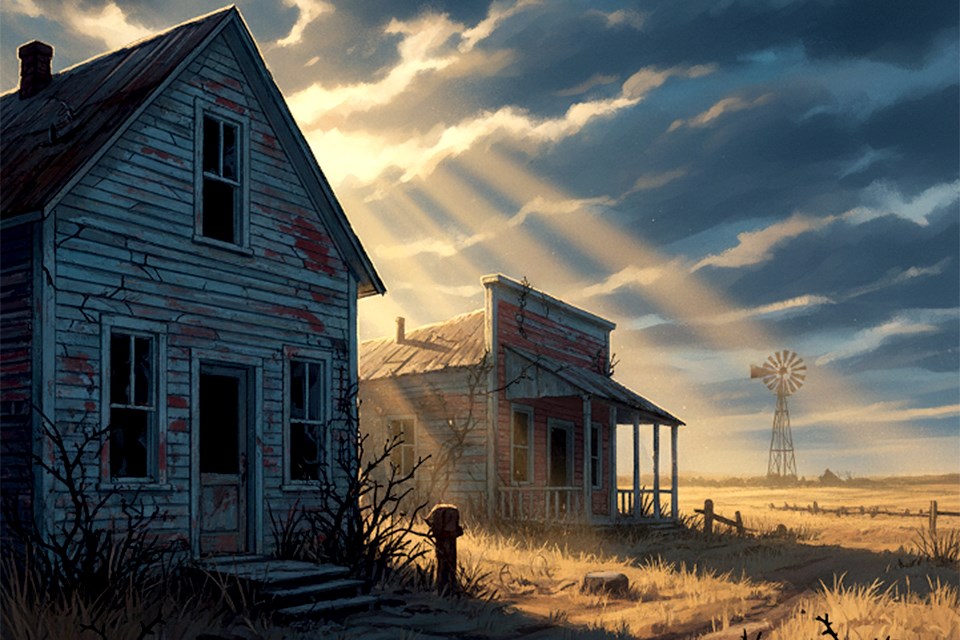
Travellers looking for a unique summer road trip experience can step back in time by exploring some of Alberta’s historic ghost towns, where abandoned settlements continue to tell the story of the province’s mining, railway, agricultural and energy heritage.
Scattered across Alberta’s prairies, foothills and mountain landscapes, these once thriving communities have largely disappeared after economic changes, environmental challenges or shifting industries forced residents to move elsewhere. Today, the remaining landmarks, cemeteries and historical sites offer visitors an opportunity to discover an important chapter of Alberta’s history while enjoying some of the province’s most scenic regions.
One of the most notable destinations is Alderson, located in southern Alberta. Originally known as Carlstadt, the community emerged in the early twentieth century as a promising railway and farming settlement. The town quickly developed businesses, public services and a growing population as settlers hoped to build successful agricultural operations.
However, Alderson was situated within the dry region known as Palliser’s Triangle, where prolonged droughts, strong winds and devastating fires created extremely difficult farming conditions. By the 1930s, many residents had abandoned the community, leaving behind only faint reminders of what was once considered a town full of opportunity.
For those seeking mountain scenery alongside local history, Mountain Park offers another fascinating destination. Established in 1911 high in the Canadian Rockies, the community became one of Canada’s highest towns and was built around a prosperous coal mining operation.
For decades, Mountain Park supported hundreds of workers and their families, creating a close knit mountain community. The decline of coal demand following the Second World War, combined with the transition from steam locomotives to diesel powered railways, eventually led to the closure of the mine in 1950. Most of the buildings were later removed, although the well preserved cemetery remains a lasting tribute to the families who once lived and worked there.
Near Red Deer, visitors can discover the historical significance of Tail Creek Town, one of the largest Métis wintering settlements in western Canada during the 1870s. At its height, the settlement was home to more than 2,000 people who relied on buffalo hunting and the production of pemmican for trade and survival.
As buffalo populations rapidly declined during the late nineteenth century, the settlement gradually disappeared. A prairie fire later destroyed the remaining cabins, leaving only a cemetery and historical markers that continue to honour the area’s important Métis heritage.
Northern Alberta is home to Windfall, another community shaped by the province’s resource industry. The town experienced rapid growth during the late 1950s following the discovery of a major sour gas field. Built specifically for employees and their families, Windfall featured modern homes, paved streets, a school and recreational facilities.
Advances in technology and increased automation eventually reduced the need for a permanent residential community near the gas operations. By the late 1980s, Windfall had been completely decommissioned, allowing forests and vegetation to gradually reclaim much of the former townsite.
Another remarkable destination is Seebe, located along the scenic Bow River west of Calgary. Unlike many resource communities that disappeared decades earlier, Seebe remained an active company town for nearly one hundred years while supporting workers at nearby hydroelectric facilities.
Residents enjoyed spectacular mountain surroundings and a strong sense of community before the town officially closed in 2004 after operational changes made the residential settlement unnecessary. Although public access is now limited because the property is privately owned, Seebe continues to hold a special place in Alberta’s industrial history and remains an important part of the province’s hydroelectric heritage.
These historic communities illustrate how Alberta’s development has been shaped by changing industries, transportation networks, natural resources and environmental conditions. While many of the buildings have disappeared, each location preserves stories of determination, resilience and the lives of thousands of people who helped build communities across the province.
Visitors planning to explore Alberta’s ghost towns are encouraged to respect private property, follow posted regulations and help preserve these historically significant sites for future generations. Many locations remain accessible through public roads or nearby viewpoints, allowing history enthusiasts, photographers and travellers to experience Alberta’s past while enjoying some of the province’s most beautiful landscapes.
From abandoned prairie settlements to former coal mining communities hidden among mountain peaks, Alberta’s ghost towns continue to offer memorable journeys through history, making them worthwhile destinations for anyone seeking an unforgettable summer adventure.
Courtesy: stalbertgazette
Post Disclaimer
The views and content presented in this article, news report, or video are solely those of the respective author or creator and do not necessarily reflect the official policy or position of BW Times Digital Online E-Paper.








Leave a comment