











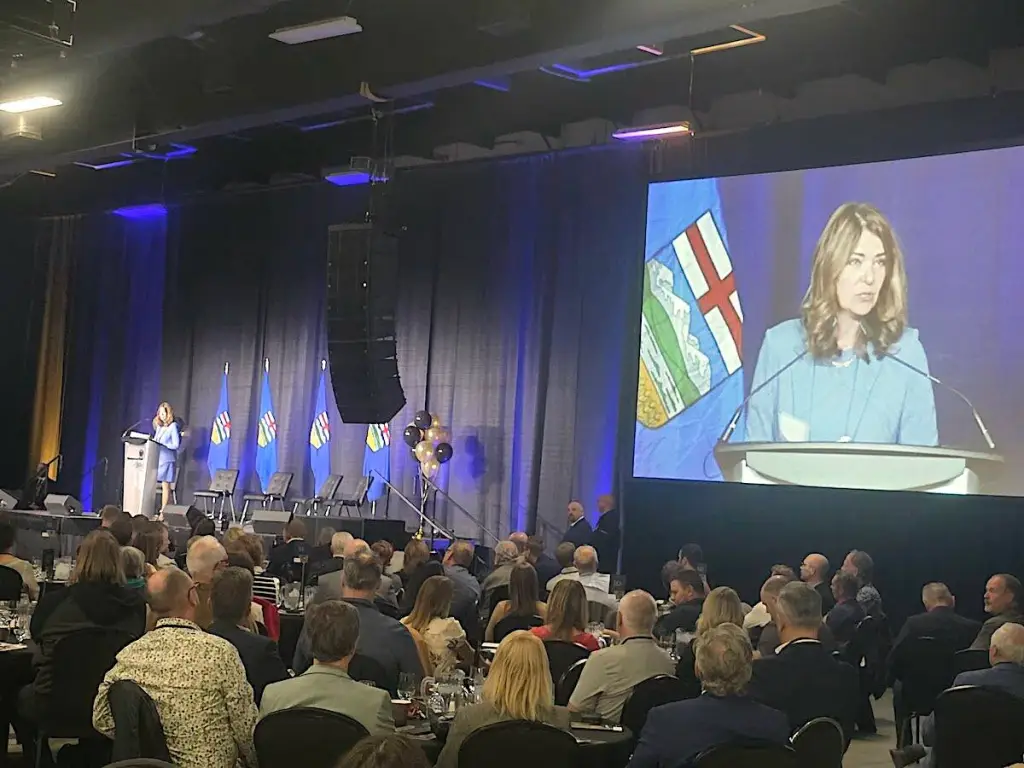
The participation of Danielle Smith in a high-profile Christian leadership conference in Red Deer has sparked debate among religious communities, with several faith leaders expressing concern over what they describe as limited inclusivity and representation at the event. The Alberta Christian Leadership Summit, held at Westerner Park, brought together political figures and Christian leaders for discussions on faith, governance, and public policy, but not without criticism from within the broader faith community.
The summit, which was sold out, featured Smith as a keynote speaker and marked a significant effort to connect Christian leadership with government decision-makers. However, approximately 100 faith leaders from across Alberta signed a letter raising concerns about the structure of the event, particularly its guest list and associated costs, which they argue effectively excluded a wide range of voices from participating in the dialogue. While acknowledging the importance of engagement between faith groups and public institutions, critics suggested that the format of the summit risked narrowing the conversation rather than broadening it.
Defending the premier’s participation, representatives from her office emphasized that government officials routinely engage with diverse cultural and religious communities across the province. The statement highlighted involvement in events linked to multiple faith traditions, underscoring that attendance at the summit should be viewed within a broader context of inclusive outreach. Officials also noted that the conference was organized and funded by independent third-party groups, distancing the provincial government from decisions related to invitations and event structure.
The event featured a range of prominent speakers, including former Reform Party leader Preston Manning, alongside several provincial and federal representatives. Discussions at the summit focused on a range of issues relevant to Christian communities, including medical ethics, religious freedom, education policy, and the evolving relationship between faith-based organizations and public institutions. Organizers framed the gathering as an opportunity to foster meaningful dialogue and strengthen engagement between policymakers and Christian leaders across Alberta.
Despite these intentions, the criticism reflects ongoing tensions about the role of religion in public life and governance, particularly in a diverse society where multiple faith traditions coexist. Some observers argue that while faith-based engagement is essential, ensuring equitable access and representation remains critical to maintaining trust and inclusivity in such initiatives. Others view the summit as part of a broader effort to give voice to specific community perspectives within the policy-making process.
The Alberta Christian Leadership Summit ultimately highlights the challenges of balancing targeted engagement with broader inclusivity, especially when public officials participate in events tied to particular religious groups. As conversations about faith and governance continue to evolve, the response to this event may influence how similar initiatives are structured in the future, with greater attention to accessibility, diversity, and representation likely to remain central concerns.
Courtesy: reddeeradvocate
Post Disclaimer
The views and content presented in this article, news report, or video are solely those of the respective author or creator and do not necessarily reflect the official policy or position of BW Times Digital Online E-Paper.










Leave a comment