














The British Parliament is set to hold a significant debate on June 22 after a public petition calling for an inquiry into alleged Israeli influence on British politics surpassed the threshold required for parliamentary consideration. The petition, which gathered more than 118,000 signatures, has reignited discussions about lobbying, political transparency, foreign influence, and the United Kingdom’s policy toward Israel and Palestine.
The petition was launched earlier this year by British citizen Andy Kalil, who argued that concerns regarding foreign influence in British politics should not be limited to traditional geopolitical rivals but should also examine the role of pro-Israel lobbying organizations and networks operating within the United Kingdom. The petition specifically calls for an investigation into the scope and impact of Israeli state-linked and pro-Israel lobbying activities on government policy, political parties, and public discourse.
Supporters of the petition argue that the devastating humanitarian situation in Gaza, ongoing tensions in the occupied Palestinian territories, and Britain’s political response to the conflict have highlighted the need for greater scrutiny of lobbying efforts that may shape foreign policy decisions. They contend that transparency is essential in maintaining public confidence in democratic institutions.
The debate is expected to attract significant attention from politicians, activists, community groups, and international observers. Under parliamentary rules, any petition receiving more than 100,000 signatures is eligible for consideration and debate in the House of Commons.
The British government, however, has indicated that it does not support launching a formal inquiry. Officials have stated that the United Kingdom already maintains a robust framework governing political lobbying and transparency. According to the government, existing regulations require disclosure of donations, lobbying activities, and political funding, ensuring accountability within the political system.
The issue has drawn attention to several prominent pro-Israel advocacy organizations operating in Britain. Among the most well-known are Conservative Friends of Israel and Labour Friends of Israel, both of which seek to strengthen political and diplomatic ties between the United Kingdom and Israel. Other organizations, including educational and policy-focused groups, have also played active roles in fostering relationships between British lawmakers and Israeli institutions.
Reports published over recent years have documented financial contributions, sponsored visits to Israel, and policy engagement initiatives involving British politicians from multiple political parties. Critics argue that these activities warrant closer examination, while supporters maintain that such exchanges are a normal and legitimate part of democratic political engagement.
The debate is also expected to revisit previous controversies surrounding the influence of lobbying organizations on British politics. Critics have cited instances where politicians who expressed criticism of Israeli policies faced political pressure or accusations of anti-Semitism. Supporters of Israel reject suggestions of improper influence and argue that advocacy groups simply represent the interests of their members within democratic frameworks.
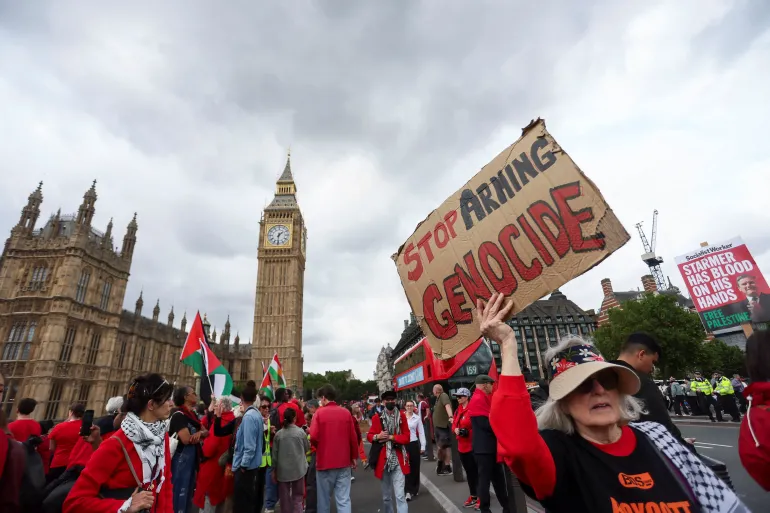
The discussion comes at a politically sensitive moment for Britain. Public opinion remains deeply divided over the conflict in Gaza, and large-scale demonstrations supporting Palestinian rights have taken place across the country over the past two years. At the same time, Jewish organizations and pro-Israel groups have voiced concerns about rising anti-Semitism and the need to protect community relations.
Political analysts note that the debate could create challenges for the Labour government. Prime Minister Keir Starmer, who recently announced his intention to step down once a successor is chosen, has faced criticism from both pro-Israel and pro-Palestinian groups during his tenure. Labour has attempted to balance support for a two-state solution while avoiding definitive legal judgments on whether Israel’s military actions in Gaza constitute genocide.
Experts believe it is unlikely that Parliament will immediately authorize a formal inquiry following the debate. However, the discussion could increase pressure on lawmakers to examine broader questions surrounding political lobbying, foreign influence, campaign donations, and transparency standards.
The outcome may also have implications for Britain’s diplomatic relations with Israel and other international partners. Any move toward a formal investigation would likely generate strong reactions from advocacy groups, political parties, and foreign governments.
For now, Monday’s parliamentary debate represents an important moment in Britain’s ongoing conversation about democracy, accountability, foreign policy, and the role of lobbying organizations in shaping national political decisions. Whether it leads to further action or remains largely symbolic, the discussion is expected to highlight growing public interest in how political influence is exercised and monitored within the United Kingdom.
Courtesy: aljazeera
Post Disclaimer
The views and content presented in this article, news report, or video are solely those of the respective author or creator and do not necessarily reflect the official policy or position of BW Times Digital Online E-Paper.










Leave a comment