















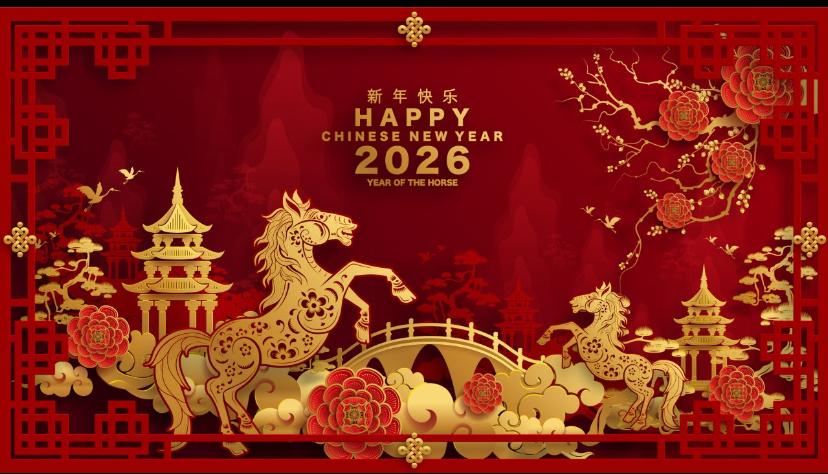
As communities across China and far beyond its borders prepare for celebration, Chinese New Year also known as the Spring Festival marks not simply the start of another calendar cycle, but the renewal of history, heritage, and hope. In 2026, the festival ushers in the Year of the Horse, one of the twelve animals in the traditional Chinese zodiac. But this annual observance is far more than a symbolic change of animal sign; it is a living expression of one of the world’s oldest continuous civilizations.
Chinese New Year follows the lunar calendar rather than the Gregorian system used in most Western nations. The date shifts each year, typically falling between late January and mid-February, beginning with the second new moon after the winter solstice. This lunar calculation connects the festival to agricultural rhythms that shaped ancient Chinese society. For thousands of years, farmers relied on lunar cycles to guide planting and harvesting. The New Year therefore became a moment to close one chapter of toil and welcome a new season of opportunity.
Historical records trace the origins of the festival back more than 3,000 years to the Shang Dynasty. Early celebrations were tied to rituals honoring deities and ancestors, seeking blessings for good harvests and protection from misfortune. Over time, legends enriched the tradition. One widely told story speaks of a mythical beast that would terrorize villages at the turn of the year. According to folklore, loud noises, bright lights, and the color red frightened it away. Today’s fireworks, lanterns, and red decorations echo that ancient narrative, blending myth with cultural continuity.
At its heart, Chinese New Year is about family. The days leading up to the festival see what is often described as the largest annual human migration on Earth. Millions travel long distances to reunite with relatives for the New Year’s Eve dinner, a meal layered with symbolism. Fish represents abundance, dumplings symbolize prosperity, and sweet rice cakes express the wish for progress and growth. These culinary traditions are not accidental; they are messages conveyed through taste and ritual.
Red envelopes containing money are gifted to children and unmarried adults, symbolizing good fortune and protection. Homes are cleaned thoroughly before the New Year to sweep away bad luck, while doors and windows are adorned with calligraphy expressing wishes for health, wealth, and happiness. Lion and dragon dances animate city streets, their rhythmic movements believed to attract positive energy for the months ahead.
The zodiac system adds another dimension to the festival’s significance. Each year is associated with an animal and its perceived characteristics. The Horse, for example, is often linked to energy, independence, and determination. While modern society may treat zodiac traits lightly, they continue to shape cultural conversations and personal reflections across generations.
Beyond China, Chinese New Year has become a global event. From Southeast Asia to North America, from Europe to Australia, major cities host parades, lantern festivals, and community gatherings. In countries with significant Chinese diaspora populations, the celebration has grown into a multicultural spectacle. Even in places where it is not a public holiday, landmarks glow red, and international leaders extend greetings acknowledging its importance. The festival has become a bridge between East and West, highlighting China’s cultural influence in an interconnected world.
Economically, the period carries enormous weight. Travel, retail, entertainment, and hospitality industries experience dramatic surges. Businesses often close for days, reflecting the festival’s priority over commercial routine. For many families, it is the one time in the year when work pauses and personal connection takes precedence.
Yet amid the fireworks and festivities, Chinese New Year remains deeply introspective. It is a time to honor ancestors, settle debts, forgive grievances, and set intentions. The emphasis on renewal resonates universally. Regardless of nationality, the desire for a fresh start is something all societies understand.
In a rapidly changing global landscape, Chinese New Year stands as a reminder of continuity. It links modern skyscrapers with ancient temples, digital messages with handwritten scrolls, and global citizens with ancestral roots. As the new lunar year begins, it carries with it a simple but powerful message: every ending holds the promise of a beginning.
For millions around the world, this is not merely a change of date. It is a reaffirmation of identity, community, and hope for the year ahead.
Post Disclaimer
The views and content presented in this article, news report, or video are solely those of the respective author or creator and do not necessarily reflect the official policy or position of BW Times Digital Online E-Paper.











Leave a comment