
















Exclusive Political Analysis | BWtimes Canada | November 7, 2026
The United States has entered a new and potentially turbulent political chapter following the November 3, 2026 midterm elections, in which the Democratic Party secured control of both chambers of Congress, delivering a major setback to President Donald Trump and the Republican Party. The results represent a significant change in Washington’s political balance and could reshape the final two years of Trump’s presidency.
American voters have sent a clear message through the ballot box that the administration’s policies, economic performance, foreign-policy decisions and political leadership are facing substantial public scrutiny. Although the election does not remove Trump from the presidency, it fundamentally changes the political environment in which his administration will operate.
According to the Associated Press, Democrats secured control of the Senate on election night and subsequently captured the House of Representatives early Wednesday morning. The result gives Democrats control of both chambers for the first time during Trump’s current presidential term.
The scale of the Democratic victory is particularly significant because Republicans entered the election controlling both chambers. Democrats made substantial gains in traditionally Republican areas, including Texas, Iowa, Kansas, Ohio and other competitive states. Their success extended beyond the established battlegrounds, demonstrating the importance of economic concerns and local political organization.
A new balance of power in Washington
All 435 seats in the House of Representatives were contested, while 35 Senate seats were on the ballot, including two special elections.
Democrats entered the election with 214 seats in the House and Republicans with 218, alongside vacancies. Following the election, Democrats secured enough victories to take control of the chamber. CBS News estimates that the party could ultimately hold between 251 and 268 seats after outstanding votes are counted.
The Senate result was equally consequential. Democrats secured at least 54 seats, with Alaska and Mississippi among the remaining closely contested races at the time of the latest reporting. The Associated Press declared Democratic control after a series of victories in states where Republican candidates had previously maintained strong positions.
The new congressional majority will give Democrats considerable authority over legislative committees, congressional investigations, federal spending debates and the confirmation process for presidential appointments.
However, controlling Congress does not mean Democrats can automatically implement their entire political programme. Presidential veto powers, Senate procedures and the possibility of legislative disagreements will continue to influence Washington’s political direction.
Sources: Associated Press | CBS News.
Economic dissatisfaction and the cost of living
One of the central factors behind the election outcome appears to have been economic dissatisfaction.
Inflation, housing expenses, grocery prices, energy costs and household financial pressures became major campaign issues. For millions of Americans, the question was not simply which party had the strongest political message but which leadership could provide greater economic stability.
Democratic candidates concentrated heavily on affordability, healthcare costs, employment and the financial pressures affecting ordinary families.
Republicans attempted to defend the administration’s economic record, highlighting tax policies, business investment, trade measures and employment. Nevertheless, the election results indicate that a substantial number of voters remained dissatisfied with their economic circumstances.
CBS News reported that 89 per cent of voters considered the cost of living a major or crucial factor in their decision. This illustrates how economic concerns influenced voting behaviour across different communities.
The results also suggest that voters who supported Trump and Republican candidates in 2024 were not necessarily committed to supporting the same political direction in 2026.
The Iran conflict becomes a major political issue
Foreign policy, particularly the American conflict with Iran, emerged as another significant factor in the election.
The conflict, which began in late February 2026, continued for months and contributed to international uncertainty, rising energy prices and concerns about America’s military involvement in the Middle East.
The consequences were felt beyond the region. Energy markets, fuel prices, international trade and diplomatic relationships became part of the American domestic political debate.
Vice President JD Vance made particularly important comments following the Republican losses. In a public statement on social media, he directly connected the party’s defeat with the Iran conflict.
Vance stated that the reason Republicans lost was the war, arguing that many voters who had supported Trump and Vance in 2024 subsequently voted for Democrats because of their opposition to the conflict.
He also identified four concerns among voters: ending the war with Iran, addressing the cost of living and inflation, putting America first, and reconsidering America’s relationship with Israel.
His comments were politically significant because they represented an unusually direct assessment of the administration’s foreign-policy difficulties from within its own leadership.
Vance also suggested that the Republican Party needed an honest discussion about the political and national costs of the conflict.
His intervention raises questions about the future direction of Republican foreign policy and the political relationship between Trump and his vice president.
Source: CBS News – JD Vance’s assessment of the election defeat.
Trump faces a new political challenge
President Donald Trump has rejected the idea that the election represents a personal defeat, although he has acknowledged that the Iran conflict affected the Republican performance.
Before the election, Trump had campaigned extensively across the country, attending rallies and encouraging voters to support Republican congressional candidates.
He had also warned that a Democratic-controlled Congress could obstruct his administration’s policies.
Following the results, Trump indicated that he would use his presidential veto powers against legislation he considers unacceptable.
This suggests that Washington could experience a period of political confrontation between the White House and Congress.
Democrats are expected to use their new congressional authority to investigate administration decisions, examine federal spending and scrutinize executive policies. Republican lawmakers, meanwhile, will attempt to defend the president’s record and prevent Democrats from advancing legislation they oppose.
The outcome could also intensify debates about immigration enforcement, trade policy, government spending, foreign relations and executive authority.
For Trump, the immediate challenge is to maintain political support while facing an opposition-controlled Congress.
Source: Associated Press – Democrats win both chambers.
JD Vance and the Republican Party’s future
The election has also placed Vice President JD Vance in a complicated political position.
Vance has been considered one of the prominent potential Republican presidential figures for 2028. His public criticism of the Iran conflict’s political consequences indicates that he is prepared to participate in the debate about the party’s future direction.
However, the Republican defeat creates difficult questions for the entire leadership.
Some Republicans may argue that the party needs to reconsider its economic priorities, while others may defend Trump’s policies and blame individual candidates, campaign strategies or regional political circumstances.
The Republican Party now faces the challenge of maintaining unity while considering its future presidential leadership.
Vance’s comments could become an important part of this internal discussion, particularly regarding foreign policy, economic priorities and the political identity of the Republican Party.
It remains too early to determine how the party will resolve these disagreements or what influence Vance will have on its future direction.
Historic achievements for Muslim Americans
One of the most notable developments in the 2026 elections was the increased representation of Muslim Americans in elected office.
According to the Council on American-Islamic Relations (CAIR), at least 97 Muslim candidates had secured electoral victories nationwide by November 5. The organization was tracking 168 Muslim candidates who had advanced through their primaries and contested federal, state and local positions.
The preliminary figures included 38 state legislative victories, with additional races still being counted.
Among the most significant achievements was the election of Abdul El-Sayed to the United States Senate from Michigan, making him the first Muslim elected to the US Senate.
Adam Hamawy also won a congressional seat in New Jersey’s 12th District, becoming the first Muslim to represent New Jersey in Congress.
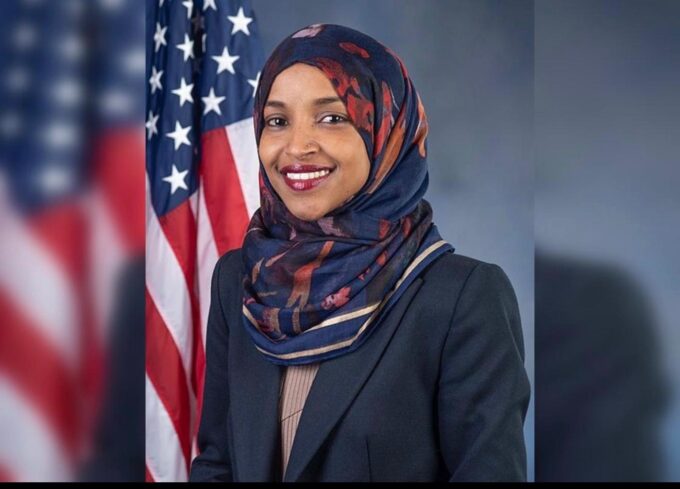
Other Muslim American representatives, including Ilhan Omar, Rashida Tlaib, André Carson and Lateefah Simon, secured victories or reelection.
These developments demonstrate the growing participation of Muslim Americans in the country’s democratic institutions.
Muslim communities have increasingly engaged in discussions about civil rights, religious freedom, immigration, healthcare, international affairs and political representation.
However, their political priorities are not identical. Muslim American voters represent diverse ethnic, cultural and political communities, and their views extend across the American political spectrum.
The election of the first Muslim senator is nevertheless a significant milestone in the history of American political representation.
Source: CAIR – Preliminary 2026 election report.
Historic victories in gubernatorial and state elections
The Democratic gains were not limited to Washington.
The party also made important advances in gubernatorial contests and state legislatures. Democrats gained control of additional state governments and won the Texas House, a significant development in a state traditionally associated with Republican strength.
The election also produced several historic milestones in American political representation, including victories by candidates who are projected to become the country’s first Black woman governor and first Native American woman governor.
These developments indicate that the political changes taking place in the United States extend beyond the federal government.
State governments play an important role in education, healthcare, taxation, voting regulations, public safety and economic development. Consequently, Democratic gains at the state level could have consequences for policy debates well beyond Washington.
Source: Associated Press – Democratic gains in state governments.
What does this mean for American democracy?
The midterm elections demonstrate the importance of America’s system of political checks and balances.
A president may enjoy considerable executive authority, but congressional control remains an independent source of political power.
The Democratic victories will give the opposition party opportunities to question administration decisions, hold hearings, investigate government programmes and demand greater accountability.
The new Congress will also face pressure to address economic concerns, healthcare affordability, immigration, international conflicts and public confidence in government institutions.
For Republicans, the results create an opportunity to reassess their political strategy and reconnect with voters who supported the party in previous elections but changed their preferences this time.
For Democrats, winning Congress is only the beginning. They must demonstrate that electoral victories can translate into meaningful legislative work and policies that address public concerns.
The coming months will therefore be important for both parties.
Looking towards the 2028 presidential election
Although the next presidential election is scheduled for 2028, the consequences of the 2026 midterms will influence the political environment long before voters return to the polls.
Democratic leaders will seek to build on their congressional victories, while potential presidential contenders will face questions about their policy priorities, national leadership and ability to maintain the coalition that produced the midterm gains.
On the Republican side, attention will increasingly turn towards the future leadership of the party and the role of JD Vance and other potential presidential candidates.
The relationship between Trump and Vance, particularly regarding the Iran conflict and the party’s electoral strategy, will remain an important subject of political discussion.
However, it would be premature to treat the midterm outcome as a prediction of the 2028 presidential result. Presidential elections involve different candidates, issues, voter participation patterns and political circumstances.
A turning point in American politics
The November 3, 2026 midterm elections have significantly changed the political landscape of the United States. Democrats have captured both chambers of Congress, Republicans are confronting an internal debate over their political direction, and President Trump must now govern with an opposition-controlled legislature.
The election has also highlighted the importance of economic stability, foreign-policy decisions and the participation of diverse communities in American democracy.
The coming two years will test the ability of both parties to negotiate, govern and respond to public expectations.
For the international community, the consequences will extend beyond America’s borders. Decisions concerning Iran, international trade, energy markets, immigration, NATO and relations with major global powers will continue to influence international stability.
The most important lesson from this election is that political power in a democracy is never permanently guaranteed. Voters can change the balance of government when they believe their economic, social and national concerns are not being adequately addressed.
America has delivered its midterm verdict. The next chapter will be written in Congress, the White House and ultimately at the ballot box in 2028.
By BWtimes Canada – Political Affairs Desk
Post Disclaimer
The views and content presented in this article, news report, or video are solely those of the respective author or creator and do not necessarily reflect the official policy or position of BW Times Digital Online E-Paper.










Leave a comment