

















OTTAWA, CANADA: Canada is preparing to enter a new era of international cooperation as Prime Minister Mark Carney advances negotiations with the European Union over an unprecedented partnership that could bring the country closer to the 27-member bloc than ever before, without requiring full EU membership.
Senior European officials have confirmed that discussions are underway to establish a unique relationship with Canada, potentially involving a form of associate membership that has never previously existed within the European Union.
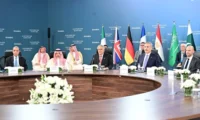
The proposed arrangement is expected to dominate discussions at the upcoming Canada-EU summit in Montreal, beginning Thursday, October 29, where leaders will explore new agreements covering international trade, security, technology and broader economic cooperation.
European officials have described the initiative as one of the most ambitious developments in the history of the bloc’s international partnerships, suggesting that Canada could eventually enjoy an unprecedented level of integration with European institutions and markets.
The initiative comes as Ottawa seeks to diversify its international relationships and reduce its economic dependence on the United States amid continuing trade tensions with President Donald Trump’s administration.
Although the precise structure and official designation of the proposed partnership remain undecided, European officials have indicated that all 27 EU member states support developing the closest possible relationship with Canada.
The discussions represent a significant diplomatic opportunity for Carney, whose government has made international economic diversification and stronger strategic alliances central priorities.
A New Chapter in Canada-Europe Relations
The proposed partnership follows an announcement made in September by European Commission President Ursula von der Leyen, who revealed that the European Union was prepared to explore granting Canada a new form of associate membership.
The announcement attracted international attention because associate membership is not an established category within the EU’s existing institutional framework.
Unlike full membership, which involves extensive legal, political and economic obligations, the proposed arrangement would be designed specifically to reflect Canada’s circumstances and its existing relationship with European countries.
Carney welcomed the European initiative during his visit to the European Parliament in Strasbourg, France, while making clear that Canada was not pursuing conventional EU membership.
Instead, his government is seeking a strategic alliance that could strengthen economic opportunities, improve cooperation on international security and create new channels for technological development.
The prime minister has consistently emphasised that the practical benefits of the partnership matter more than its official title.
Speaking to reporters in Ottawa on Tuesday before a cabinet meeting, Carney reiterated that the Montreal summit would mark the beginning of formal negotiations expected to continue over the following year.
He said the government’s priority was ensuring that the agreement would improve the lives of Canadians while strengthening the country’s independence and sovereignty.
For Ottawa, the objective is not to replace Canada’s existing international relationships but to establish greater flexibility in a changing global political and economic environment.
The European Union already represents an important market for Canadian exports and investment, and both sides have an established foundation for cooperation through their existing trade and diplomatic agreements.
A deeper strategic arrangement could build on that foundation by creating new opportunities for businesses, researchers, technology companies and institutions across Canada and Europe.
European Union Signals Strong Support for Canada
Senior European officials expressed considerable optimism ahead of the Montreal summit, describing the proposed relationship as a potentially historic development.
During a briefing in Brussels on Tuesday, officials indicated that the European Union was prepared to pursue a level of cooperation with Canada that could exceed its previous arrangements with countries outside the bloc.
They acknowledged, however, that negotiations were still in their early stages and that important questions remained unresolved.
Among the issues requiring further examination are the legal framework of the proposed relationship, the responsibilities Canada might assume and the extent to which the country could participate in European programmes and institutions.
Officials also recognised that individual EU member states have questions about the practical implications of introducing a new partnership category.
Despite those uncertainties, they maintained that European governments were united in their ambition to strengthen relations with Canada.
The proposed arrangement would be tailored specifically to Canada rather than automatically establishing a new membership pathway for other countries seeking closer ties with the European Union.
That distinction is particularly important because several European countries have spent years pursuing full EU membership through complex accession procedures.
Creating a unique status for Canada could raise questions about how the bloc differentiates between strategic partnerships and formal membership applications.
European officials have indicated that such issues will require careful consideration during negotiations expected to extend into 2027.
The upcoming summit is therefore being viewed as the beginning of a long-term diplomatic process rather than the conclusion of a final agreement.
Trade and Economic Cooperation at the Centre of Discussions
Economic cooperation is expected to play a central role in the evolving Canada-EU relationship.
Canada and the European Union already maintain extensive commercial ties through the Comprehensive Economic and Trade Agreement, commonly known as CETA.
The agreement has provided a framework for reducing trade barriers and expanding commercial opportunities between Canadian and European businesses.
A more ambitious partnership could strengthen those connections and potentially open new areas of cooperation involving investment, supply chains, advanced manufacturing and emerging technologies.
For Canadian businesses, stronger access to European markets could create opportunities to diversify exports and reduce exposure to disruptions affecting trade with the United States.
European companies could also benefit from expanded investment opportunities in Canada, particularly in industries linked to clean energy, natural resources, advanced technology and infrastructure.
The proposed strategic alliance could encourage greater cooperation on critical minerals, an increasingly important sector as countries seek secure supplies of materials used in electric vehicles, batteries, renewable energy systems and advanced manufacturing.
Canada possesses substantial natural resources, while European economies are working to strengthen industrial supply chains and reduce dependence on limited international suppliers.
Closer coordination could therefore support economic priorities on both sides of the Atlantic.
However, the details of any additional market access, regulatory cooperation or investment commitments will depend on negotiations between Canadian and European representatives.
Security and Technology Become Strategic Priorities
Beyond trade, security cooperation is expected to feature prominently in the Montreal discussions.
Canada and European countries already maintain longstanding defence relationships through NATO and other international institutions.
A stronger Canada-EU partnership could complement those existing arrangements by encouraging greater cooperation on cybersecurity, defence-related technology, economic security and responses to emerging global threats.
The rapid development of artificial intelligence and other advanced technologies has also increased the importance of international cooperation on research, innovation and regulation.
Both Canada and the European Union have significant interests in developing secure digital infrastructure, supporting technological innovation and establishing responsible approaches to emerging technologies.
A deeper partnership could provide opportunities for researchers, universities and businesses to work more closely together.
Such cooperation would be particularly relevant as governments seek to protect sensitive technologies, strengthen supply chains and remain competitive in an increasingly complex global economy.
Nevertheless, the scope of future agreements remains under discussion, and no final framework for Canada’s proposed associate status has been established.
Trump’s Trade Policies Accelerate Canada’s Global Strategy
The diplomatic initiative comes against the backdrop of deteriorating relations between Canada and the United States.
President Donald Trump’s tariff policies and repeated statements about the possibility of Canada becoming part of the United States have created political tensions and uncertainty surrounding the future of bilateral relations.
For decades, the United States has been Canada’s dominant trading partner, with deeply integrated supply chains connecting businesses, workers and industries across the border.
That economic relationship remains critically important, but the current trade dispute has reinforced concerns about the risks of relying too heavily on a single market.
Carney has responded by pursuing stronger diplomatic and commercial relationships with countries beyond North America, particularly European partners.
His government views international diversification as a means of protecting Canadian economic interests while strengthening the country’s ability to make independent policy decisions.
The proposed EU partnership is emerging as one of the most significant elements of that strategy.
By expanding cooperation with Europe, Canada could gain additional economic opportunities and greater flexibility in responding to future international trade disputes.
However, stronger European ties would not eliminate the importance of Canada’s relationship with the United States.
The geographic proximity, existing infrastructure and scale of cross-border commerce mean that American markets will continue to play a major role in the Canadian economy.
The challenge for Ottawa will be to strengthen alternative partnerships without unnecessarily disrupting established commercial relationships.
Questions Remain Over Associate Membership
Despite the enthusiasm surrounding the initiative, several fundamental questions remain unanswered.
It is not yet clear whether Canada’s proposed associate status would provide any formal participation in European institutions or whether it would primarily involve expanded cooperation through separate agreements.
There is also uncertainty about the legal obligations, financial commitments and regulatory arrangements that might accompany such a partnership.
European officials have acknowledged that the concept represents new territory for the bloc and will require extensive negotiations before its practical implications become clear.
Carney has attempted to manage expectations by emphasising that Canada is not seeking full membership and that the agreement’s substance will determine its value.
The prime minister has described the emerging relationship as a strategic alliance designed to strengthen Canada’s sovereignty rather than compromise it.
That distinction will likely become increasingly important as negotiations progress and Canadians seek greater clarity about the potential benefits and responsibilities involved.
The government will also need to demonstrate how closer European cooperation could translate into tangible improvements for Canadian workers, businesses and consumers.
Montreal Summit Could Shape Canada’s International Future
The two-day Montreal summit is expected to provide the first major opportunity for Canadian and European leaders to establish a roadmap for the proposed partnership.
Discussions will focus on identifying areas where cooperation can be expanded immediately while developing a longer-term framework for the unprecedented relationship.
European officials expect negotiations to continue until at least the next Canada-EU summit in 2027, reflecting the complexity of creating a new arrangement involving 27 European governments and Canada.
For Carney, the summit represents an opportunity to demonstrate that Canada can respond to international economic uncertainty by strengthening its global alliances.
For the European Union, closer relations with Canada could reinforce ties with a democratic partner that shares important economic, diplomatic and security interests.
The proposed partnership also reflects broader changes in international relations, as countries increasingly seek reliable partners to navigate trade disputes, technological competition and geopolitical uncertainty.
Whether the final arrangement is formally called associate membership or a strategic alliance, its importance will depend on the opportunities and commitments it creates.
Canada’s future relationship with the European Union remains a work in progress, but the political ambition behind the initiative is already clear.
As Ottawa prepares to welcome European leaders to Montreal, the discussions could mark the beginning of one of the most significant transformations in Canada’s international relationships in decades.
If negotiations succeed, Canada could emerge with a deeper connection to Europe, stronger economic partnerships and greater international influence while maintaining its independence outside the European Union.
For Prime Minister Mark Carney, the ultimate test will be whether this ambitious diplomatic initiative can deliver meaningful economic and strategic benefits to Canadians in an increasingly uncertain world.
Courtesy: CBC
Post Disclaimer
The views and content presented in this article, news report, or video are solely those of the respective author or creator and do not necessarily reflect the official policy or position of BW Times Digital Online E-Paper.













Leave a comment