

















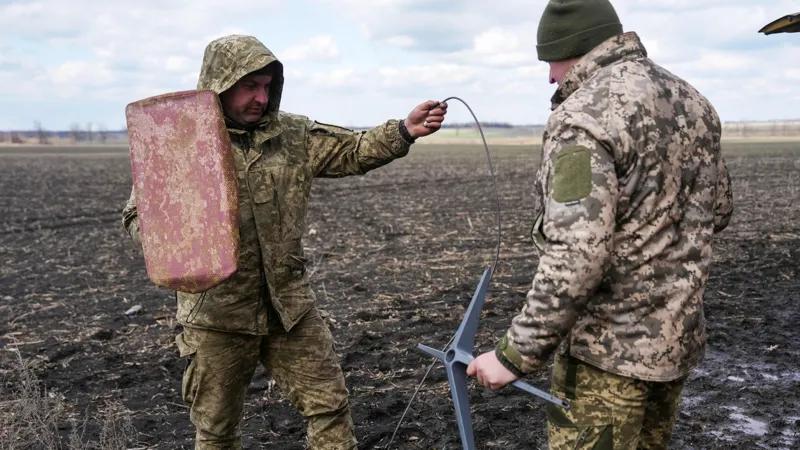
KYIV, Ukraine, October 14, 2026: Ukraine has expressed serious concern over newly reported restrictions on Elon Musk’s Starlink satellite internet service, warning that unexpected connectivity limitations are disrupting critical military operations as Russia intensifies missile and drone attacks against Ukrainian cities and energy infrastructure.
A senior adviser to Ukrainian President Volodymyr Zelensky has suggested that the restrictions may be connected to the current political situation, raising fresh questions about Ukraine’s dependence on American technology during its continuing war with Russia.
Serhiy Beskrestnov, an adviser specializing in military communications and electronic warfare, said SpaceX had introduced a speed limitation affecting Starlink terminals operating on fast-moving military equipment.
According to Ukrainian officials, the new restriction causes Starlink terminals to lose connectivity when the vehicles or systems carrying them exceed approximately 160 kilometres per hour.
The limitation has reportedly affected Ukrainian drone missions, including operations involving aerial interceptors designed to destroy incoming Russian attack drones.
Beskrestnov said the restrictions were introduced overnight without advance notification to Ukrainian authorities, leaving military units struggling to understand why communication systems had suddenly stopped functioning during certain operations.
He suggested that the timing was unlikely to be accidental and could be connected to broader political developments surrounding the conflict.
However, no evidence has been publicly established demonstrating that the reported restrictions were introduced for political reasons.
SpaceX, the American aerospace company responsible for operating Starlink, has not publicly explained the reported changes or responded to the allegations.
The development comes at a particularly sensitive moment for Ukraine, which continues to rely heavily on satellite communications and Western intelligence systems to coordinate military operations and defend its territory against Russian attacks.
Since Russia launched its full-scale invasion in February 2022, Starlink has become an essential part of Ukraine’s battlefield communication network.
The satellite internet system enables Ukrainian military personnel to maintain connectivity in areas where conventional telecommunications infrastructure has been damaged or destroyed.
It also supports reconnaissance activities, military logistics, battlefield coordination and the operation of certain unmanned systems.
Ukraine has increasingly relied on drones to monitor Russian positions, conduct attacks against military targets and intercept incoming aerial threats.
Beskrestnov emphasized that Starlink has been particularly important for operating interceptor drones capable of engaging Russia’s newer jet-powered unmanned aircraft.
These faster drones present additional challenges for Ukrainian air defence systems because they can travel at speeds that make interception more difficult.
According to Ukrainian defence ministry sources, the newly reported restrictions affect Starlink terminals once the equipment carrying them exceeds the specified speed threshold.
The resulting loss of connectivity can interrupt communications between drone operators and their aircraft, potentially forcing missions to be abandoned or reducing their effectiveness.
Officials said the restrictions have affected interceptor drones and medium-range strike systems while also creating difficulties for reconnaissance, frontline logistics and communication relay operations.
The Ukrainian defence ministry is investigating the cause of the reported connectivity problems.
Although officials have confirmed observing disruptions, the precise technical explanation and the reasons for the reported speed limitation remain unclear.
The controversy has revived concerns about the strategic risks associated with relying on privately operated satellite networks for essential military functions.
Starlink is owned and operated by SpaceX, meaning decisions concerning the service’s technical configuration can have significant consequences for countries that depend on its infrastructure.
Earlier this year, restrictions preventing Russian forces from accessing Starlink reportedly disrupted Moscow’s military operations and created difficulties for Russian commanders.
That development had demonstrated the potential influence of satellite communications on battlefield effectiveness.
The latest reported limitations, however, have raised concerns within Ukraine that similar technical controls could interfere with its own defensive capabilities.
The dispute is unfolding against a backdrop of renewed diplomatic tension involving Washington, Kyiv and Moscow.
US President Donald Trump recently announced what he described as an agreement between Russia and Ukraine to suspend attacks against energy infrastructure.
Trump stated publicly that an energy ceasefire had taken effect and called on both countries to respect the arrangement.
However, subsequent Russian strikes against Ukrainian electricity facilities have cast serious doubt on whether the proposed agreement is being observed.
President Zelensky has repeatedly indicated that Ukraine is prepared to suspend attacks on Russian oil refineries and other energy installations if Moscow agrees to halt similar strikes against Ukrainian infrastructure.
Russian Foreign Minister Sergey Lavrov has taken a more confrontational position, arguing that a ceasefire could provide Ukraine with an opportunity to receive additional weapons from European allies.
Lavrov suggested that such a pause could strengthen Ukraine’s military capabilities and allow it to continue fighting.
The disagreement highlights the difficulties facing diplomatic efforts to secure even a limited reduction in hostilities.
Meanwhile, Zelensky has alleged that the United States threatened to restrict intelligence sharing unless Ukraine accepted Trump’s proposed energy ceasefire.
Trump has denied that Washington is withholding intelligence from Kyiv.
The issue is particularly important because Ukraine depends on American satellite intelligence and early warning systems to identify incoming Russian missiles.
Such information allows Ukrainian authorities to issue air raid warnings and helps military units prepare defensive responses.
Ukrainian officials have expressed concern after missiles struck targets in Kyiv during recent attacks before warning sirens could provide residents with sufficient time to seek shelter.
The circumstances surrounding those incidents have raised questions about the effectiveness of existing early warning arrangements, although a direct connection to any alleged intelligence restrictions has not been established.
The military and diplomatic disputes have coincided with another devastating wave of Russian attacks against Ukrainian cities.
According to Ukrainian authorities, overnight missile and drone strikes damaged critical energy infrastructure and left at least 600,000 people without electricity.
The attacks affected Kyiv and surrounding areas, as well as the northeastern city of Kharkiv.
Local officials reported that three people were killed in Kyiv, where explosions damaged residential buildings and other structures.
Emergency workers were deployed to affected neighbourhoods as residents emerged from damaged homes, some suffering injuries from shattered glass and flying debris.
Later Wednesday, authorities reported that at least six people were killed when a Russian drone struck a warehouse in the northwestern city of Lutsk.
The latest casualties have added to the growing human cost of a war that has continued for more than four years.
Ukraine’s air force reported that Russia launched 39 ballistic and cruise missiles alongside 128 drones during the overnight attacks.
Ukrainian air defence units said they intercepted four missiles and 115 drones.
Despite those interceptions, several weapons reached their targets, causing deaths, injuries and damage to essential infrastructure.
Russian authorities described their operation as a large-scale attack against communications and energy facilities allegedly supporting Ukraine’s military.
Moscow maintains that its strikes are directed against infrastructure connected to Ukrainian defence operations.
However, the destruction of electricity systems and residential areas has imposed severe hardship on civilians, particularly as communities continue struggling with repeated attacks on power supplies.
The Russian defence ministry also claimed that its forces intercepted 902 Ukrainian drones overnight across several Russian regions, including the Moscow area and Russian-occupied Crimea.
The competing claims reflect the expanding scale of drone warfare, with both countries increasingly using unmanned aircraft to strike targets far beyond the immediate front lines.
Russia continues to control approximately one-fifth of Ukrainian territory, including Crimea, which Moscow annexed in 2014.
The conflict has transformed into a prolonged struggle involving conventional ground operations, missile strikes, electronic warfare and rapidly evolving drone technology.
Against this backdrop, reliable communication networks have become essential to Ukraine’s ability to defend its cities and coordinate battlefield operations.
The reported Starlink restrictions therefore represent more than a technical inconvenience.
They expose the vulnerability of military systems that depend on external technology providers and communications infrastructure beyond the direct control of Ukrainian authorities.
Defence specialists have increasingly emphasized the importance of maintaining alternative communication systems to reduce the risks associated with interruptions to satellite connectivity.
For Ukraine, however, developing comparable alternatives during an active war presents significant financial, technological and operational challenges.
The country is simultaneously attempting to strengthen its air defences, repair damaged energy facilities and secure additional military assistance from international partners.
Zelensky has continued urging European governments to accelerate deliveries of air defence equipment capable of intercepting Russian missiles and drones.
His diplomatic efforts include discussions with British leaders about expanding support for Ukraine’s defensive capabilities.
The need for additional protection has become increasingly urgent following repeated strikes against civilian areas.
In Kyiv, residents have described terrifying experiences as explosions struck residential buildings with little or no warning.
Tetiana Storozhyk, a 54-year-old resident, recalled being thrown from her kitchen into a hallway when a missile explosion struck her apartment building.
She said the attack occurred so suddenly that she had no opportunity to escape before the building was damaged.
Her account illustrates the dangers facing civilians when missile warning systems and air defences fail to provide adequate protection.
Like many Ukrainians, she expressed a desire for stronger defensive weapons while also emphasizing the urgent need for peace.
The latest attacks have reinforced concerns about the effectiveness of proposed ceasefire arrangements that lack clear enforcement mechanisms.
They have also intensified debate over the responsibilities of Ukraine’s international partners at a time when the country remains dependent on external military assistance.
For Kyiv, the immediate priority is restoring confidence in the communication systems used to protect Ukrainian airspace.
Ukrainian officials are seeking to determine why Starlink connectivity has reportedly been interrupted and whether the restrictions can be modified to accommodate essential military operations.
Until SpaceX provides a detailed explanation, uncertainty will remain over the technical and political circumstances surrounding the reported changes.
The situation has placed renewed attention on the relationship between private technology companies, national governments and military operations during modern conflicts.
It also demonstrates how decisions involving satellite connectivity, intelligence sharing and defence technology can directly influence battlefield operations and civilian security.
As Russian attacks continue and diplomatic efforts struggle to produce a durable ceasefire, Ukraine faces mounting pressure to protect its population while maintaining the technological capabilities necessary to resist Moscow’s military offensive.
The controversy surrounding Starlink has added another layer of uncertainty to an already complex conflict, underscoring the extent to which Ukraine’s security depends not only on weapons and soldiers but also on reliable communications, international cooperation and the political decisions of its allies.
Courtesy: BBC
Post Disclaimer
The views and content presented in this article, news report, or video are solely those of the respective author or creator and do not necessarily reflect the official policy or position of BW Times Digital Online E-Paper.












Leave a comment