















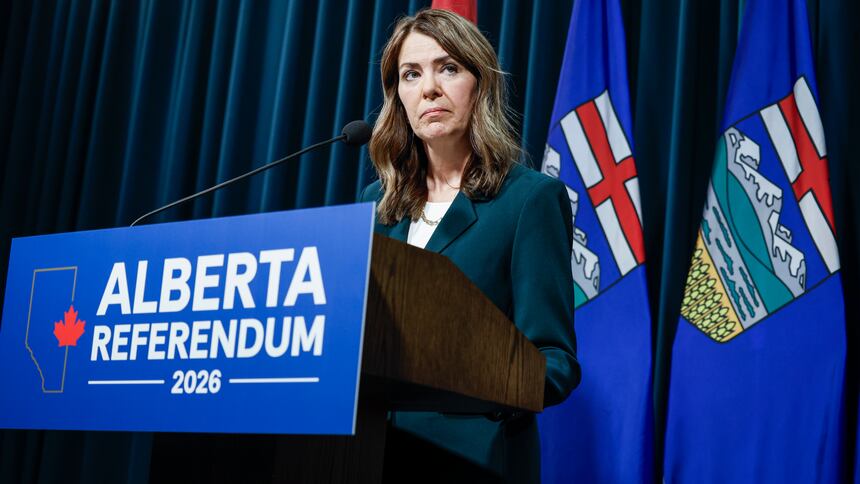
Alberta’s growing debate over separation from Canada is drawing increasing attention to Britain’s experience with Brexit, a political decision that transformed the United Kingdom and continues to shape its politics a decade after the vote.
In 2016, British voters narrowly chose to leave the European Union, with 52 per cent supporting Brexit and 48 per cent voting to remain. What followed was not a simple political transition. Britain entered years of negotiations, uncertainty and political division as governments worked to determine what leaving the European Union would actually mean.
Alberta now faces a very different situation, but the Brexit experience offers several lessons as the province prepares for a referendum on whether to begin a process that could eventually lead to independence from Canada.
The circumstances surrounding the two debates are not identical. Britain was deciding its relationship with a political and economic bloc made up of other sovereign countries, while Alberta is part of Canada and remains deeply connected to the rest of the country through trade, federal institutions, infrastructure and shared economic interests.
Despite those differences, both debates have raised questions about what happens after a successful referendum and whether political promises can be translated into a practical plan.
For Alberta separatists, the Brexit experience highlights the importance of answering difficult questions before asking voters to make a historic decision. Issues such as trade, currency, taxation, pensions, borders, energy markets, federal assets, debt and relations with neighbouring provinces would all require detailed consideration if Alberta were ever to pursue independence.
The British experience also demonstrated how difficult it can be to establish a clear path forward after a referendum. The vote itself provided a political direction, but many of the most complicated questions remained unresolved. Negotiations over Britain’s future relationship with the European Union continued for years and became a major source of political conflict.
Alberta’s separation debate could face similar challenges if voters support beginning an independence process without a detailed agreement on what comes next.
Supporters of Alberta independence argue that the province has the economic resources and political strength to determine its own future. Many separatists point to Alberta’s energy industry, natural resources and contributions to the Canadian economy as evidence that the province could operate successfully outside Confederation.
However, economic strength alone would not settle the practical questions surrounding separation.
Alberta would need to establish new relationships with Canada and potentially other countries. Businesses would need certainty about trade and investment. Residents would want answers about pensions, citizenship, healthcare, taxation and government services. Indigenous nations would also have an important role in any constitutional negotiations affecting their rights and territories.
The Brexit experience shows that political movements can gain momentum around a broad promise of change while the detailed consequences remain uncertain.
Another important lesson is the long political shadow a referendum can create. Ten years after the Brexit vote, Britain continues to debate its economic, social and political consequences. The issue reshaped political parties, influenced elections and contributed to deep divisions within British society.
For Alberta, that raises a fundamental question: would a referendum settle the separation debate, or could it mark the beginning of years of political and constitutional uncertainty?
A vote in favour of beginning a separation process would not automatically create an independent Alberta. It would instead open the door to negotiations and potentially lengthy constitutional battles. Any final change to Alberta’s status within Canada would involve complicated legal and political processes.
The debate therefore extends beyond the question of whether Alberta can become independent. It also concerns whether there is a realistic and detailed plan for achieving independence and managing the transition.
As Albertans consider the issue, the experience of Britain provides both encouragement and caution. Brexit demonstrated that major political change is possible, but it also showed that leaving an established political arrangement can be far more complicated than winning a referendum.
Alberta’s coming debate will ultimately be decided by Albertans. But before casting their votes, residents will have to consider not only the reasons for seeking change, but also the economic, legal and political consequences that could follow.
The central lesson from Brexit may be straightforward: winning the vote is only the beginning. The real challenge comes in determining what happens the day after.
Courtesy: CBC
Post Disclaimer
The views and content presented in this article, news report, or video are solely those of the respective author or creator and do not necessarily reflect the official policy or position of BW Times Digital Online E-Paper.










Leave a comment