










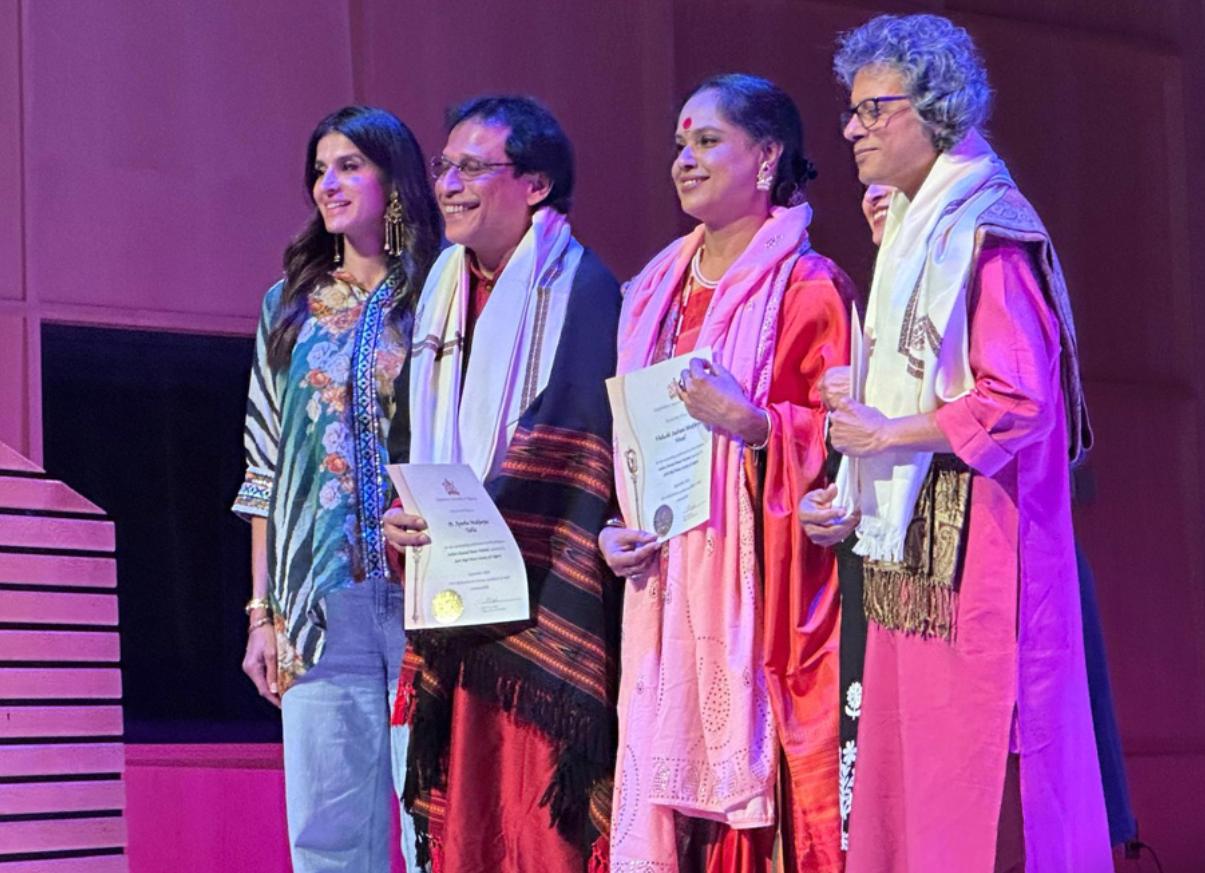
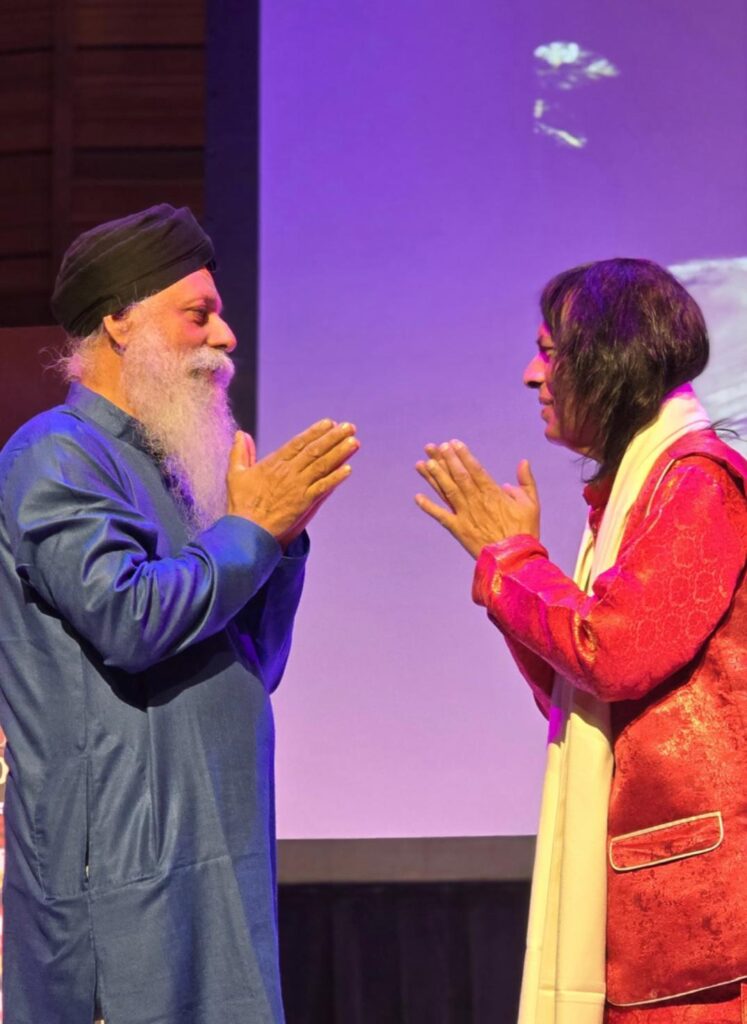
CALGARY, AB — September 11, 2026: The rich traditions of Indian classical music came alive in Calgary as the Indian Classical Music Festival 2026 opened at the Rozsa Centre of the University of Calgary, bringing together accomplished musicians, music enthusiasts and members of the multicultural community for an evening devoted to melody, rhythm and artistic expression.
The opening program presented a carefully arranged combination of Hindustani classical vocal music, tabla, harmonium and sarangi, along with an unusual meeting of Indian classical percussion and the Western marimba. The diverse program demonstrated the depth and versatility of classical music while giving Calgary audiences an opportunity to experience performances rooted in centuries-old musical traditions.
The festival’s first evening featured Vidushi Indrani Mukherjee as the principal Hindustani classical vocalist. Her performance formed the centrepiece of the opening program, offering the audience an opportunity to experience the distinctive character of Indian classical vocal music, where melody, rhythm, improvisation and emotional expression work together to create a highly developed musical form.
Mukherjee was accompanied by Shri Apurba Mukherjee on tabla and Shri Anirban Chakraborty on harmonium. The combination of voice, harmonium and tabla created the traditional musical framework associated with many Hindustani classical presentations. The musicians complemented one another throughout the performance, with the rhythmic patterns of the tabla providing a foundation for the melodic and vocal passages.
The performance also demonstrated the important role of accompaniment in Indian classical music. Rather than simply providing background support, the accompanying musicians participate actively in the musical conversation, responding to the vocalist and contributing their own interpretations to the performance.
Another major component of the opening evening was a tabla solo by Ustad Akram Khan Sahib. Tabla occupies a central position in the Hindustani musical tradition and is recognized for its extraordinary range of rhythmic patterns, tonal qualities and technical possibilities.
Khan’s solo performance provided the audience with an opportunity to experience tabla as a principal instrument rather than simply an accompanying percussion instrument. The performance explored rhythm and timing while demonstrating the technical discipline required to perform Indian classical percussion at a high level.
Pandit Pankaj Mishra accompanied the tabla presentation on sarangi. The sarangi, known for its distinctive and expressive sound, has a long association with Hindustani classical music. Its presence added another melodic dimension to the presentation and complemented the rhythmic character of the tabla.
The festival’s opening program also moved beyond a conventional Indian classical presentation with a marimba recital by Dr. Rodney Squance. The performance was accompanied on tabla by Mr. Abbas Jan Mohammed, creating an interesting musical dialogue between the marimba and the traditional Indian percussion instrument.
The combination brought together two different musical traditions and demonstrated how instruments from different cultural backgrounds can interact within a performance setting. The marimba’s distinctive resonant tones were paired with the intricate rhythmic language of the tabla, creating a presentation that expanded the musical scope of the evening.
Such performances are particularly significant in a multicultural city such as Calgary, where audiences regularly encounter artistic traditions from around the world. Cultural festivals provide opportunities not only for communities to preserve their own artistic heritage but also for others to discover and appreciate musical forms that may be unfamiliar to them.
The evening was hosted by Master of Ceremonies Nav Sohal, who guided the audience through the program and introduced the performers. The role of the master of ceremonies was important in connecting the various segments of the program and helping the audience understand the structure of the evening.
The Indian Classical Music Festival is also an example of the contribution made by cultural organizations to Calgary’s artistic landscape. Events devoted to traditional music create opportunities for established performers to present their work while helping younger audiences and new listeners develop an appreciation for classical traditions.
For members of Calgary’s South Asian community, such events also provide an important connection to cultural heritage. Indian classical music has developed through generations of musicians and teachers, with traditions passed from one generation to another through intensive study, practice and performance.
At the same time, the festival’s presence in Calgary places this heritage within Canada’s multicultural environment. Audiences from different backgrounds can experience the music together, creating opportunities for cultural understanding through the arts.
The opening night also reflected the contribution of volunteers, sponsors and organizers who work behind the scenes to bring cultural programs to the public. The Sarb Akal Music Society of Calgary expressed its appreciation to the artists, music lovers, volunteers, sponsors and members of the organizing team whose efforts contributed to the success of the opening evening.
The society’s work in presenting Indian classical music in Calgary adds to the city’s growing cultural and artistic activities. Calgary has a diverse population representing communities from many parts of the world, and festivals such as ICMF provide a platform where cultural traditions can be presented to both established audiences and the wider public.
The Rozsa Centre at the University of Calgary provided the setting for the opening evening. The venue, associated with the university’s arts community, offered an appropriate environment for a program centred on live musical performance and cultural expression.
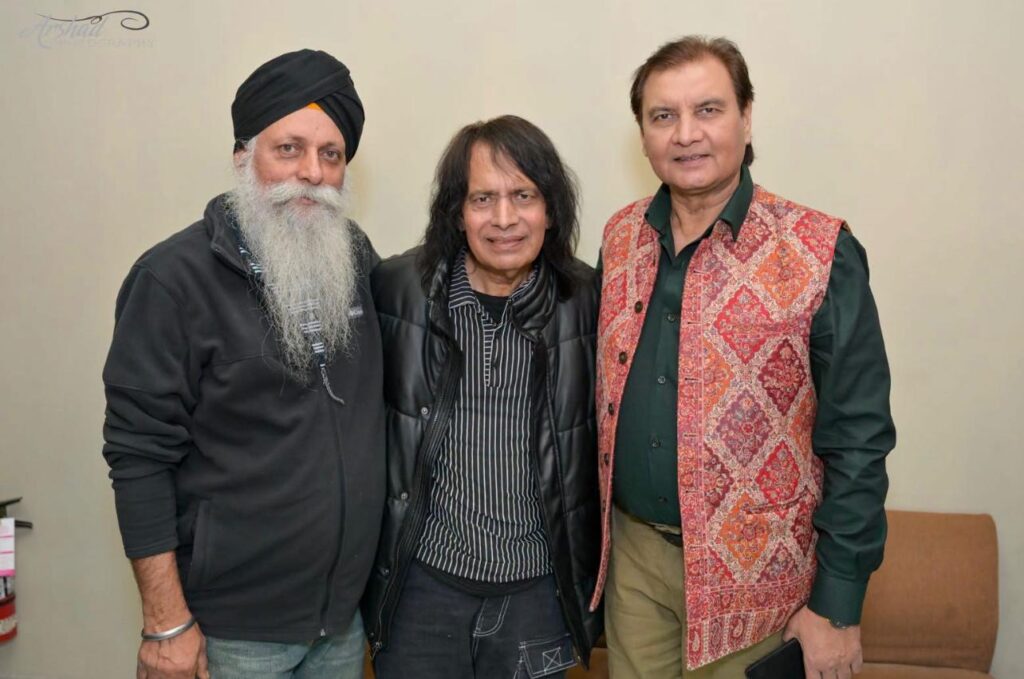
The event was also documented through photography, with special appreciation extended to Arshad Photography for capturing moments from the performances and preserving the atmosphere of the opening night.
Photography plays an important role in documenting cultural events, particularly performances that bring together artists and audiences for a limited period. Images from the festival allow the wider community to see the musicians, performances and audience experience even after the event has concluded.
The first evening of ICMF 2026 ultimately brought together several dimensions of musical performance: the expressive power of the human voice, the intricate rhythms of tabla, the distinctive sound of harmonium and sarangi, and the contrasting musical character of the marimba.
Rather than presenting classical music as something confined to the past, the opening program demonstrated its continuing relevance in a modern multicultural environment. Traditional forms were presented alongside new musical combinations, allowing audiences to appreciate both the heritage and continuing evolution of classical performance.
With its opening evening at the University of Calgary, the Indian Classical Music Festival 2026 established a strong cultural presence in the city, celebrating musicianship, tradition and collaboration while providing Calgary audiences with an opportunity to experience the richness of Indian classical music in a live setting.
The festival’s opening night was not simply a series of individual performances. It was a broader celebration of music as a bridge between cultures, generations and artistic traditions, bringing performers and audiences together through the universal language of music.
Post Disclaimer
The views and content presented in this article, news report, or video are solely those of the respective author or creator and do not necessarily reflect the official policy or position of BW Times Digital Online E-Paper.








Leave a comment