















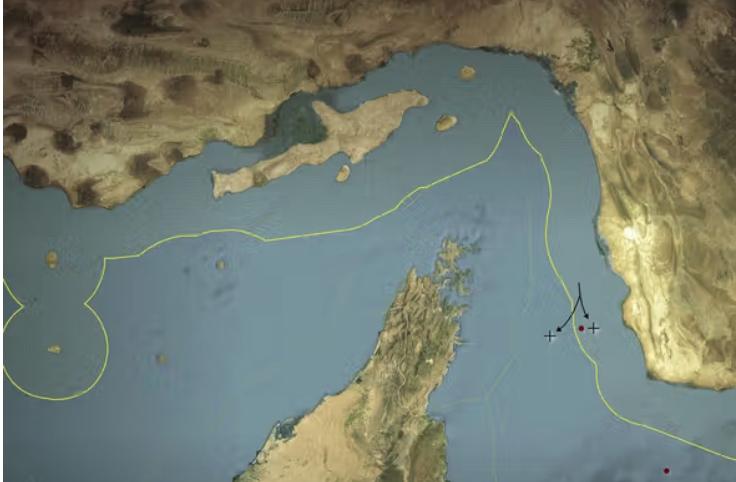
The quiet waters of the Persian Gulf have once again turned into a stage for one of the most dangerous confrontations of modern geopolitics. A sudden American strike on Iran’s strategic island in the Gulf has shaken the region and sent shockwaves through global markets. What began as a military operation has quickly grown into a crisis that could reshape the balance of power in the Middle East and beyond.
The island targeted in the attack is not just a piece of land surrounded by water. It is a critical gateway for Iran’s oil exports and an important point in the maritime network of the Gulf. The strike reportedly focused on military installations, including missile storage areas and strategic defense positions. Although the attack did not directly destroy major oil facilities, the message behind the operation was clear: the conflict between Washington and Tehran has entered a far more dangerous phase.
Iran’s leadership reacted with immediate anger and defiance. Officials warned that any aggression against the country would be answered with force. Military commanders signaled that American bases and allied infrastructure in the region could become targets if attacks continue. Iranian forces also increased their alert levels in the Gulf, while naval units and missile systems were placed in a higher state of readiness. The tone coming from Tehran suggests that the country intends to show strength rather than retreat.
One of the most serious concerns emerging from the crisis is the safety of the Strait of Hormuz, one of the world’s most vital energy routes. A large portion of global oil shipments travels through this narrow waterway every day. Any disruption there would instantly affect the global economy. Following the latest developments, shipping companies have begun to reassess their routes, and energy markets have responded with anxiety.
Oil prices have reacted sharply to the rising tension. Traders fear that if the confrontation expands or if shipping routes become unsafe, the supply of oil could be reduced. Even the possibility of disruption has been enough to push prices upward, reflecting how fragile the global energy system remains when conflict appears in the Gulf region.
Arab countries surrounding the Gulf are watching the situation with deep concern. Many governments in the region are trying to balance their relationships carefully. On one side they maintain security partnerships with the United States, while on the other they understand the risks of a wider war with Iran. As a result, their public statements emphasize restraint and the need to avoid escalation. Behind the scenes, however, security around key ports, airports, and oil facilities has been tightened.
The international response also reflects the seriousness of the moment. Russia has expressed concern about the rising military tension and warned that further escalation could destabilize the entire region. Moscow believes that confrontation in the Gulf would create long-term consequences not only for the Middle East but also for global security.
China, which relies heavily on energy supplies from the region, has also called for calm and diplomacy. Stability in the Gulf is critical for China’s economic interests, and any interruption to oil flows would affect global trade and industrial production. Beijing therefore favors negotiation and political dialogue rather than military confrontation.
For now, the situation remains tense but uncertain. Neither side appears ready to back down, yet both understand the enormous risks of a full-scale war. The Gulf has experienced many crises before, but each new confrontation carries the possibility of something far more serious. With powerful nations involved and vital energy routes at stake, the world is watching closely to see whether the conflict will cool through diplomacy or ignite a wider regional storm.
Post Disclaimer
The views and content presented in this article, news report, or video are solely those of the respective author or creator and do not necessarily reflect the official policy or position of BW Times Digital Online E-Paper.









Leave a comment