















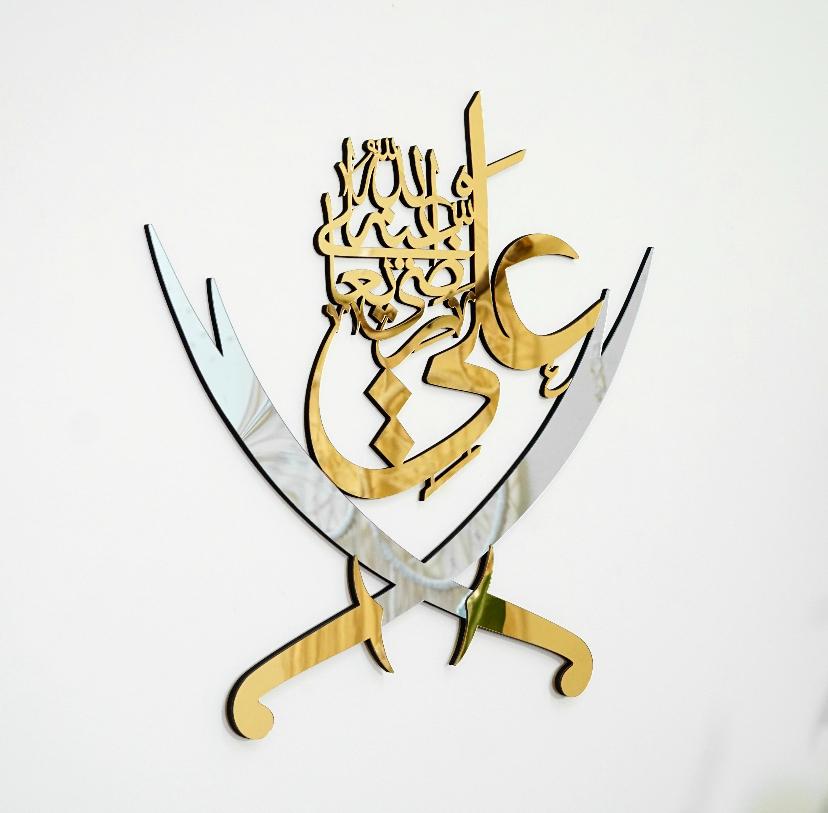
Hazrat Ali ibn Abi Talib, the fourth caliph of Islam and one of the closest companions of the Prophet Muhammad, holds a unique and deeply respected place in Islamic history. His life was marked by courage, wisdom, devotion to faith, and a strong commitment to justice. Hazrat Ali was martyred during the holy month of Ramadan, a time of spiritual reflection and prayer for Muslims. Historical accounts record that he was attacked on the 19th day of Ramadan in the year 661 CE while offering the Fajr prayer in the mosque of Kufa, and he passed away two days later on the 21st of Ramadan. Because of this, the last ten days of Ramadan are remembered with deep respect and emotion by many Muslims who recall the sacrifice and legacy of Hazrat Ali.
Hazrat Ali was born around 600 CE in the sacred city of Mecca. According to many Islamic traditions, he was born inside the Kaaba, the holiest sanctuary of Islam located within Masjid al-Haram. His father, Abu Talib, was a respected leader of the Quraysh tribe and a strong protector of the Prophet Muhammad during the early years of Islam. His mother was Fatimah bint Asad, who also held an honored place among the early believers.
From a young age, Hazrat Ali grew up under the care and guidance of the Prophet Muhammad. This close relationship allowed him to witness the Prophet’s character, teachings, and lifestyle directly. When the Prophet began preaching the message of Islam, Hazrat Ali was among the very first to accept the new faith. Many historians describe him as the first male youth to embrace Islam, showing loyalty and courage at a time when the early Muslim community faced severe opposition in Mecca.
Hazrat Ali soon became known for his bravery and dedication in defending the Muslim community. He played a significant role in several important battles during the early Islamic period. In the Battle of Badr in 624 CE, he fought with remarkable courage and helped secure a decisive victory for the Muslims. His bravery was also evident in the Battle of Uhud and later during the Battle of the Trench. In many of these confrontations, Hazrat Ali stood among the most courageous warriors, defending the Prophet and the Muslim community with unwavering determination.
One of the famous symbols associated with Hazrat Ali is the legendary sword known as Zulfiqar. In Islamic tradition, the sword represents justice and strength. Stories of Hazrat Ali’s bravery and fairness spread widely, and he became known as a warrior who always fought for truth rather than personal gain.
Hazrat Ali’s close relationship with the Prophet Muhammad was further strengthened through family ties. He married the Prophet’s beloved daughter Fatimah. Their marriage is remembered as a model of humility, faith, and devotion. They had several children, including Hasan ibn Ali and Husayn ibn Ali, both of whom later became important figures in Islamic history and were greatly loved by the Prophet.
After the death of the Prophet Muhammad in 632 CE, leadership of the Muslim community passed to a series of caliphs who guided the rapidly growing Islamic state. The first three caliphs were Abu Bakr, Umar, and Uthman. During their rule, Hazrat Ali served as a trusted advisor and scholar, respected for his knowledge of Islamic law and his deep understanding of the Qur’an.
In 656 CE, after the assassination of Caliph Uthman, Hazrat Ali was chosen as the fourth caliph of the Muslim state, a period known as the Rashidun Caliphate. His leadership began at a time of political tension and internal disputes within the Muslim community. Several groups disagreed about how justice should be carried out for the killing of Uthman, and these disagreements eventually led to conflicts.
One of the first major confrontations during his caliphate was the Battle of the Camel in 656 CE. The battle involved forces led by Aisha along with companions Talha ibn Ubaydullah and Zubayr ibn al-Awwam. Although the conflict was painful because it involved members of the same Muslim community, Hazrat Ali eventually emerged victorious and later showed mercy toward his opponents.
Another major challenge came from the governor of Syria, Muawiya I. Their disagreement led to the Battle of Siffin in 657 CE. The battle ended without a clear winner and resulted in an arbitration process that created further political divisions within the Muslim world.
Despite the political turmoil, Hazrat Ali remained known for his honesty and simple lifestyle as a ruler. He believed strongly in justice and equality. Historical reports describe how he personally cared for poor people, widows, and orphans. His speeches, letters, and teachings were later collected in the famous work Nahj al-Balagha, which continues to be studied for its insights into leadership, morality, and justice.
Hazrat Ali’s life ended in tragedy during Ramadan in the year 661 CE. While leading the Fajr prayer in the mosque of Kufa on the 19th of Ramadan, he was attacked with a poisoned sword by Abd al-Rahman ibn Muljam, a member of the radical group known as the Kharijites. After suffering from his wounds for two days, Hazrat Ali passed away on the 21st of Ramadan.
He was later buried in Najaf, located in present-day Iraq. His shrine in Najaf has become one of the most significant religious sites in the Muslim world, visited every year by millions of believers who come to honor his memory.
Today Hazrat Ali is remembered not only as a caliph and warrior but also as a symbol of knowledge, justice, humility, and faith. His sayings about wisdom, fairness, and compassion continue to inspire people across generations. For Muslims around the world, the life of Hazrat Ali remains a powerful reminder that true leadership is built on integrity, courage, and devotion to the principles of Islam.
Post Disclaimer
The views and content presented in this article, news report, or video are solely those of the respective author or creator and do not necessarily reflect the official policy or position of BW Times Digital Online E-Paper.











Leave a comment