






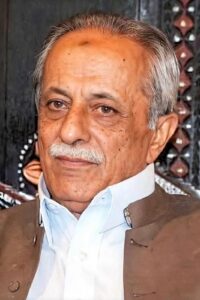





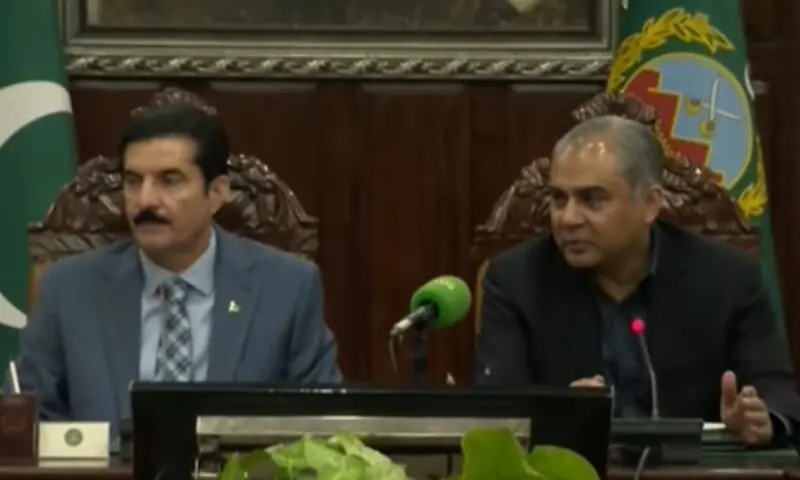
PESHAWAR, October 12, 2026: Khyber Pakhtunkhwa Governor Faisal Karim Kundi and Federal Interior Minister Mohsin Naqvi have pledged to intensify counterterrorism operations and restore law and order across the province following the federal government’s controversial decision to impose emergency measures and governor’s rule.
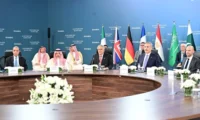
The two officials jointly chaired a meeting of the provincial apex committee on Monday, a day after the federal government assumed direct administrative control of Khyber Pakhtunkhwa, previously governed by Pakistan Tehreek e Insaf (PTI).
The meeting focused on strengthening coordination between federal and provincial authorities, improving the operational capabilities of law enforcement agencies and developing a more effective response to the growing security challenges in the province.
Addressing senior officials, Governor Kundi declared that public safety would take precedence over development projects, emphasizing that the administration would dedicate its resources and attention to restoring peace.
Kundi maintained that development could be delayed if necessary, but the government could not afford to compromise the security of its citizens.
He acknowledged weaknesses in coordination among institutions responsible for combating terrorism and promised that the new administrative arrangement would address those shortcomings.
According to the governor, the Counter Terrorism Department and provincial police would receive the necessary support to improve their operational effectiveness. He also directed officials to adopt a continuous working schedule, stressing that the province’s security situation required immediate and sustained attention.
Kundi said the administration would be judged by measurable improvements rather than announcements or symbolic initiatives.
Referring to the deteriorating security environment in Dera Ismail Khan, Tank and Waziristan, he expressed concern that residents in several districts were struggling to travel freely and conduct normal activities because of persistent militant threats.
He said restoring freedom of movement and creating conditions for economic and social stability would be among the government’s central objectives.
The governor also announced that meetings of the apex committee would be held regularly to monitor security developments and evaluate the performance of institutions involved in counterterrorism efforts.
Interior Minister Mohsin Naqvi welcomed the new administrative arrangement, arguing that cooperation between Islamabad and the provincial leadership would strengthen the campaign against militant violence.
Naqvi claimed that disagreements with the previous PTI administration had prevented effective coordination during the past two and a half years.
He accused the former provincial government of failing to provide the political and administrative leadership required to confront terrorism, despite repeated requests from federal authorities for greater cooperation.
The interior minister maintained that security forces could not achieve lasting success without strong backing from the civilian administration, regardless of their resources or operational capabilities.
He expressed confidence that the existing police and security personnel would demonstrate improved performance under the new arrangement, arguing that the principal difference would be stronger coordination and leadership.
Naqvi nevertheless acknowledged that the province’s security challenges would not disappear immediately and warned that difficult circumstances could continue as authorities attempted to regain control in affected areas.
He called for a united effort involving the governor, police, civil administration and federal institutions.
The apex committee meeting followed a significant political development on Sunday, when the federal government imposed an emergency under Article 232 of the Constitution and governor’s rule under Article 234.
The decision came after the federal cabinet reviewed the security situation in Khyber Pakhtunkhwa and accused the PTI administration of failing to cooperate adequately with national counterterrorism efforts.
Following the constitutional measures, federal authorities also approved the deployment of Pakistan Army personnel and military resources to support civilian institutions in maintaining law and order.
Security arrangements were tightened in Peshawar, where police established a heavy presence and shipping containers were positioned on several roads.
The imposition of governor’s rule has intensified the political confrontation between the federal government and PTI, raising questions about provincial autonomy, democratic governance and the constitutional justification for removing an elected provincial administration from effective control.
Federal ministers have accused the former provincial leadership of obstructing counterterrorism measures and have made serious allegations concerning its approach toward militant organizations.
PTI, however, has maintained that the federal government excluded provincial representatives from important security decisions while attempting to impose policies without meaningful consultation.
The party has repeatedly demanded a reassessment of Pakistan’s counterterrorism strategy and has expressed opposition to large military operations, arguing for alternative approaches to addressing militancy.
Disagreements over security policy were also among the major issues contributing to the collapse of negotiations between the government and opposition earlier this month.
The political dispute has been further complicated by differences over engagement with Afghanistan’s Taliban administration and the broader strategy for addressing militant activity along Pakistan’s western border.
Before Monday’s apex committee meeting, Governor Kundi had chaired the first session of the newly established KP Advisory Council, formed following the introduction of emergency measures.
During that meeting, he instructed officials to accelerate administrative decisions, improve institutional performance and adopt a policy of zero tolerance toward corruption.
He also identified the restoration of law and order as the administration’s most urgent responsibility and encouraged officials to examine successful security practices adopted in other provinces.
The federal government has presented the emergency arrangement as a necessary response to worsening security conditions. However, the removal of effective authority from an elected provincial government has opened a wider debate about the relationship between national security priorities and constitutional democracy.
For residents of Khyber Pakhtunkhwa, particularly those living in districts repeatedly affected by militant attacks, the immediate concern remains whether the new administration can deliver meaningful improvements in security.
The coming weeks will test the federal government’s claim that closer institutional coordination can produce better results. They will also determine whether the extraordinary constitutional measures lead to greater stability or deepen the political confrontation between Islamabad and PTI.
With governor’s rule now in effect, the administration faces the challenge of demonstrating that its promises of stronger security, effective governance and restored public confidence can be translated into tangible improvements across the province.
Courtesy: dawn
Post Disclaimer
The views and content presented in this article, news report, or video are solely those of the respective author or creator and do not necessarily reflect the official policy or position of BW Times Digital Online E-Paper.








Leave a comment