
















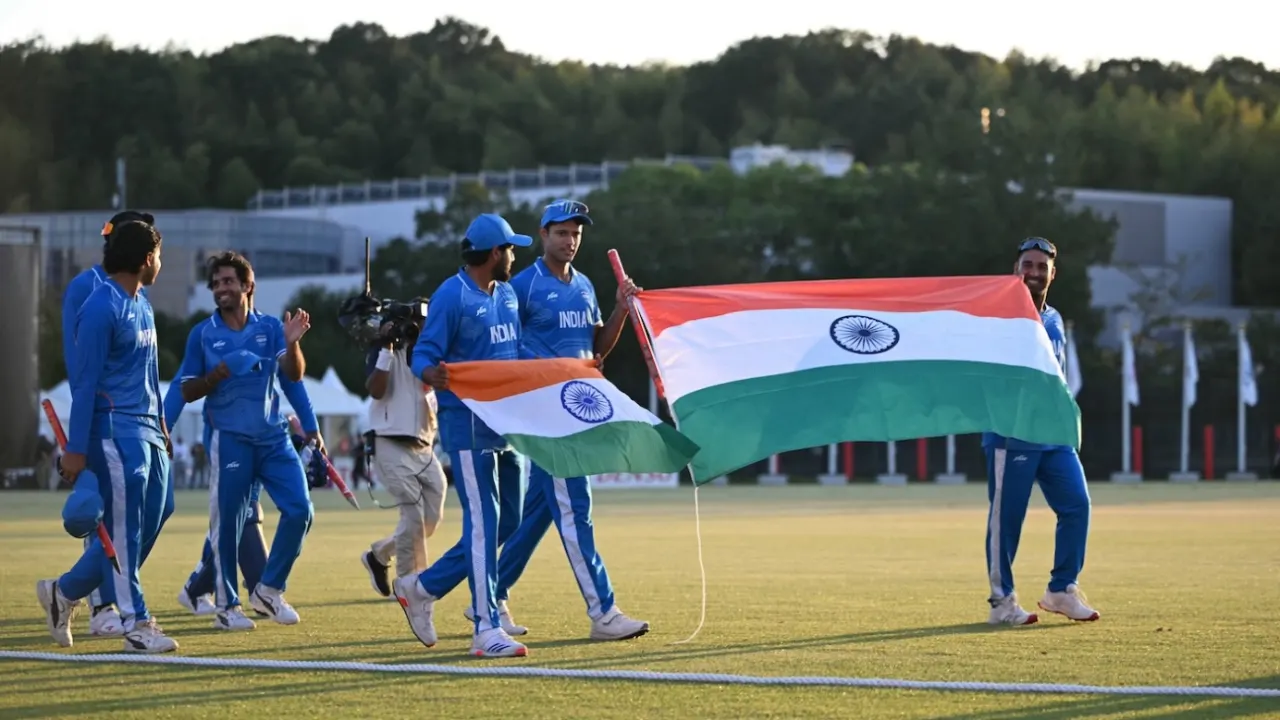
India retained the Asian Games men’s cricket gold medal after defeating Pakistan by 19 runs in a thrilling final in Nisshin, with powerful batting from Abhishek Sharma and Tilak Varma followed by disciplined bowling in the closing stages.
India posted 211 for 6 after being sent into bat, with Abhishek leading the charge with 61 and Tilak producing a crucial unbeaten half century. Pakistan responded with 192 for 6 as Hasan Nawaz delivered a spectacular 51 ball 96, but India managed to hold their nerve when the match reached its decisive final overs.
The result gave India another major tournament victory over Pakistan and continued their successful run in Asian Games cricket.
India made an explosive start despite the slow surface, which offered grip and inconsistent bounce. Pakistan struggled to maintain control with the ball, particularly against Abhishek, who immediately attacked the spinners and took advantage of the short boundaries.
Pakistan introduced Saad Masood early in the innings, but the move proved costly. Abhishek punished the leg spinner with three sixes and a boundary in an expensive over that shifted momentum heavily in India’s favour.
Vaibhav Sooryavanshi fell soon afterwards, but Abhishek continued attacking. He repeatedly used his back foot to create room against the spinners and struck the ball cleanly over the boundary. His aggressive approach brought him seven sixes before he was dismissed for 61 while attempting another big shot against Arafat Minhas.
At 93 for 3 after 7.5 overs, India appeared firmly in control.
Pakistan’s spinners then managed to slow the scoring rate. India lost Ishan Kishan and Shreyas Iyer and reached 142 for 5 after 16 overs. However, the game changed again during the final four overs when Tilak and Shivam Dube attacked aggressively.
Pakistan began bowling fuller deliveries and repeatedly offered balls in the hitting zone. Tilak and Dube took advantage, producing six sixes between them. India added 69 runs during the final four overs, with Tilak finishing the innings in style.
Pakistan therefore needed 212 to win the gold medal.
The chase began positively, with Sahibzada Farhan and Maaz Sadaqat putting together 33 runs for the opening wicket. Farhan eventually fell to Washington Sundar, but Pakistan continued finding boundaries despite struggling to consistently control their shots.
The chase appeared to be slipping away when Pakistan lost further wickets and reached 39 for 3. Then Hasan Nawaz changed the momentum completely.
Nawaz initially played cautiously and survived an early chance when a collision between Indian fielders allowed a catch to go down. He quickly made India pay for the mistake.
The Pakistan batter suddenly shifted gears, launching three sixes in his next five deliveries. He combined powerful hitting with excellent balance and began attacking both pace and spin. His partnership with Saim Ayub produced 87 runs from only 48 balls, with Nawaz contributing 57 during that stand.
When Ayub was dismissed by Dube in the 15th over, Pakistan still required 86 runs from 35 deliveries. Nawaz remained at the crease and continued giving his team hope.
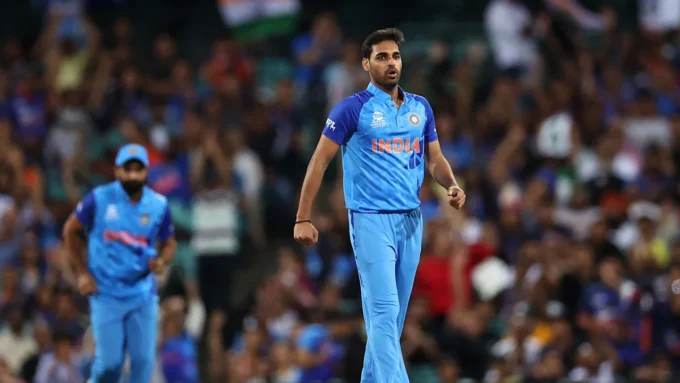
India then turned to Jasprit Bumrah for a crucial over. Pakistan needed 44 from the final two overs when Bumrah took responsibility for the attack. His mixture of yorkers and slower deliveries restricted Pakistan to just 11 runs, leaving the target at 33 from the final over.
Pakistan still had a mathematical chance, but the pressure was enormous.
Dube bowled the final over and initially conceded a boundary followed by a wide. He responded with a well directed yorker that dramatically reduced Pakistan’s chances. Nawaz then struck another six and moved to 96, leaving him four runs short of a memorable century.
On the final delivery, Nawaz attempted another aggressive shot but top edged the ball into the hands of Sanju Samson.
His dismissal ended Pakistan’s challenge at 192 for 6 and confirmed India as Asian Games champions once again.
Nawaz’s innings remained the outstanding individual performance of Pakistan’s chase. His 96 came from just 51 balls and included powerful hitting that transformed what appeared to be a one sided contest into a tense finish.
India’s bowling attack ultimately made the difference. Axar Patel, Washington Sundar and Shivam Dube shared six wickets between them, while Bumrah’s late spell provided the control India needed when Pakistan threatened to produce an unlikely comeback.
The final also highlighted the contrasting strengths of the two teams. India’s batting depth allowed them to maintain a high scoring rate throughout the innings, while their ability to use multiple all rounders gave them several bowling options.
Pakistan’s players showed considerable fighting spirit during the chase, particularly through Nawaz, but the target created by India’s powerful finish proved just beyond their reach.
For India, the victory secured another Asian Games gold medal and reinforced their dominance in the tournament’s men’s cricket competition. For Pakistan, the silver medal came after a spirited performance, with Nawaz’s remarkable innings providing one of the final’s most memorable moments.
The contest once again demonstrated the intensity surrounding India Pakistan cricket, with both sides producing an absorbing final that remained competitive until the final ball.
Courtesy: cricinfo
Post Disclaimer
The views and content presented in this article, news report, or video are solely those of the respective author or creator and do not necessarily reflect the official policy or position of BW Times Digital Online E-Paper.








Leave a comment