















MONTRÉAL, Canada — The streets of Montréal have become the centre of world cycling this week as the 2026 UCI Road World Championships bring together cyclists from across the globe, but one familiar name is missing from the competitive field.
Pakistan.
The world’s leading cyclists are competing in Montréal from September 20 to 27 in a championship programme featuring men’s and women’s events across junior, Under-23 and elite categories. Almost 1,000 cyclists from dozens of countries are taking part, competing for world titles in individual time trials, road races and the mixed team relay.
For Pakistan, however, the event has highlighted a painful contradiction. Pakistani cycling officials are present in Montréal and Pakistan continues to maintain its connection with the international cycling administration, but Pakistani cyclists are not competing in the World Championships.
The situation has once again raised serious questions about the condition of sports financing and athlete development in Pakistan.
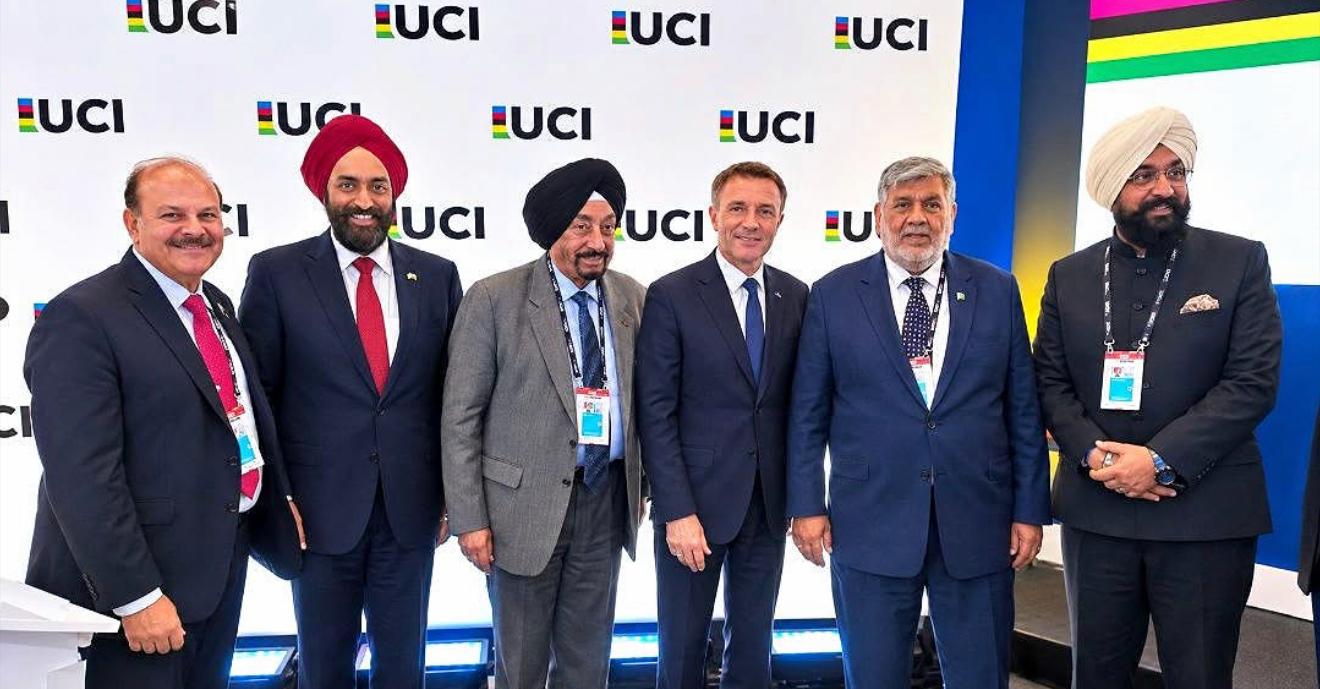
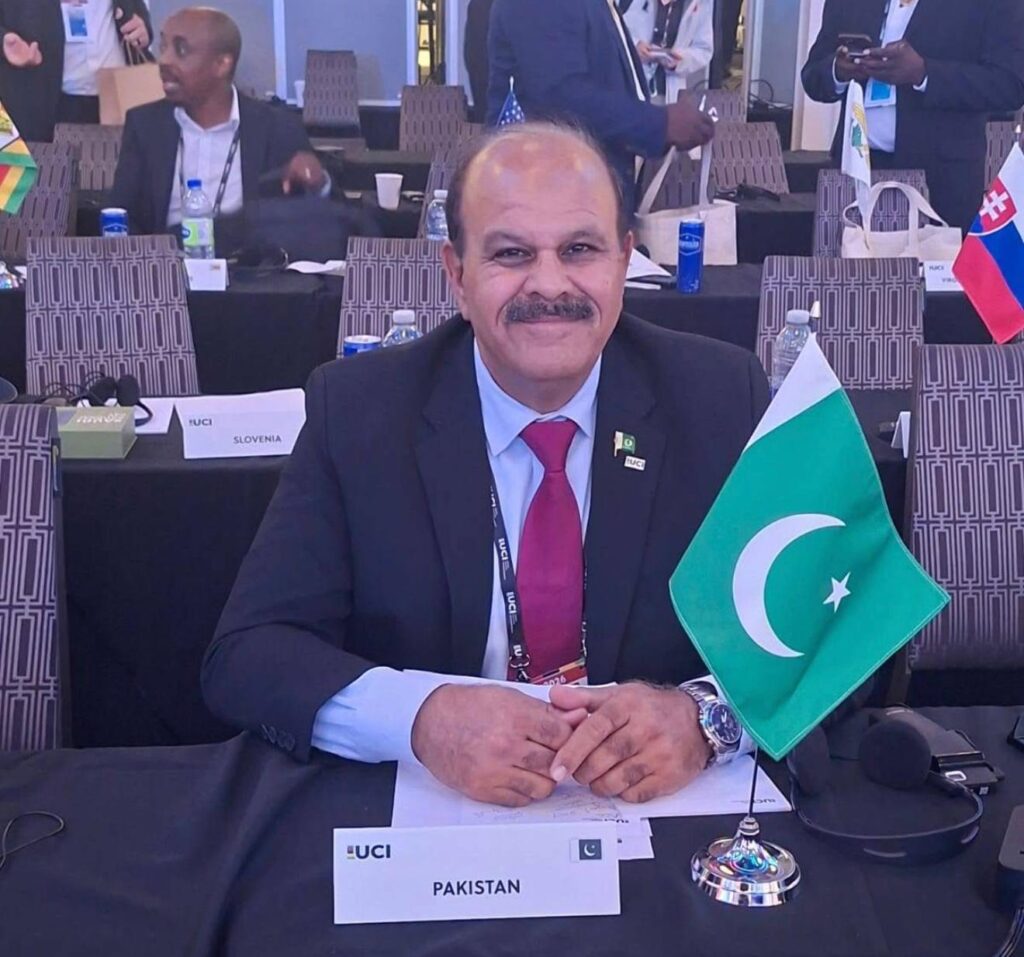
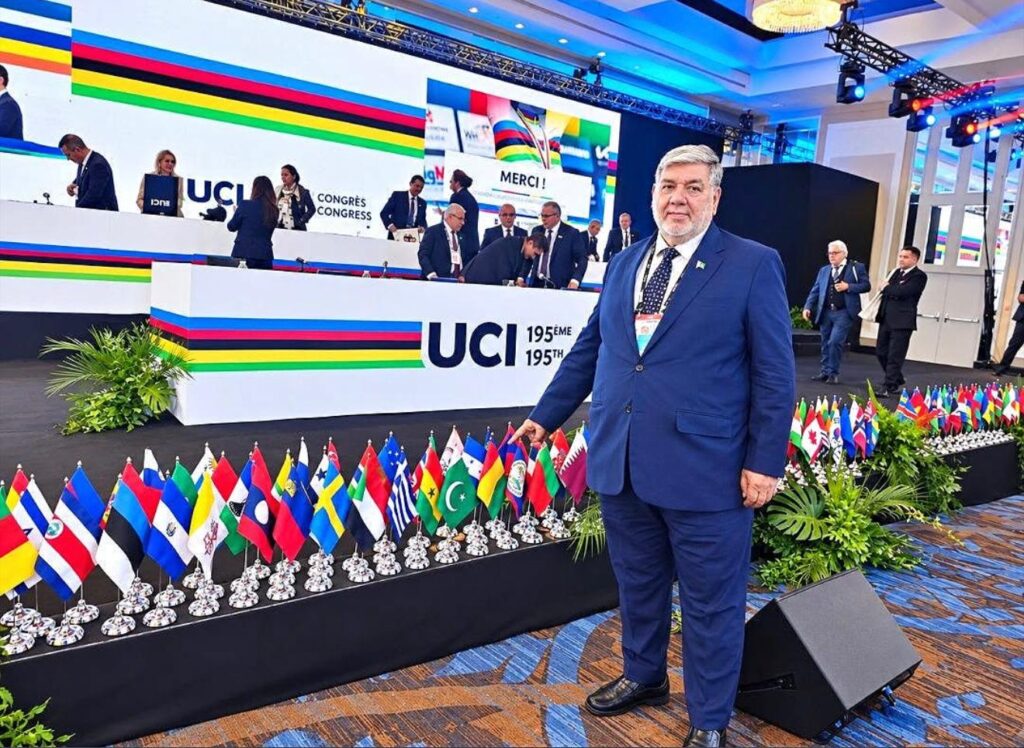
Among the Pakistani representatives present in Montréal are Pakistan Cycling Federation President Syed Azhar Ali Shah and Nisar Ahmed, a well-known figure in Pakistani cycling who has represented the country internationally and has also been involved in cycling administration and development.
Their presence at the UCI Congress provides Pakistan with an important institutional connection to international cycling. But the absence of Pakistani riders from the championship itself is difficult to ignore.
The UCI Congress is one of the most important administrative gatherings in international cycling. Representatives of national federations from around the world attend the meeting to discuss the development and governance of the sport.
Pakistan therefore has a voice in the international cycling structure, but the country’s athletes are missing from the road where the world’s best cyclists are competing for rainbow jerseys.
This contrast reflects one of the biggest problems confronting Pakistani sport: the gap between sporting talent and the financial resources required to develop that talent.
Cycling is not an inexpensive sport at international level. A rider cannot simply arrive at a World Championship with a bicycle and compete against the world’s best. Elite cycling requires years of structured training, professional coaching, nutrition, medical support, sports science, physiotherapy, high-quality bicycles, aerodynamic equipment, wheels, helmets, racing clothing, international competition experience and extensive travel.
For a country such as Pakistan, the cost becomes a major obstacle.
The Pakistan Cycling Federation has continued to organise domestic competitions and has announced an annual calendar for 2026-27. The National Road Cycling Championship is scheduled to be held in Karachi, with affiliated units, departmental teams and provincial teams expected to participate.
The federation has also announced plans to use national-level performances to select riders for international competitions, including the Asian Road Cycling Championships. Training camps and modern coaching are expected to form part of the preparation process.
These plans demonstrate that the federation continues to work toward building a national cycling structure. But the bigger question remains whether Pakistan has sufficient financial support to take its best cyclists from domestic competition to the world’s highest level.
The answer is increasingly visible at international championships.
Pakistan has talented cyclists, and its history at Asian-level competition proves that the country is capable of producing riders who can compete internationally.
Nisar Ahmed is one of the names associated with that history.
Pakistan’s official sporting records include Nisar Ahmed among cyclists who have won medals for the country. He was part of a Pakistani cycling team that won a silver medal in the road team time trial and also won an individual bronze medal in the road race.
Those achievements demonstrate that Pakistani cycling has previously produced athletes capable of succeeding on the international stage.
The problem is not simply a lack of talent.
It is the lack of a continuous system through which talent can be identified, trained, funded and exposed to international competition.
The same problem affects women cyclists.
Pakistan has made progress in bringing women into international cycling. Pakistani women have previously participated in major international cycling competitions, including the UCI Road World Championships. Their participation was significant because it represented an important step for women’s cycling in a country where female athletes often face additional social, financial and logistical challenges.
The development of women’s cycling requires even greater long-term commitment. Young female cyclists need access to bicycles and equipment, qualified coaches, safe training environments, competitions, travel opportunities and international exposure.
Without such a system, participation can remain occasional rather than becoming a sustainable pathway.
The Montréal championship provides a useful comparison.
The 2026 programme includes separate competitions for junior women, junior men, Under-23 women, Under-23 men, elite women and elite men, in addition to the mixed team relay.
This structure demonstrates how modern cycling countries develop athletes through different stages.
A young cyclist does not have to immediately become an elite world-class athlete. There is a development pathway from junior competition to Under-23 racing and eventually elite international competition.
For Pakistan, building such a pathway should be one of the central objectives of national cycling development.
The country needs regular domestic competition, stronger provincial and departmental programmes, professional coaching, women’s development programmes and regular participation in Asian and international events.
The Pakistan Cycling Federation has also taken steps in the area of coaching.
Pakistan’s Haroon General, the country’s only UCI Level 3 coach, recently completed an internship at the UCI World Cycling Centre in Switzerland. He worked with international high-performance programmes, including the UCI women’s continental team, and gained experience in coaching, athlete development, training methodology and performance analysis.
Such opportunities are important because international coaching knowledge can eventually be transferred to Pakistani riders.
But coaching development alone cannot solve the problem.
A coach can prepare an athlete, but the athlete must have the opportunity to race.
This is where international funding becomes crucial.
Participation in a World Championship involves considerably more than the entry itself. A national federation must arrange international flights, accommodation, visas, local transportation, bicycles and spare equipment, technical support, team management, training and preparation.
For many developing sporting nations, these costs can determine whether an athlete appears at the starting line.
In the case of Pakistan, the absence of a national cycling team from Montréal has created disappointment among people who believe the country’s cyclists deserve greater international opportunities.
At the same time, Pakistan’s representatives are continuing to participate in international cycling administration.
Syed Azhar Ali Shah has been associated with the Pakistan Cycling Federation’s efforts to strengthen the domestic sport and has repeatedly emphasised the need for modern training, merit-based selection and greater international exposure.
The federation has also expressed disappointment over cycling’s exclusion from major regional sporting programmes and has argued that Pakistan has considerable cycling talent.
The message from the federation is that Pakistani cyclists have the ability.
What is missing is continuity.
The Montréal championships therefore provide an important moment for Pakistan to reconsider its approach to cycling.
The country does not necessarily need hundreds of athletes to compete internationally. A carefully selected development programme could initially focus on a smaller group of elite men and women, supported by professional coaching and regular international competition.
A properly planned national cycling programme could begin with the best performers at the National Road Cycling Championship, followed by national training camps and participation in Asian-level races. The strongest riders could then be given opportunities to compete in international UCI events and eventually qualify for World Championship competition.
Such a system would also create opportunities for young cyclists.
Pakistan has a large youth population, and cycling is a sport that can be developed with relatively modest infrastructure compared with many other Olympic sports. Roads, training circuits, cycling clubs and competitive programmes can provide the foundation for development if they receive consistent support.
Cycling can also contribute to public health, transportation and environmental awareness.
Montréal itself demonstrates how cycling can become part of a city’s sporting and cultural identity. The city has a long relationship with cycling and previously hosted the UCI Road World Championships in 1974. The 2026 championship has brought the world’s elite riders back more than five decades later.
The contrast between Montréal and Pakistan is therefore not simply about money.
It is about sporting priorities.
Pakistan has produced world-class athletes in several disciplines despite limited resources. Its cricket, hockey, squash, boxing, athletics and cycling communities have all produced athletes capable of competing internationally.
But too often, talented athletes depend on personal commitment, departmental support, private assistance or limited federation resources.
When funding becomes uncertain, international participation is among the first things affected.
The story of the Pakistani representatives in Montréal is therefore important.
According to information concerning Pakistan’s participation, Nisar Ahmed and Syed Azhar Ali Shah are attending the UCI Congress and related activities while Pakistan does not have a competing cycling team at the World Championships. It has also been stated that the Pakistani representatives have met their own expenses for the Montréal visit. Such personal financial arrangements, however, should be understood as information provided by the representatives unless formally documented by the relevant authorities.
Their presence nevertheless sends an important message: Pakistan wants to remain connected with the international cycling community.
The next challenge is to make sure that Pakistani cyclists are connected with it as well.
Administrative representation is important, but the ultimate purpose of a national sports federation is to create opportunities for athletes.
The rainbow jersey is won on the road, not in the conference room.
For Pakistani cycling, the Montréal championships should therefore be viewed not only as a missed opportunity but also as a wake-up call.
The country needs a long-term national cycling strategy that covers men and women, juniors and elite riders, athletes and coaches.
It needs regular national competitions, transparent selection, modern training camps, international exposure and a sustainable funding mechanism.
The federation also needs stronger partnerships with government institutions, departments, private companies, sponsors and the Pakistani diaspora.
Corporate sponsorship could play a particularly important role. Cycling provides companies with opportunities to associate themselves with youth development, health, environmental responsibility and international sport.
A national sponsorship programme could help finance bicycles, equipment, training camps and international participation without placing the entire burden on government sports budgets.
Pakistan’s cycling community should also look beyond a single World Championship.
The objective should be to establish a cycle of development in which athletes compete regularly at Asian and international events, gain experience, improve their rankings and eventually arrive at World Championships properly prepared.
The current generation of Pakistani cyclists should not be expected to achieve international success without international preparation.
Montréal 2026 has once again demonstrated the enormous standard of modern cycling.
The world’s leading nations are developing athletes from childhood through junior competition, Under-23 racing and elite professional cycling. They invest in coaching, technology, sports science and competition experience.
Pakistan cannot close that gap overnight.
But it can begin.
The presence of Pakistani officials at the UCI Congress gives the country an opportunity to remain engaged with the global cycling community. The experience of Pakistani coaches at the UCI World Cycling Centre offers another building block. The country’s history of Asian medals demonstrates that Pakistani cyclists can compete.
What remains is a sustainable national system capable of turning occasional success into continuous international participation.
As the world’s cyclists race through Montréal this week, Pakistan’s absence should not be seen simply as another missing name on an entry list.
It should be treated as a serious question about the future of sport in Pakistan.
The country has cyclists.
It has coaches.
It has a national federation.
It has a history of international medals.
What it needs is the financial support, planning and consistent international exposure necessary to bring those elements together.
For Pakistani cycling, the road to the next World Championships must begin long before the starting gun.
And that road requires investment.
Post Disclaimer
The views and content presented in this article, news report, or video are solely those of the respective author or creator and do not necessarily reflect the official policy or position of BW Times Digital Online E-Paper.








Leave a comment