






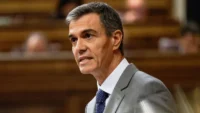









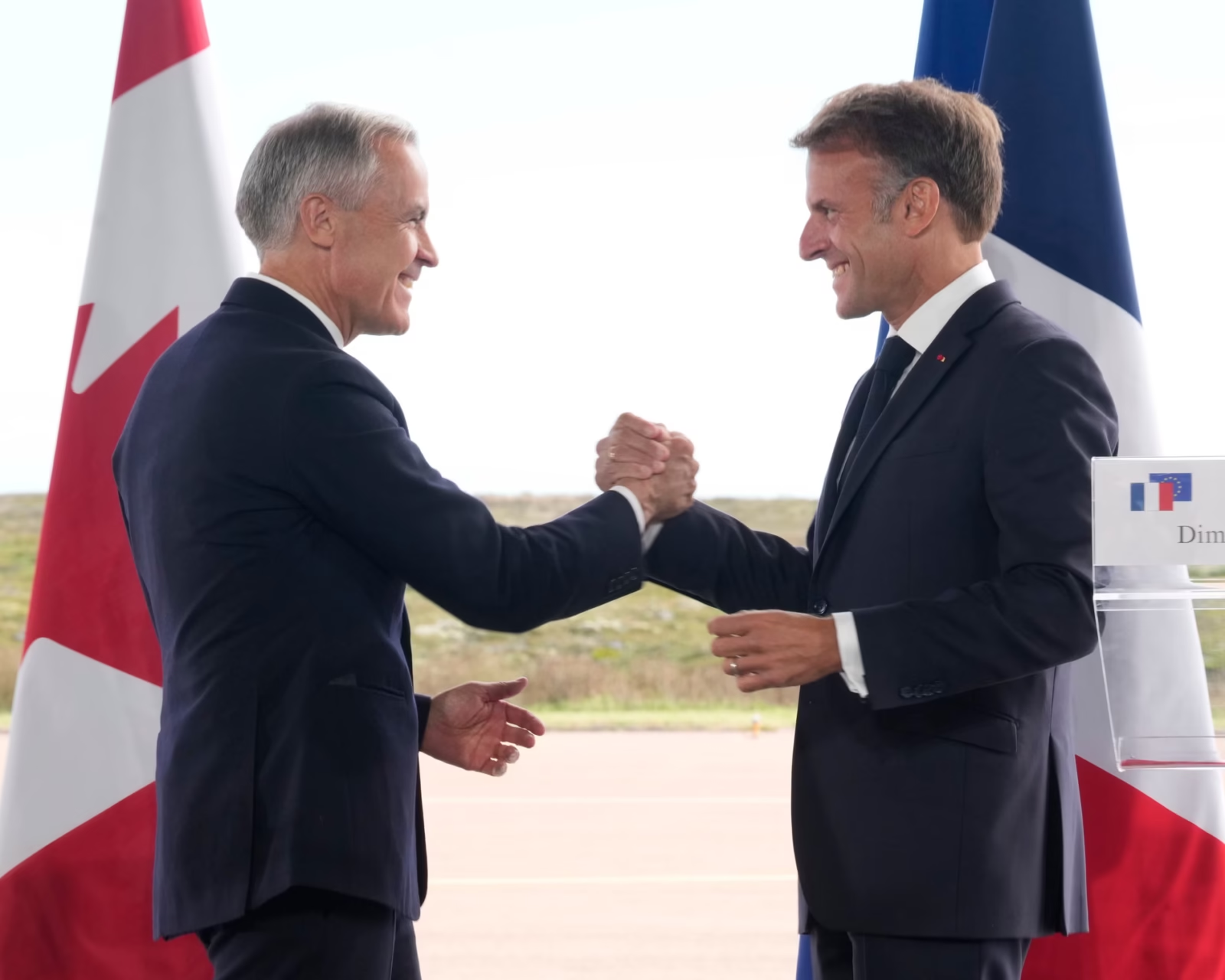
SAINT PIERRE, September 21, 2026: French President Emmanuel Macron and Canadian Prime Minister Mark Carney have announced plans to deepen cooperation between France and Canada as both countries confront growing geopolitical uncertainty, economic pressures and strained relations with the United States.
The two leaders met Sunday in Saint Pierre and Miquelon, the small French territory located off Canada’s Atlantic coast. The meeting carried particular diplomatic significance as Canada seeks stronger economic and strategic relationships with Europe while facing continuing tensions with Washington.
The visit was the first by a French president to the territory since 2014 and the first visit there by a Canadian prime minister. Saint Pierre and Miquelon has long served as an important point of contact between France and Canada because of its geographic position and close economic and social links with Atlantic Canada.
Carney said the international environment was undergoing major changes, pointing to climate pressures, challenges to democratic institutions and new concerns surrounding national sovereignty. He said the developments made closer cooperation between Canada and France increasingly important.
Macron echoed the call for stronger relations and said the two countries intended to expand cooperation in areas including energy, climate policy, space and trade.
Both leaders emphasized shared support for democratic institutions, the rule of law, international law, scientific decision making and fair trade.
The meeting came only weeks after U.S. President Donald Trump shared an image depicting a large area of North America and nearby territories under the United States flag. The image included Canada, Greenland, Iceland, Mexico, Central America, the Caribbean and Saint Pierre and Miquelon.
Macron was asked about the implications of the image and rejected any suggestion that Saint Pierre and Miquelon could cease to be French territory. He said France’s sovereignty over the territory did not need to be repeatedly reaffirmed in response to comments he regarded as unfounded.
The territory’s location gives it particular strategic importance for France. Saint Pierre and Miquelon lies close to Canada’s Atlantic coastline and provides France with a direct presence in North America.
The territory is also part of broader cooperation between France and Canada involving energy, trade and regional security.
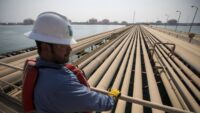
Energy emerged as one of the key areas of discussion between Macron and Carney. France is seeking to strengthen its energy security amid continuing volatility in global fuel markets, while Canada has significant potential to increase exports of liquefied natural gas.
Macron said Canadian LNG projects could play an important role in supplying European markets. France has been looking for ways to diversify energy supplies and reduce vulnerabilities caused by disruptions in major international energy routes.
The two leaders also discussed Canada’s developing relationship with the European Union.
The EU has recently proposed a new form of associate membership for Canada, which could provide Ottawa with deeper institutional cooperation with the bloc without making Canada a full EU member. Carney has been pursuing closer links with European governments as Canada seeks to broaden its international partnerships.
France has expressed support for stronger Canada EU cooperation. Macron’s government sees Canada as an important partner in North American affairs and in efforts to strengthen European relationships with countries outside the bloc.
The proposal has also generated criticism from Washington. Trump has threatened potential tariffs against the European Union over the idea of giving Canada a closer formal relationship with the bloc.
The issue comes as Ottawa and Washington continue to face significant trade disagreements. Canada has been seeking greater economic resilience and new markets as it attempts to reduce its dependence on the United States.
Carney has also emphasized that Canada will determine its own international partnerships and has rejected the idea that another country should dictate Ottawa’s diplomatic choices.
For France, closer ties with Canada offer opportunities in several strategic areas. Both countries are members of the G7 and NATO and have overlapping interests in Arctic security, energy, climate policy, technological development and international trade.
The two governments are also exploring closer cooperation between their space agencies and defence institutions. Recent discussions have included joint work on space launch capabilities and ground based infrastructure, reflecting the broader effort to expand strategic cooperation.
The Saint Pierre and Miquelon meeting therefore went beyond a symbolic diplomatic visit. It formed part of a broader effort by Ottawa and Paris to build stronger economic and security links at a time when the international environment is becoming more fragmented.
The two countries have also worked together on international diplomatic issues. Canada and France have recently coordinated positions on several global matters, demonstrating closer alignment on questions involving international law and global security.
However, deeper Canada Europe integration still faces practical challenges. The Canada EU Comprehensive Economic and Trade Agreement was provisionally implemented in 2017, but not all EU member states have completed the ratification process.
That means stronger political relations do not automatically translate into deeper economic integration. Ottawa and European governments will still need to overcome regulatory, political and institutional obstacles before any expanded relationship can become fully operational.
For Carney, strengthening relations with France and the wider European Union represents part of a broader effort to diversify Canada’s economic and strategic partnerships.
For Macron, the relationship offers France another important partner in North America at a time when transatlantic relations are under pressure.
The meeting in Saint Pierre and Miquelon provided a highly visible setting for both leaders to underline those ambitions. Their message was that Canada and France intend to strengthen cooperation across trade, energy, technology, climate policy and security while defending their respective sovereignty and maintaining close ties based on shared institutions and international rules.
As Canada continues to navigate difficult relations with the United States, the partnership with France and the wider European Union is likely to remain an increasingly important part of Ottawa’s foreign and economic policy.
Courtesy: theguardian
Post Disclaimer
The views and content presented in this article, news report, or video are solely those of the respective author or creator and do not necessarily reflect the official policy or position of BW Times Digital Online E-Paper.











Leave a comment