















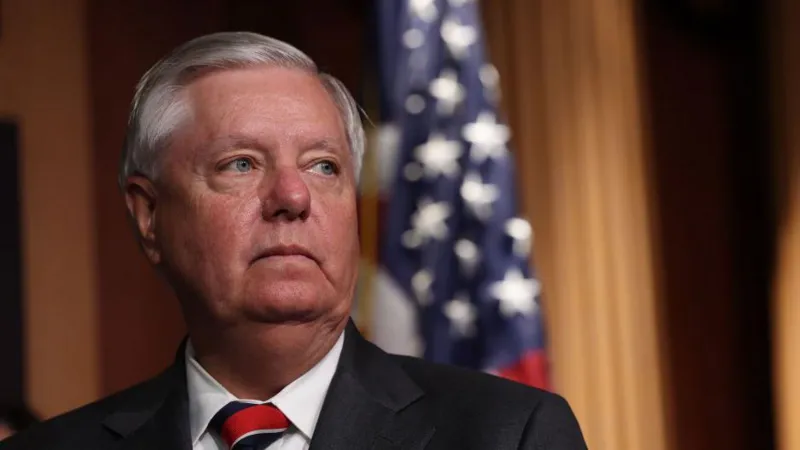
United States Senator Lindsey Graham has died at the age of 71 after suffering an aortic dissection caused by cardiovascular disease, according to preliminary findings released by the Washington, DC medical examiner.
Officials said the preliminary examination determined that Graham’s death resulted from a tear in the aorta, the body’s main artery responsible for carrying oxygen rich blood from the heart to the rest of the body. Further toxicological and microscopic examinations are expected before the final death certificate is completed.
Graham, one of the most influential Republican lawmakers in the United States Senate, died on Saturday evening after returning from an official visit to Ukraine, where he had met with President Volodymyr Zelensky only a day earlier. News of his death prompted an outpouring of tributes from political leaders in the United States and around the world.
Throughout more than two decades in the Senate, Graham built a reputation as one of Washington’s leading voices on national security and foreign policy. Representing South Carolina since 2003, he frequently advocated for a strong American military presence overseas and consistently supported increased defence cooperation with US allies.
Ukrainian President Volodymyr Zelensky expressed his condolences following the senator’s passing, describing Graham as a committed supporter of Ukraine and a strong advocate for democratic values. Zelensky noted that Graham had remained engaged with Ukraine’s leadership throughout the ongoing conflict and had continued to support international assistance for the country.
Israeli Prime Minister Benjamin Netanyahu also paid tribute to the late senator, praising his longstanding support for Israel and describing him as one of the country’s strongest friends in the United States Congress. Graham was widely recognized for his consistent backing of close security and diplomatic ties between the United States and Israel.
In recent months, Graham had remained active on several major international issues, including the conflict involving Iran and broader security concerns in the Middle East. He frequently argued for a strong American response to regional threats and continued to advocate for robust US engagement in global security matters.
Although Graham was initially a vocal critic of Donald Trump during the 2016 Republican presidential campaign, their political relationship evolved significantly in later years. Following Trump’s presidency, Graham became one of his strongest allies in the Senate, supporting many of his policy initiatives and defending him during key political battles, including impeachment proceedings.
Over the course of his political career, Graham earned respect from both supporters and critics for his extensive knowledge of foreign affairs, military policy and national security. His influence extended well beyond South Carolina, making him one of the Republican Party’s most recognizable figures on Capitol Hill.
With Graham’s passing, South Carolina law provides Governor Henry McMaster with the authority to appoint an interim senator to fill the vacancy until voters elect a permanent successor during the upcoming midterm elections. The replacement will serve for the remainder of Graham’s term until a new senator is officially chosen by the electorate.
The vacancy also carries political significance for the balance of power in the United States Senate, where Republicans currently hold a majority. Both major political parties are expected to closely monitor the upcoming election as control of the Senate remains an important national political objective.
Lindsey Graham’s death marks the end of a political career spanning more than three decades in public service. Throughout his time in Congress, he played a central role in debates involving defence policy, judicial appointments, international diplomacy and national security.
As colleagues, world leaders and constituents continue to pay tribute, Graham is being remembered as an experienced lawmaker whose influence shaped American foreign policy and national political debate for more than twenty years. His passing leaves a significant vacancy within the Senate and closes the chapter on one of the most prominent Republican careers of the modern era.
Courtesy: BBC
Post Disclaimer
The views and content presented in this article, news report, or video are solely those of the respective author or creator and do not necessarily reflect the official policy or position of BW Times Digital Online E-Paper.










Leave a comment