














A convicted people smuggler once described by French authorities as the “godfather” of migrant camps has been found living in the United Kingdom, where he is believed to be seeking asylum while allegedly working illegally, according to a BBC investigation.
The investigation identified the man as Twana Jamal, an Iraqi Kurd who was sentenced to five years in prison by a French court in 2016 for running a major cross Channel people smuggling network. French prosecutors at the time described him as one of the most successful smugglers ever brought to justice, alleging that he earned as much as £100,000 per week by arranging the illegal movement of migrants from northern France into the United Kingdom.
Following a recent tip off, BBC journalists traced Jamal to the village of Blaby in Leicestershire, where they observed him allegedly working in a local business, driving without a valid licence and reportedly using a different identity.
The discovery has renewed concerns about the effectiveness of Britain’s immigration screening system, particularly in identifying asylum seekers with serious criminal convictions overseas. Immigration officials told the BBC that criminal background checks involving European countries have become more difficult since the United Kingdom left the European Union, limiting access to certain criminal databases.
The BBC investigation also claims that more than 20 suspected people smugglers are currently living in the United Kingdom, including individuals with previous convictions in France, Germany and Belgium, while some are allegedly claiming asylum under false identities.
Jamal was previously linked to the notorious Ranya Boys, a Kurdish criminal network that European law enforcement agencies have identified as one of the main groups behind cross Channel human smuggling operations over the past decade and a half.
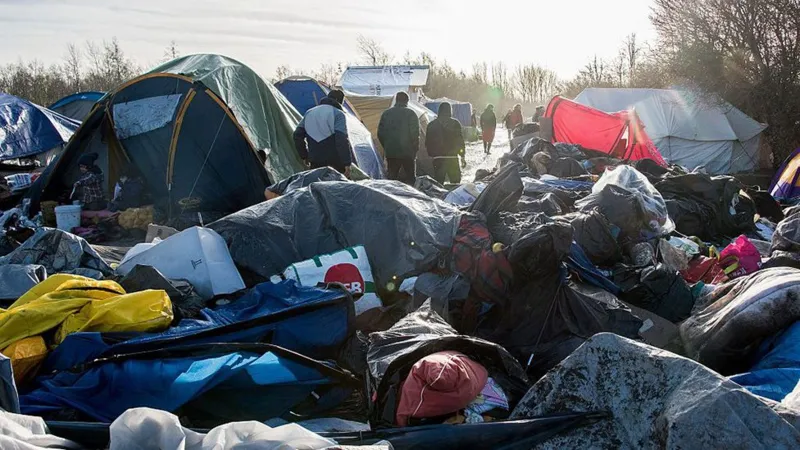
Court proceedings in France revealed that between 2012 and 2016, Jamal operated from the Grand Synthe migrant camp near Dunkirk, charging migrants between £4,500 and £5,000 each for illegal crossings into Britain. During that period, most migrants were transported across the Channel inside freight lorries rather than the small boats commonly used today.
French prosecutors also told the court that Jamal was widely known in the migrant camps by the nickname “Pasha,” a Turkish title associated with high rank and authority. Although Jamal denied the allegations and claimed mistaken identity during his trial, the court found him guilty and ordered that he be deported to Iraqi Kurdistan after completing his prison sentence.
Despite that conviction, Jamal later entered the United Kingdom. When approached by BBC reporters, he stated that he had applied for asylum and was still waiting for a decision on his case.
Under UK immigration law, individuals sentenced to at least 12 months in prison overseas are generally subject to mandatory refusal of asylum applications. However, questions remain about whether Jamal’s criminal record was available to British authorities or whether he entered the country using one of several aliases that prosecutors said he frequently adopted.
French court documents indicated that Jamal regularly used multiple false identities to avoid detection, reportedly writing the names inside his cap to remember which alias he was using.
The BBC investigation narrowed his location after sources arranged a recorded telephone conversation in which Jamal allegedly said he was living in Leicester. During the call, he reportedly claimed that he and his associates “knew everyone” in the city and described profitable work involving the movement of cigarettes from a warehouse.
He also allegedly admitted driving without a licence and expressed confidence that police would not stop him.
Journalists later linked Jamal to two convenience stores operating under the name Candy Corner in Blaby. After several days of surveillance, they identified a man matching photographs from his 2016 French court appearance.
An undercover visit to one of the shops reportedly confirmed the identification when the man introduced himself as “Sultan.” Reporters also observed a distinctive hand tattoo that matched images from Jamal’s social media accounts, where he reportedly uses the name Sultan Pasha.
If Jamal is currently seeking asylum, he would generally not be permitted to work or drive without the appropriate legal authorization. BBC reporters said they observed him doing both over several days.
When confronted outside one of the shops, Jamal denied ever being involved in people smuggling or serving a prison sentence in France. He claimed to have lived in the United Kingdom since 2009.
After being shown a photograph of himself appearing in a French courtroom in 2016, Jamal reportedly did not dispute that it was him but dismissed further questions, saying he did not care.
He also denied working at the shop despite reporters claiming they had seen him serving customers and moving stock. He declined to provide his name but stated that the Home Office and immigration authorities knew his identity.
When questioned about driving without a valid licence, Jamal reportedly responded by asking whether he had harmed anyone.
The BBC investigation says Jamal’s case is not unique. Investigators identified more than 20 alleged people smugglers living across the United Kingdom, with European law enforcement agencies confirming at least 15 of those cases. Some individuals reportedly have criminal convictions for people smuggling in France, Germany and Belgium, while others are believed to have claimed asylum using false identities.
One convicted smuggler is reportedly living in Manchester operating a used car business, while another based in Blackpool is said to have obtained leave to remain after applying for asylum under a different name.
Lucy Moreton of the Immigration Services Union told the BBC that the UK’s departure from the European Union has made it significantly harder to share criminal records with neighbouring countries.
She said that if Britain had continued sharing databases with countries such as France, Belgium, Germany and the Netherlands, authorities would have been better able to identify individuals with previous convictions for people smuggling.
The UK Home Office said all asylum applicants undergo mandatory identity, security and criminality checks. It added that Britain maintains several agreements with international partners for sharing criminal record information and stated that immigration enforcement activity has reached record levels, with arrests for illegal working increasing by 83 percent.
Courtesy: BBC
Post Disclaimer
The views and content presented in this article, news report, or video are solely those of the respective author or creator and do not necessarily reflect the official policy or position of BW Times Digital Online E-Paper.











Leave a comment