














Every July, the city of Calgary, Alberta, transforms into a sea of cowboy hats, boots, country music, and western hospitality as it hosts the world-famous Calgary Stampede. Known as “The Greatest Outdoor Show on Earth,” the Calgary Stampede is much more than a rodeo. It is a celebration of Alberta’s ranching heritage, Indigenous traditions, agriculture, entertainment, and community spirit that attracts visitors from across Canada and around the globe.
The Calgary Stampede has become one of Canada’s largest annual festivals and one of the world’s premier outdoor events. Each year, approximately 1.3 to 1.5 million visitors attend the ten-day festival, making it one of the most visited festivals in North America. Tourists travel from the United States, Europe, Asia, Australia, and many other countries to experience the excitement and unique western culture that the Stampede offers.
The history of the Calgary Stampede dates back to 1912 when American cowboy and Wild West promoter Guy Weadick envisioned creating a grand event to celebrate the ranching traditions of Western Canada. His dream became a reality with financial support from four influential Alberta ranchers known as “The Big Four”: Patrick Burns, George Lane, A. E. Cross, and A. J. McLean. Together they helped launch the first Calgary Stampede, which was held from September 2 to September 7, 1912.
The inaugural Stampede attracted more than 100,000 visitors during its six-day run, while the opening parade alone drew around 80,000 spectators despite Calgary having a much smaller population at the time. From its very beginning, the event was considered a remarkable success and quickly established itself as one of Canada’s signature celebrations.
Today, more than a century later, the Calgary Stampede continues to preserve the traditions of the Old West while embracing modern entertainment. In 2026, the event celebrates approximately 114 years since its founding in 1912, continuing a legacy that has been enjoyed by generations of Canadians and international visitors.
One of the most anticipated traditions is the Calgary Stampede Parade, which officially opens the festival on the first Friday morning. The parade begins around 9:00 a.m. and stretches for several kilometres through downtown Calgary. Hundreds of thousands of spectators line the streets hours before the parade begins to secure the best viewing spots.
The parade features colourful floats, marching bands, mounted riders, horse-drawn wagons, Indigenous performers, military units, community organizations, and cultural groups representing Calgary’s diverse population. More than 150 floats, hundreds of horses, and dozens of marching bands participate, creating one of Canada’s largest annual parades. Over the years, famous athletes, entertainers, politicians, and community leaders have served as Parade Marshal.
The Calgary Stampede lasts 10 days, offering an impressive variety of attractions and activities for people of all ages.
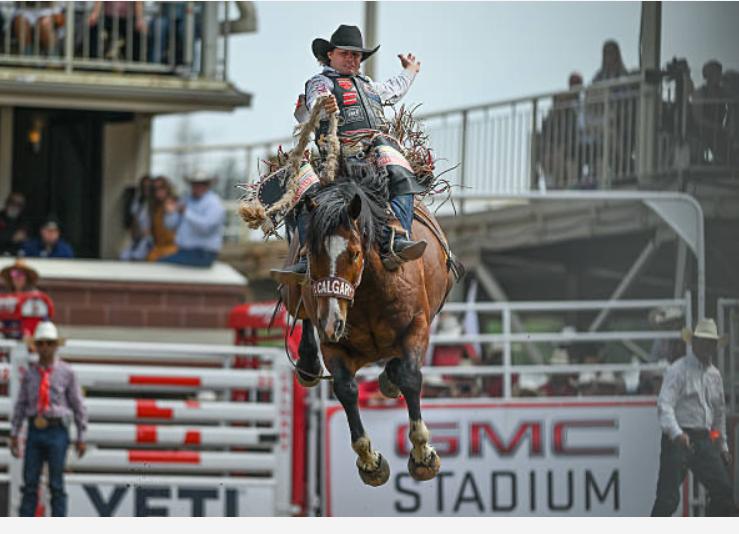
The heart of the Stampede is its internationally recognized rodeo competition. Professional cowboys and cowgirls compete in events such as bareback riding, saddle bronc riding, bull riding, steer wrestling, tie-down roping, barrel racing, and team roping. Competitors come from Canada, the United States, Mexico, Australia, and other countries to compete for substantial prize money and international recognition.
Another signature attraction is the thrilling Chuckwagon Races, often referred to as the “Half Mile of Hell.” These evening races feature teams of horses pulling covered wagons around a challenging dirt track at incredible speeds. The races are followed by spectacular evening entertainment, including concerts, fireworks, and the Grandstand Show featuring music, dancers, acrobats, and visual effects.
Families visiting Stampede Park enjoy the lively midway with amusement rides, games, and unique food vendors serving everything from traditional fair favourites to imaginative culinary creations. Livestock exhibitions, agricultural competitions, horse shows, educational displays, and farming demonstrations highlight Alberta’s strong agricultural roots and provide visitors with opportunities to learn about rural life.
The Stampede also honours the traditions and cultures of the Treaty 7 First Nations through Indigenous programming, cultural performances, traditional dances, storytelling, and educational exhibits, reflecting a relationship that has existed since the very first Stampede in 1912.
One of Calgary’s most beloved Stampede traditions is the Stampede Breakfast, commonly known as the Pancake Breakfast. During Stampede week, hundreds of free breakfasts are organized by community associations, businesses, shopping centres, churches, politicians, and volunteers throughout Calgary.
These breakfasts usually feature fluffy pancakes served with maple syrup, sausages, juice, coffee, and other breakfast favourites. Thousands of volunteers help prepare and serve meals, creating an atmosphere of friendship and hospitality.
The tradition began in 1923, when rancher and chuckwagon driver Jack Morton served free pancakes from his chuckwagon to downtown visitors. What started as a simple act of western hospitality has grown into one of Calgary’s most cherished annual traditions. Today, some of the largest Stampede breakfasts serve tens of thousands of people in a single morning.
Beyond the official Stampede grounds, the entire city embraces the celebration. Office workers dress in western attire, businesses decorate their storefronts, schools organize themed activities, and communities host family-friendly events. Country music fills the air, local restaurants feature western-inspired menus, and neighbours gather together to celebrate Calgary’s unique heritage.
The economic impact of the Calgary Stampede is significant. The festival generates hundreds of millions of dollars for Calgary and Alberta each year by supporting hotels, restaurants, transportation services, retailers, entertainment venues, and tourism businesses. Thousands of seasonal jobs are created, while local charities and community organizations also benefit from Stampede-related fundraising activities.
More importantly, the Calgary Stampede has become a symbol of unity and community pride. It brings together people of different cultures, backgrounds, and generations to celebrate the values of hard work, hospitality, volunteerism, and western heritage.
As another successful Stampede season unfolds, visitors from around the world continue to discover why Calgary proudly calls this event “The Greatest Outdoor Show on Earth.” More than 110 years after its founding, the Calgary Stampede remains one of Canada’s most treasured traditions, preserving its rich history while welcoming millions of guests to experience the warmth, excitement, and unforgettable spirit of Alberta’s western culture.
Courtesy: CBC
Post Disclaimer
The views and content presented in this article, news report, or video are solely those of the respective author or creator and do not necessarily reflect the official policy or position of BW Times Digital Online E-Paper.










Leave a comment