










Author: Shaheen Kamal
Review by: Naeem Ashraf
The (Fall of Dhaka) remains one of the most heartbreaking, complex, and bitter chapters in the history of Pakistan. It is the story of a nation that came into existence through the dream of a separate homeland for Muslims, yet only twenty-four years later split into two independent countries: Pakistan and Bangladesh (formerly East Pakistan).
The separation of East Pakistan in 1971 also taught us an important historical lesson: that a shared religion alone is not enough to preserve the unity of a nation. Equality, fair political representation, and just economic distribution are far more powerful forces in maintaining national harmony. On 16 December 1971, Pakistan lost one of its major wings when East Pakistan separated and became the independent state of Bangladesh. Why did this happen? Numerous books have been written to answer this question. Sadly, however, our textbooks still fail to tell our children the complete truth. Without presenting the full historical, geographical, and cultural background, textbook writers either place all the blame on India or dismiss the tragedy as the result of an international conspiracy. Military historians too often begin the story from March 1971 and end it with the surrender of the Pakistani army on 16 December 1971.
To investigate this tragic event, the Hamoodur Rahman Commission was established in 1971 and submitted its report within a year, yet the report remained classified for ten years. What was the truth? At least my generation grew up without ever truly knowing it. Few historians are willing to admit that the tensions and eventual separation of East Pakistan did not begin suddenly, nor were they solely the result of foreign conspiracies. In reality, we ourselves contributed to our downfall. The events of 1971 were the outcome of two decades of political and economic deprivation, and of the forceful denial of the people’s democratic mandate. The lust for power among politicians had overtaken national unity and solidarity.
Books written on this tragedy rarely discuss the millions of refugees displaced by the catastrophe, or the reaction born out of political and economic marginalization, during which countless non-Bengalis (Biharis) were brutally massacred by Bengali nationalists. What must those women have endured who were dishonored before their families? What happened to the families whose flourishing homes were looted and burned? What fault was it of those innocent children who had barely begun to experience life, only to have their futures stolen from them? What unimaginable suffering fell upon the women whose husbands were taken from them without reason? What psychological scars were left upon the children who witnessed bloodshed and chaos with their own eyes?
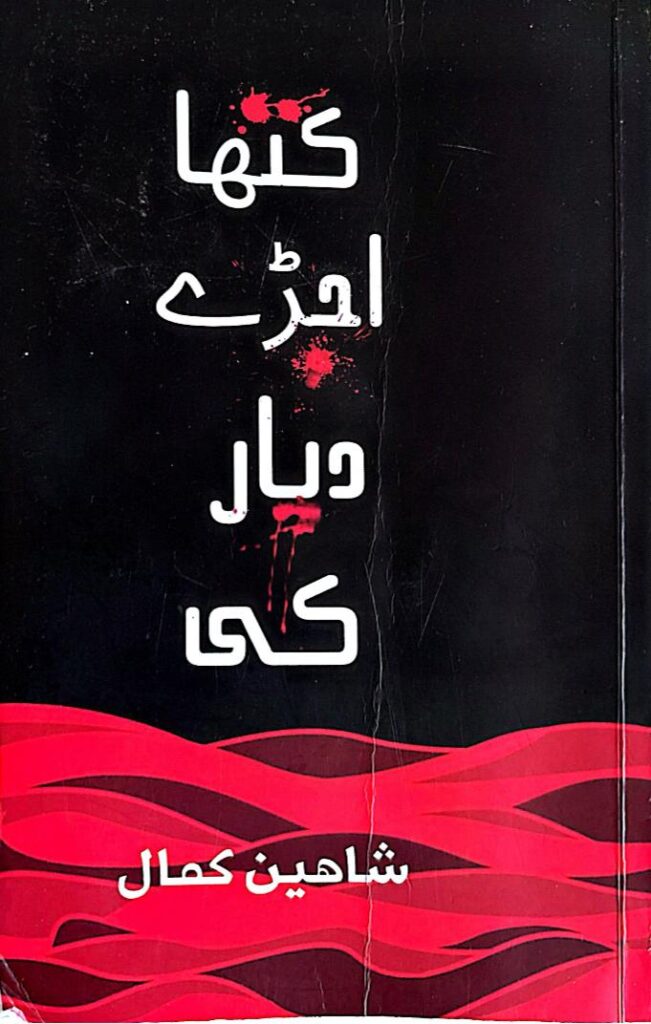
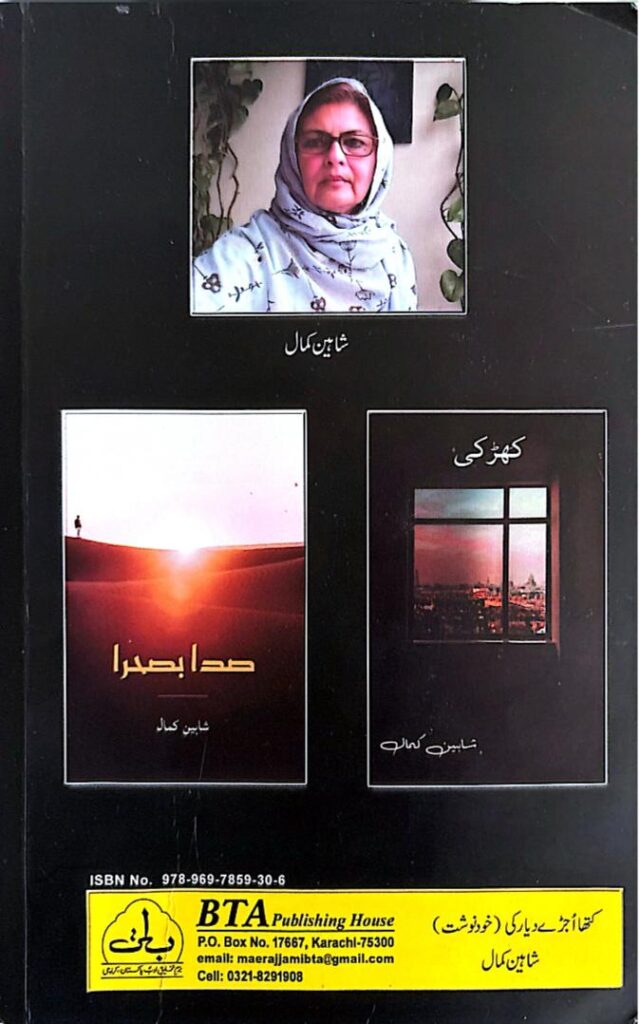
Shaheen Kamal’s autobiography Katha Ujray Diyar Ki (“The Tale of a Ruined Homeland”) is the life story of a woman who witnessed all of this herself. The author has performed a remarkable service by presenting the historical background of this tragedy in a beautiful literary style. The book contains true incidents and scenes so painful that they make the heart bleed and the soul tremble.
The 248-page book is divided into two parts. The first part consists of the author’s personal memories, beginning with her childhood and tracing her turbulent journey through India and Nepal before finally reaching Rawalpindi and later Karachi in Pakistan. The second part contains ten short stories written in the context of the Fall of Dhaka. These stories are deeply moving and heartbreaking. The author has dedicated the book to all displaced people of the world, especially to the stranded Pakistanis in Bangladesh.
The copy lent to me by the author was actually intended as a gift for her daughter. On its opening page was written this touching inscription:
“My dear daughter Aiman! This is not merely a story, but a heart-wrenching tale. Be sure to tell it to your children one day. Tell them that Pakistan once had another wing too — one that was beautiful and enchanting. It was the city of beauty that belonged to your grandmother.”
Only those who are forced to leave behind their homeland, childhood friends, and the homes in which they first opened their eyes can truly understand the pain of migration. Recalling the memories of her childhood homeland, the author writes:
“Ramadan in Mohammadpur was extraordinary, especially at suhoor time when groups of boys carrying Petromax lamps would walk through the streets reciting naats, waking every household. Then the wandering drummer would arrive. Lights would glow from every home, and the atmosphere would be filled with the fragrance of food. Even after the Fajr prayer, the streets remained lively for a long time. Ramadan was full of warmth and spirituality. On odd nights, all the women would gather in Razia’s long veranda for prayers. To be honest, we prayed less and chatted more. But with so many people around, staying awake became easy.” (Page 46)
She further writes about her departure from Dhaka on 3 December 1972:
“On the sorrowful evening of 3 December 1972, the airplane took off from the Dhaka runway, indifferent to the fact that someone’s entire world had been left behind. The flying aircraft was carrying me away from my beloved homeland, my birthplace now only a symbol of terror and brutality for us. It was difficult to convince ourselves that our ties with East Pakistan, with our home and our land, had been severed forever. The city of my dreams, my green homeland, had been destroyed murdered by force.” (Pages 131–132)
After arriving in Pakistan, the author recalls an unexpected childhood encounter with Ayub Khan in Islamabad:
“One day, while out walking, we reached Ayub Khan’s house. He was strolling in a sleeping robe while we stood at the gate trying to catch a glimpse of him. The guard kept telling us to move away, but Ayub Khan noticed us waving eagerly and walked over to ask where we were from. When he heard ‘East Pakistan,’ sorrow became visible on his face. Despite old age and frailty, the authority in his personality remained intact. For me, it was a dream come true because we had admired him since childhood. In truth, we were captivated by the military uniform that suited him so well, while it seemed to weep on Yahya Khan.”
Though Katha Ujray Diyar Ki is technically an autobiography, it is in reality the internal story of the tragedy that transformed East Pakistan into Bangladesh. The author’s style is graceful, engaging, and emotionally compelling. A reader feels compelled to continue from beginning to end in a single sitting because the book completely absorbs them.
The second part of the book contains stories that could only have been written with deep emotional pain and extraordinary courage. The stories born out of the Fall of Dhaka may not number in the millions, but certainly in the thousands and each one is enough to tear the heart apart.
One story that deeply moved me is titled “After So Much Devotion”:
“16 July 1971 — Soldier Nisar Ali, son of Nazim Ali, of the 33 Punjab Regiment and resident of Rawalpindi, was martyred while defending the homeland in Sudhir Ganj. He was buried with full military honors in Banani Army Graveyard.”
This news struck the family like lightning. The martyr’s widow and mother endured the tragedy with dignity. His bride of merely two days was pregnant, and the unborn child had become an orphan before entering the world. On 16 December 1971, the country was split in two, and I Shahbaz Ali, son of Nisar Ali was born on that dark night, a deprived child whose first cry carried within it the lament of his mother and grandmother.” (Page 215)
Shaheen Kamal’s descriptive power is exceptional, and her fiction carries profound meaning, purpose, and emotional weight. Another deeply tragic story is “I Wept at the Fate of Your Love”:
“It was the first week of December. The day Mina was due to give birth, Captain Yusuf and I — his commanding officer — were in the same trench. The enemy was using shells and heavy fire relentlessly. Yusuf said to me: ‘Major Sahib, my wife is in the labor room at CMH Dhaka. I do not know whether I will survive as a victor or die as a martyr. If I do not return, please visit Mina and tell her that those ten months were the best days of my life, and that she remained with me until my final breath. Shundori, tumi amar priyo — Beautiful one, you are my beloved. This message is my trust with you.’” (Page 196)
Captain Yusuf is martyred, and his wife also dies while giving birth to a daughter. The commanding officer and his wife adopt the baby and raise her as their own child, revealing the truth only when she turns eighteen. This story beautifully reflects the noble military traditions of honoring and caring for the families of fallen comrades.
Katha Ujray Diyar Ki successfully meets both historical and literary standards. I congratulate Shaheen Kamal for presenting Urdu readers and future generations of Pakistani children with such a valuable and beautiful gift in the form of this book.
Post Disclaimer
The views and content presented in this article, news report, or video are solely those of the respective author or creator and do not necessarily reflect the official policy or position of BW Times Digital Online E-Paper.










Thank you so very much Mr. Naeem Ashraf. You have done a thought full and deep analysis of this book and I am thankful from the core of my heart.